

Jam Nut Locking
1. INDUSTRY CONTEXT, TECHNICAL FUNDAMENTALS & JOINT MECHANICS
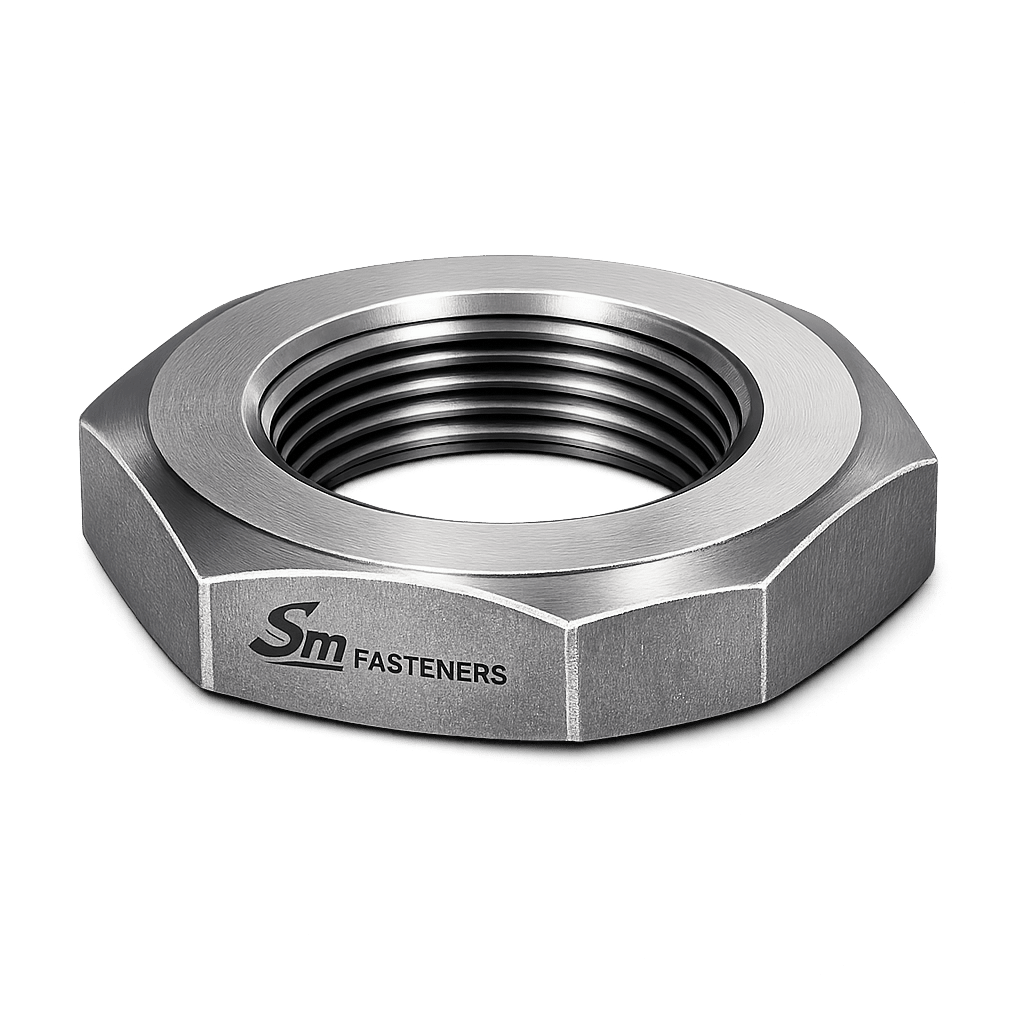
1.1 Industrial Context of Jam Nut Locking
Threaded fasteners remain the most widely used detachable mechanical joining system across heavy engineering industries. Despite advancements in welding, adhesive bonding, and interference fits, bolted joints continue to dominate because they provide:
- Controlled preload generation
- Serviceability and dismantling capability
- Predictable structural performance
- Inspection accessibility
However, vibration, dynamic loading, thermal cycling, and rotational forces introduce a persistent engineering problem:
Loss of preload due to self-loosening.
Industries such as:
- Oil & Gas processing facilities
- Structural steel construction
- Rotating machinery systems
- Power generation equipment
- Offshore platforms
- Heavy transportation systems
require locking mechanisms capable of maintaining clamp load without introducing excessive complexity.
One of the oldest and most reliable mechanical locking solutions used in critical assemblies is Jam Nut Locking.
SM Fasteners manufactures precision jam nuts engineered for controlled preload retention under international compliance frameworks including:
- ISO 9001 certified quality management
- UKAF accredited systems
- MSME manufacturing recognition
1.2 Technical Definition of Jam Nut Locking
A Jam Nut is a low-profile secondary nut installed against a primary nut to create a locking condition through controlled opposing thread forces.
Engineering Definition
Jam Nut king is a mechanical locking method where two nuts tightened against each other generate opposing axial forces and frictional resistance that prevent rotational loosening under service loads.
Key Components
| Component | Function |
|---|---|
| Primary Nut | Generates required clamp load |
| jam nut (Thin Nut) | Applies counter-force locking action |
| Threaded Fastener | Transfers tensile load |
| Clamped Members | Structural interface |
Fundamental Principle
Unlike prevailing torque nuts or chemical locking systems, jam nut locking works by:
- Creating opposing thread flank pressure
- Increasing friction coefficient between threads
- Eliminating rotational freedom
1.3 Load Mechanics & Force Behavior
Understanding jam nut locking requires detailed analysis of threaded joint mechanics.
1.3.1 Preload Generation
When torque is applied:
Where:
- T = Applied Torque
- K = Nut Factor (friction coefficient)
- F = Preload Force
- D = Nominal Diameter
Only 10–15% of applied torque creates preload.
Remaining torque is lost to friction:
- Thread friction ≈ 40%
- Bearing friction ≈ 50%
Jam nuts modify this friction distribution.
1.3.2 Jam Nut Force Interaction
After tightening:
- Primary nut develops clamp load.
- Jam nut applies reverse axial compression.
- Thread clearances collapse.
- Micro-movement disappears.
Result:
✅ Increased resistance to vibration loosening.
1.3.3 Load Path Behavior
Without Jam Nut
- Cyclic shear → rotation → preload loss.
With Jam Nut
- Bidirectional thread stress locks rotational freedom.
1.3.4 Stress Distribution
Load sharing occurs between nuts:
| Nut | Function | Load Share |
|---|---|---|
| Primary Nut | Structural preload | 85–95% |
| Jam Nut | Locking resistance | 5–15% |
1.4 Joint Design Principles
Correct engineering design determines success of jam nut locking.
1.4.1 Correct Tightening Sequence
Critical Engineering Requirement
- Tighten primary nut to required torque.
- Install jam nut.
- Hold primary nut stationary.
- Tighten jam nut against primary.
Incorrect sequence eliminates locking effect.
1.4.2 Recommended Thickness Ratio
| Nut Type | Thickness |
|---|---|
| Standard Nut | 1.0 D |
| Jam Nut | 0.5 D |
Thin profile ensures locking occurs through elastic deformation rather than load sharing.
1.4.3 Thread Engagement Requirement
Minimum engagement:
Where:
- Le = engagement length
- D = bolt diameter
1.4.4 Design Advantages
- No additional components required
- High temperature capable
- Reusable locking method
- No polymer degradation risk
- Suitable for hazardous environments
1.4.5 Engineering Limitations
Jam nut locking is not recommended where:
- Extreme transverse vibration exists
- Access prevents dual tightening
- Automated assembly required
In such cases, mechanical locking or prevailing torque nuts may be preferred.
1.5 Torque–Tension Relationship
Preload depends on friction conditions.
| Condition | Nut Factor (K) |
|---|---|
| Dry | 0.20–0.25 |
| Light Oil | 0.16–0.18 |
| Moly Lubricated | 0.12–0.15 |
| PTFE Coated | 0.10–0.13 |
Jam nuts increase effective friction coefficient after installation.
1.6 Friction & Thread Engagement Mechanics
Locking occurs because:
- Thread flank angles generate radial forces.
- Opposing nuts create compressive interference.
- Elastic recovery produces permanent resistance.
Thread Flank Force
Where:
- Fr = radial force
- Fa = axial preload
- α = thread angle
1.7 Failure Mechanisms Prevented by Jam Nut Locking
1.7.1 Self-Loosening (Junker Effect)
Vibration causes micro-slip → rotation.
Jam nuts eliminate rotational freedom.
1.7.2 Fatigue Failure
Loss of preload causes alternating stress → fatigue crack initiation.
Maintained preload improves fatigue life significantly.
1.7.3 Shear Failure
Stable clamp force keeps load in friction rather than shear.
1.7.4 Thermal Relaxation
Dual nut compression compensates for:
- Creep
- Embedment
- Thermal expansion mismatch
1.7.5 Hydrogen Embrittlement Risk Control
Jam nuts allow lower tightening torque compared to chemical locking systems, reducing stress concentration in high-strength materials.
1.8 Functional Role in Industrial Assemblies
Jam nut locking is widely used in:
- Valve stem adjustments
- Instrument mounting
- Pipe supports
- Bearing adjustment assemblies
- Turnbuckles
- Structural tie rods
- Machinery alignment systems
1.9 Selection Criteria — Engineering Decision Matrix
| Parameter | Selection Guidance |
|---|---|
| Load Type | Static / Moderate Dynamic |
| Temperature | Ideal for high temperature |
| Maintenance Access | Required |
| Reusability | Excellent |
| Corrosion Environment | Material dependent |
| Safety Critical | Requires controlled tightening |
1.10 Integration with SM Fasteners Engineering Capability
SM Fasteners supports jam nut locking systems through:
- Precision thread manufacturing
- Tight tolerance machining
- Controlled heat treatment
- Advanced material supply including:
- Duplex
- Super Duplex
- Nickel Alloys
- SMO 254
- PEEK engineering polymers
Manufacturing and inspection processes operate under ISO 9001 quality systems ensuring repeatable preload performance demanded by EPC and OEM projects worldwide.
2. PRODUCT TYPES, DIMENSIONAL LOGIC & INTERNATIONAL STANDARDS
2.1 Product Types and Engineering Variants
Jam nuts are not simply thinner versions of standard nuts. Their geometry, tolerances, and mechanical behavior are intentionally engineered to create controlled locking action while maintaining compatibility with standardized threaded fasteners.
SM Fasteners manufactures jam nuts across metric and imperial systems, aligned with global EPC procurement requirements.
2.1.1 Standard Hex Jam Nut
Description
Low-profile hexagonal nut designed for use with a full-height nut.
Characteristics
- Reduced height (≈ 0.5D)
- Standard hex drive
- Compatible with structural bolts
- Controlled deformation during locking
Typical Applications
- Structural tie rods
- Pipe supports
- Equipment mounting
- Machinery alignment
2.1.2 Heavy Pattern Jam Nut
Used in higher load environments where increased wrenching strength is required.
Features
- Wider across flats
- Increased bearing surface
- Improved tool engagement
- Enhanced durability during field installation
Industries
- Oil & Gas skid assemblies
- Offshore equipment
- Petrochemical structures
2.1.3 Metric Thin Lock Nut (ISO Pattern)
Common across European and international projects.
Characteristics:
- ISO metric thread compatibility
- Tight tolerance classes
- Precision locking performance
2.1.4 Fine Thread Jam Nuts
Fine threads improve locking efficiency.
Advantages:
- Higher preload control
- Reduced loosening risk
- Increased vibration resistance
Used in:
- Automotive systems
- Instrumentation
- Rotating equipment
2.1.5 Stainless & Corrosion-Resistant Jam Nuts
SM Fasteners manufactures jam nuts in:
- Austenitic stainless steels
- Duplex & Super Duplex
- Nickel alloys
- SMO 254
- PEEK polymer fasteners
Suitable for:
- Offshore exposure
- Chemical processing
- LNG terminals
- Marine structures
2.1.6 PEEK Jam Nuts (High-Performance Polymer)
Advanced applications increasingly require electrically non-conductive and corrosion-immune fasteners.
PEEK jam nuts provide:
- Zero galvanic corrosion
- Chemical resistance
- Lightweight assemblies
- Electrical insulation
- Non-magnetic performance
Applications:
- Semiconductor equipment
- Chemical dosing systems
- Cryogenic instrumentation
- Electrical isolation assemblies
2.2 Dimensional Logic and Geometry
Jam nut geometry directly affects locking performance.
2.2.1 Fundamental Geometry Parameters
| Parameter | Symbol | Engineering Function |
|---|---|---|
| Nominal Diameter | D | Thread load capacity |
| Pitch | P | Axial movement per rotation |
| Nut Height | m | Elastic deformation behavior |
| Across Flats | s | Tool engagement |
| Across Corners | e | Wrench clearance |
| Bearing Diameter | dw | Load distribution |
2.2.2 Jam Nut Height Principle
Standard nut height ≈ 1D
Jam nut height ≈ 0.4–0.6D
Why thinner?
- Enables elastic compression
- Generates locking preload
- Prevents excessive load sharing
2.2.3 Metric Jam Nut Dimensional Specification (ISO Pattern)
| Size | Pitch | Height m (mm) | Across Flats s (mm) | Across Corners e (mm) |
|---|---|---|---|---|
| M6 | 1.0 | 3.2 | 10 | 11.5 |
| M8 | 1.25 | 4.0 | 13 | 15.0 |
| M10 | 1.5 | 5.0 | 17 | 19.6 |
| M12 | 1.75 | 6.0 | 19 | 22.1 |
| M16 | 2.0 | 8.0 | 24 | 27.7 |
| M20 | 2.5 | 10.0 | 30 | 34.6 |
| M24 | 3.0 | 12.0 | 36 | 41.6 |
| M30 | 3.5 | 15.0 | 46 | 53.1 |
| M36 | 4.0 | 18.0 | 55 | 63.5 |
Dimensions aligned with international procurement specifications supported by SM Fasteners manufacturing systems.
2.2.4 Unified (UNC / UNF) Jam Nut Dimensions
| Size | Thread | Height (in) | Across Flats (in) |
|---|---|---|---|
| 1/4″ | UNC | 0.125 | 7/16 |
| 3/8″ | UNC | 0.187 | 9/16 |
| 1/2″ | UNC | 0.250 | 3/4 |
| 5/8″ | UNC | 0.312 | 15/16 |
| 3/4″ | UNC | 0.375 | 1-1/8 |
| 1″ | UNC | 0.500 | 1-1/2 |
2.3 Thread Standards & Tolerances
Global projects require interchangeability across thread systems.
Thread Standards Comparison Table
| Thread System | Standard | Region | Typical Use |
|---|---|---|---|
| Metric Coarse | ISO 261 / ISO 965 | Global | General engineering |
| Metric Fine | ISO 261 | Precision assemblies | |
| UNC | ASME B1.1 | USA | Structural |
| UNF | ASME B1.1 | USA | Automotive |
| BSW | BS 84 | UK legacy systems | |
| BSF | BS 84 | Precision legacy | |
| NPT | ASME B1.20 | Pressure piping |
Thread Tolerance Classes
| Class | Application |
|---|---|
| 6H | Standard internal thread |
| 6G | Clearance fit |
| 5H | Precision fit |
| 4H | High accuracy |
SM Fasteners maintains controlled thread tolerances through calibrated rolling and gauging systems.
2.4 Applicable International Standards
Jam nut manufacturing must comply with multiple international standards depending on project specification.
ISO Standards
| Standard | Description |
|---|---|
| ISO 4035 | Hex thin nuts |
| ISO 4036 | Thin nuts chamfered |
| ISO 898-2 | Mechanical properties of nuts |
| ISO 965 | Thread tolerances |
| ISO 3506 | Stainless fasteners |
DIN Standards
| Standard | Description |
|---|---|
| DIN 439 | Hex jam nuts |
| DIN 936 | Metric thin nuts |
| DIN 267 | Technical delivery conditions |
ASTM Standards
| Standard | Application |
|---|---|
| ASTM A194 | Alloy & stainless nuts |
| ASTM A563 | Carbon steel nuts |
| ASTM F594 | Stainless steel nuts |
| ASTM B564 | Nickel alloy fasteners |
British Standards (BS)
| Standard | Description |
|---|---|
| BS 4190 | Metric hex nuts |
| BS 3692 | Metric precision fasteners |
| BS EN ISO equivalents | European compliance |
2.5 Property Class System (Mechanical Compatibility)
Jam nut strength must match bolt strength to prevent stripping.
ISO Property Class Matching
| Bolt Class | Jam Nut Class |
|---|---|
| 4.6 | Class 4 |
| 5.8 | Class 5 |
| 8.8 | Class 8 |
| 10.9 | Class 10 |
| 12.9 | Class 12 |
Engineering rule:
Nut proof load ≥ Bolt tensile capacity.
2.6 Mechanical Properties Table (Grade-Wise)
| Property Class | Proof Load (MPa) | Hardness (HV) | Typical Use |
|---|---|---|---|
| Class 4 | 225 | 120–200 | Light duty |
| Class 5 | 380 | 140–240 | Machinery |
| Class 8 | 600 | 200–300 | Structural |
| Class 10 | 830 | 250–353 | Heavy engineering |
| Class 12 | 970 | 300–380 | High load systems |
2.7 Proof Load & Tensile Strength Table (Typical Values)
| Size | Class 8 Proof Load (kN) | Class 10 Proof Load (kN) |
|---|---|---|
| M8 | 14 | 19 |
| M10 | 22 | 30 |
| M12 | 32 | 45 |
| M16 | 60 | 84 |
| M20 | 94 | 132 |
| M24 | 135 | 190 |
| M30 | 220 | 305 |
Values aligned with ISO 898-2 mechanical requirements.
2.8 Dimensional Interchangeability Considerations
EPC projects frequently combine equipment sourced globally.
Key engineering considerations:
- ISO and DIN generally interchangeable.
- UNC/UNF not interchangeable with metric.
- Pitch mismatch causes catastrophic failure.
- Stainless galling risk increases with mismatched tolerances.
SM Fasteners supports full drawing verification prior to production for global project compatibility.
2.9 Weight Chart — Jam Nuts (Typical Carbon Steel)
| Size | Weight / Piece (kg) | Weight / 100 pcs (kg) |
|---|---|---|
| M6 | 0.003 | 0.30 |
| M8 | 0.006 | 0.60 |
| M10 | 0.010 | 1.00 |
| M12 | 0.018 | 1.80 |
| M16 | 0.035 | 3.50 |
| M20 | 0.060 | 6.00 |
| M24 | 0.095 | 9.50 |
| M30 | 0.180 | 18.0 |
| M36 | 0.310 | 31.0 |
Weight data aligned with SM Fasteners production planning and export logistics calculations.
2.10 Functional Selection Guidelines
| Condition | Recommended Type |
|---|---|
| Structural assemblies | Heavy pattern jam nut |
| Precision adjustment | Fine thread |
| Offshore exposure | Duplex / Super Duplex |
| Chemical plants | Nickel alloy |
| Electrical isolation | PEEK jam nut |
| High temperature | Alloy steel |
2.11 Engineering Design Integration at SM Fasteners
SM Fasteners provides:
- Custom geometry engineering
- Drawing-based manufacturing
- Tight tolerance thread rolling
- Metric & imperial production
- High-performance materials
- Global EPC compliance manufacturing
All jam nuts are manufactured within ISO 9001 certified process controls ensuring dimensional consistency and repeatable locking performance.
3. MATERIAL ENGINEERING, HEAT TREATMENT, MANUFACTURING & SURFACE ENGINEERING
3.1 Material Grades and Engineering Selection Criteria
Material selection governs the long-term reliability of jam nut locking systems. Unlike standard nuts, jam nuts operate under localized compressive stress and repeated installation cycles; therefore, material performance must address:
- Proof load capability
- Thread wear resistance
- Galling behavior
- Corrosion resistance
- Temperature stability
- Hydrogen embrittlement risk
SM Fasteners manufactures jam nuts across a complete industrial material spectrum supporting EPC, OEM, and critical infrastructure projects.
3.2 Carbon Steel Jam Nuts
Typical Grades
- ASTM A563 Grade A / DH
- ISO Property Classes 5, 8, 10
- EN 10269 engineering steels
Engineering Characteristics
| Property | Performance |
|---|---|
| Strength | High |
| Cost | Economical |
| Machinability | Excellent |
| Corrosion Resistance | Low (requires coating) |
| Temperature Limit | ~300°C |
Typical Applications
- Structural steel
- General industrial machinery
- Infrastructure projects
3.3 Alloy Steel Jam Nuts
Designed for higher preload systems.
Common grades:
- ASTM A194 Gr. 2H
- ASTM A194 Gr. 7
- ISO Class 10 / 12
Characteristics
- High tensile capacity
- Improved fatigue resistance
- Stable preload retention
- Elevated temperature capability
Used in:
- Pressure vessels
- Power plants
- Turbine systems
- Oil & Gas equipment
3.4 Stainless Steel Jam Nuts
SM Fasteners supplies corrosion-resistant jam nuts in multiple stainless grades.
Austenitic Stainless Steel
| Grade | Standard | Features |
|---|---|---|
| A2-70 | ISO 3506 | General corrosion resistance |
| A4-70 | ISO 3506 | Marine & chloride resistance |
| 316L | ASTM A194 Gr.8M | Chemical plants |
Advantages:
- Non-magnetic
- Excellent atmospheric resistance
- Good cryogenic behavior
Limitation:
- Galling risk under high preload.
Duplex & Super Duplex Stainless Steel
Grades:
- UNS S31803
- UNS S32205
- UNS S32750
- UNS S32760
Performance:
- High strength + corrosion resistance
- Excellent chloride resistance
- Superior SCC resistance
Applications:
- Offshore platforms
- Subsea systems
- Desalination plants
- LNG terminals
3.5 Nickel Alloy Jam Nuts
SM Fasteners supports advanced alloy manufacturing including:
- Inconel 625 / 718
- Incoloy 825
- Hastelloy C276
- Monel 400
- SMO 254
Engineering Advantages
- Extreme corrosion resistance
- High-temperature capability (>700°C)
- Acid resistance
- Sour service compatibility
Used in:
- Refinery reactors
- Chemical processing
- Marine subsea systems
- Hydrogen environments
3.6 PEEK Jam Nuts — High Performance Polymer Engineering
Polyether Ether Ketone (PEEK) fasteners represent a growing engineering requirement.
Performance Characteristics
| Property | Value |
|---|---|
| Continuous Temperature | 250°C |
| Chemical Resistance | Excellent |
| Electrical Insulation | Excellent |
| Weight | Very low |
| Corrosion | Immune |
Applications:
- Electronics manufacturing
- Semiconductor tooling
- Chemical dosing systems
- MRI equipment
- Electrical isolation assemblies
SM Fasteners integrates precision machining for PEEK jam nuts ensuring thread accuracy comparable to metallic fasteners.
3.7 Material Comparison Table
| Material | UTS (MPa) | Yield Strength | Corrosion Resistance | Cost Level | Typical Industry |
|---|---|---|---|---|---|
| Carbon Steel | 400–800 | Medium | Low | Low | Construction |
| Alloy Steel | 800–1200 | High | Moderate | Medium | Power & Oil |
| SS 304 | ~700 | Medium | Good | Medium | Industrial |
| SS 316 | ~700 | Medium | Excellent | Medium-High | Marine |
| Duplex | 800+ | High | Excellent | High | Offshore |
| Super Duplex | 900+ | Very High | Exceptional | Very High | Subsea |
| Inconel | 1000+ | Very High | Extreme | Premium | High Temp |
| SMO 254 | ~650 | Medium | Extreme | Premium | Chemical |
| PEEK | ~100 | Low | Immune | High | Electrical |
3.8 Corrosion Resistance vs Environment
| Environment | Recommended Material |
|---|---|
| Atmospheric | Carbon Steel (coated) |
| Marine | SS316 / Duplex |
| Seawater Immersion | Super Duplex |
| Sour Service (H₂S) | NACE compliant alloys |
| Acid Processing | Hastelloy / SMO 254 |
| High Temperature | Inconel |
| Electrical Isolation | PEEK |
SM Fasteners supports NACE MR0175 / ISO 15156 compliant material supply when required for sour service applications.
3.9 Heat Treatment Processes
Heat treatment determines final mechanical performance.
3.9.1 Process Flow
- Austenitizing
- Quenching
- Tempering
- Stress relief
3.9.2 Heat Treatment Objectives
- Increase proof load
- Improve fatigue strength
- Control hardness
- Enhance dimensional stability
Heat Treatment Effects Table
| Process | Effect |
|---|---|
| Quenching | Strength increase |
| Tempering | Toughness recovery |
| Normalizing | Grain refinement |
| Annealing | Machinability improvement |
Hardness Limits (Typical)
| Grade | Hardness Range |
|---|---|
| Class 8 | 200–300 HV |
| Class 10 | 250–353 HV |
| Class 12 | 300–380 HV |
For sour service:
- Hardness typically limited ≤ 22 HRC.
3.10 End-to-End Manufacturing Workflow at SM Fasteners
SM Fasteners follows a controlled manufacturing route aligned with ISO 9001 quality systems.
3.10.1 Raw Material Verification
Incoming inspection includes:
- Mill Test Certificate verification
- Chemical composition validation
- PMI (Positive Material Identification)
- Heat number traceability
3.10.2 Forging vs Machining
Hot Forging (Preferred)
Advantages:
- Improved grain flow
- Higher fatigue strength
- Reduced material waste
Used for:
- Carbon steel
- Alloy steel
- Duplex materials
CNC Machining
Applied for:
- Nickel alloys
- Low-volume specials
- PEEK fasteners
- Custom geometries
3.10.3 Thread Production Methods
| Method | Advantages |
|---|---|
| Thread Rolling | Superior fatigue life |
| Thread Cutting | Flexibility for special alloys |
| Precision Tapping | Accurate internal threads |
Thread rolling compresses material, improving strength around thread roots.
3.10.4 Dimensional Control
- GO/NO-GO gauges
- Optical measurement systems
- Statistical process control
- Tool wear monitoring
3.10.5 Traceability System
Each production batch maintains:
- Heat number
- Manufacturing lot
- Inspection records
- Operator traceability
3.11 Surface Finishing & Coatings
Surface engineering protects against corrosion and influences torque–tension behavior.
Surface Finish Comparison Table
| Finish | Corrosion Resistance | Friction Control | Temperature Limit | Typical Use |
|---|---|---|---|---|
| Black Oxide | Low | Stable | 300°C | Indoor |
| Zinc Plated | Moderate | Good | 120°C | General Industry |
| Hot Dip Galvanized | High | Variable | 200°C | Structural |
| Mechanical Galvanized | High | Controlled | 200°C | Infrastructure |
| PTFE Coated | Excellent | Low friction | 260°C | Offshore |
| Dacromet / Geomet | High | Stable | 300°C | Automotive |
| Nickel Plating | High | Smooth | 600°C | Chemical |
| Passivation | Stainless Protection | Neutral | High | SS Fasteners |
Coating Engineering Considerations
- Coating thickness affects thread fit.
- Re-tapping required after HDG coating.
- Lubrication alters torque coefficients.
- Hydrogen embrittlement risk controlled via baking.
3.12 Hydrogen Embrittlement Control
Critical for high-strength fasteners.
SM Fasteners applies:
- Controlled electroplating parameters
- Post-bake treatment
- Hardness verification
- ASTM F1941 compliance
3.13 Surface Lubrication & Friction Management
Lubrication strongly affects jam nut locking efficiency.
| Lubricant | Nut Factor K |
|---|---|
| Dry | 0.22 |
| Oil | 0.18 |
| Molybdenum Disulfide | 0.13 |
| PTFE | 0.11 |
Controlled lubrication ensures predictable preload.
3.14 Manufacturing Capability Integration — SM Fasteners
SM Fasteners delivers:
- Multi-material fastener manufacturing
- Advanced alloy capability
- Custom engineering solutions
- PEEK precision machining
- Heat treatment validation
- Global specification compliance
All processes operate under certified ISO 9001 quality management systems ensuring repeatability demanded by international EPC procurement environments.
4.INSPECTION, APPLICATION ENGINEERING, EXPORT READINESS & COMPLETE ENGINEERING TABLES
4.1 Inspection & Quality Control Philosophy
Jam nut locking reliability depends directly on manufacturing precision, material integrity, and controlled preload performance. Because jam nuts rely on frictional interaction rather than deformation locking elements, dimensional and mechanical accuracy becomes critical.
SM Fasteners operates under an ISO 9001 certified quality management system, ensuring full traceability and inspection discipline suitable for EPC, OEM, and third-party audit environments.
4.2 Incoming Material Inspection
Before manufacturing begins, all raw materials undergo controlled verification.
Incoming Inspection Activities
| Inspection | Purpose |
|---|---|
| Mill Test Certificate Review | Chemical & mechanical validation |
| Heat Number Traceability | Batch control |
| Visual Inspection | Surface defects |
| Ultrasonic Testing | Internal discontinuity detection |
| PMI Testing | Alloy confirmation |
Materials remain traceable throughout production.
4.3 In-Process Manufacturing Inspection
Critical checkpoints ensure conformity.
| Stage | Inspection Method |
|---|---|
| Forging | Dimensional sampling |
| Heat Treatment | Hardness verification |
| Thread Rolling | GO/NO-GO gauging |
| Machining | SPC monitoring |
| Coating | Thickness measurement |
4.4 Final Inspection & Mechanical Testing
Dimensional Verification
- Across flats measurement
- Nut height verification
- Thread pitch accuracy
- Bearing face flatness
Mechanical Testing
| Test | Standard | Objective |
|---|---|---|
| Proof Load Test | ISO 898-2 | Load capacity |
| Hardness Test | ISO 6508 | Heat treatment validation |
| Tensile Test | ASTM F606 | Material performance |
| Impact Test | ASTM A370 | Toughness |
| Torque Test | Internal procedure | Locking performance |
Non-Destructive Examination (NDT)
- Magnetic Particle Inspection (MPI)
- Dye Penetrant Testing (DPT)
- Ultrasonic Testing (UT)
4.5 Positive Material Identification (PMI)
PMI verification confirms alloy chemistry for:
- Duplex stainless
- Nickel alloys
- Sour service fasteners
- Offshore applications
Essential for compliance with NACE MR0175 / ISO 15156 environments.
4.6 Documentation & Certification
SM Fasteners provides full export documentation packages.
Standard Documentation
| Document | Purpose |
|---|---|
| EN 10204 3.1 MTC | Material certification |
| 3.2 Certification | Third-party verification |
| Heat Treatment Report | Mechanical confirmation |
| Inspection Report | Dimensional approval |
| Coating Report | Surface validation |
| Certificate of Conformance | Supply compliance |
4.7 Tightening Torque Chart — Jam Nut Assemblies
(Typical Carbon/Alloy Steel — Lubricated Condition)
| Size | Grade 8 Torque (Nm) | Grade 10 Torque (Nm) |
|---|---|---|
| M6 | 10 | 14 |
| M8 | 25 | 35 |
| M10 | 50 | 70 |
| M12 | 85 | 120 |
| M16 | 210 | 295 |
| M20 | 410 | 580 |
| M24 | 710 | 1000 |
| M30 | 1400 | 1950 |
| M36 | 2450 | 3400 |
Engineering Note:
Primary nut receives full torque; jam nut typically tightened to 30–50% of primary torque.
4.8 Preload Calculation — Engineering Method
Preload Equation
Where:
- F = Preload Force (N)
- T = Torque (Nm)
- K = Nut Factor
- D = Nominal Diameter (m)
Worked Example
Bolt: M16
Torque: 210 Nm
Nut Factor: 0.18
Generated Preload ≈ 73 kN
Jam nut increases frictional resistance without significantly altering preload.
4.9 Mechanical Properties — Grade Comparison
| Property Class | Proof Load (MPa) | Min Yield (MPa) | Typical Service |
|---|---|---|---|
| Class 5 | 380 | 300 | Machinery |
| Class 8 | 600 | 480 | Structural |
| Class 10 | 830 | 660 | Heavy Equipment |
| Class 12 | 970 | 830 | High Load Systems |
4.10 Thread Standards & Tolerance Table
| Thread | Standard | Tolerance |
|---|---|---|
| Metric Coarse | ISO 261 | 6H |
| Metric Fine | ISO 261 | 5H |
| UNC | ASME B1.1 | 2B |
| UNF | ASME B1.1 | 2B |
| BSW | BS 84 | Medium |
| BSF | BS 84 | Close |
Precision thread control ensures reliable jam nut locking behavior.
4.11 Surface Finish Performance Comparison
| Coating | Corrosion Resistance | Torque Stability | Offshore Suitability |
|---|---|---|---|
| Zinc Plating | Medium | Good | Limited |
| HDG | High | Variable | Good |
| PTFE | Very High | Excellent | Excellent |
| Geomet | High | Stable | Good |
| Nickel Alloy Coating | Very High | Excellent | Chemical Service |
| Passivation | High | Neutral | Stainless Only |
4.12 Corrosion Resistance vs Operating Environment
| Environment | Recommended Material |
|---|---|
| Structural Outdoor | HDG Carbon Steel |
| Marine Atmosphere | SS316 |
| Offshore Splash Zone | Duplex |
| Seawater Immersion | Super Duplex |
| Sour Gas | NACE Alloy Steel |
| Acid Processing | Hastelloy |
| Electrical Isolation | PEEK |
4.13 Jam Nut Failure Modes & Preventive Controls
| Failure Mode | Cause | Engineering Control |
|---|---|---|
| Self Loosening | Vibration | Proper jam tightening |
| Thread Galling | Stainless friction | Lubrication |
| Fatigue Crack | Preload loss | Torque control |
| Hydrogen Embrittlement | Improper plating | Baking process |
| Stress Corrosion | Wrong alloy | Material upgrade |
4.14 Industrial Application Mapping
Construction & Structural Steel
- Steel frameworks
- Anchor rod adjustment
- Bridge assemblies
- Pipe racks
Jam nuts allow field alignment adjustments without re-machining.
Oil & Gas (Upstream, Midstream, Downstream)
- Valve locking systems
- Flange support assemblies
- Instrument brackets
- Pipe supports
Preferred because they tolerate high temperature environments where nylon inserts fail.
Power Generation
- Turbine alignment
- Boiler supports
- Generator mounts
- Expansion compensation systems
Petrochemical & Chemical Processing
- Corrosion-resistant assemblies
- Reactor mounting systems
- Heat exchanger supports
Nickel alloys and SMO 254 variants supplied by SM Fasteners ensure chemical resistance.
LNG & Offshore Platforms
- Marine exposure
- Chloride environments
- Cryogenic equipment
Duplex and Super Duplex jam nuts widely deployed.
Automotive & Heavy Equipment
- Suspension adjustment
- Steering linkages
- Hydraulic equipment locking
Railways & Infrastructure
- Track equipment
- Signalling systems
- Structural brackets
Shipbuilding
- Deck equipment
- Engine mounting
- Propulsion alignment
PEEK Fastener Applications
SM Fasteners integrates PEEK jam nuts for:
- Electrical insulation systems
- Semiconductor tooling
- Medical imaging equipment
- Chemical dosing assemblies
4.15 Tightening Procedure — Engineering Best Practice
- Install primary nut.
- Apply calculated torque.
- Hold primary nut fixed.
- Tighten jam nut against it.
- Verify torque retention.
Improper tightening sequence eliminates locking effect.
4.16 Weight Reference Table (Typical)
| Size | Weight / Piece (kg) | Weight / 100 pcs (kg) |
|---|---|---|
| M6 | 0.003 | 0.30 |
| M8 | 0.006 | 0.60 |
| M10 | 0.010 | 1.00 |
| M12 | 0.018 | 1.80 |
| M16 | 0.035 | 3.50 |
| M20 | 0.060 | 6.00 |
| M24 | 0.095 | 9.50 |
| M30 | 0.180 | 18.0 |
| M36 | 0.310 | 31.0 |
Aligned with SM Fasteners logistics and export planning.
4.17 Export Capability & Industrial Packaging
SM Fasteners supports global delivery programs for EPC and OEM buyers.
Industrial Packaging
- VCI corrosion protection
- Thread protectors
- Batch labeling
- Moisture barrier bags
Export Packaging
- ISPM-15 compliant wooden crates
- Palletized cargo
- Vacuum sealed packaging
- Container load optimization
4.18 Global Supply Documentation Package
Each shipment may include:
- Packing List
- Commercial Invoice
- Certificate of Origin
- EN 10204 3.1 / 3.2 certificates
- Inspection Release Note
- Heat Treatment Records
- Coating Compliance Report
4.19 Integration with SM Fasteners Manufacturing Capability
SM Fasteners demonstrates global supply readiness through:
- ISO 9001 certified manufacturing systems
- UKAF accredited quality processes
- MSME recognized production capability
- Multi-material fastener engineering expertise
- Custom drawing manufacturing
- Advanced alloy and PEEK fastener capability
- Full traceability and inspection control
These capabilities support international procurement expectations across construction, energy, petrochemical, offshore, and heavy engineering industries.
ENGINEERING SUMMARY
Jam Nut Locking remains one of the most robust mechanical locking systems available when:
- Proper preload is achieved
- Correct materials are selected
- Installation procedures are controlled
- Manufacturing tolerances are maintained
Through precision engineering, certified manufacturing systems, advanced material capability, and global export readiness, SM Fasteners provides jam nut locking solutions suitable for technically demanding industrial environments worldwide.