

Barrel nut
1. Industry Context
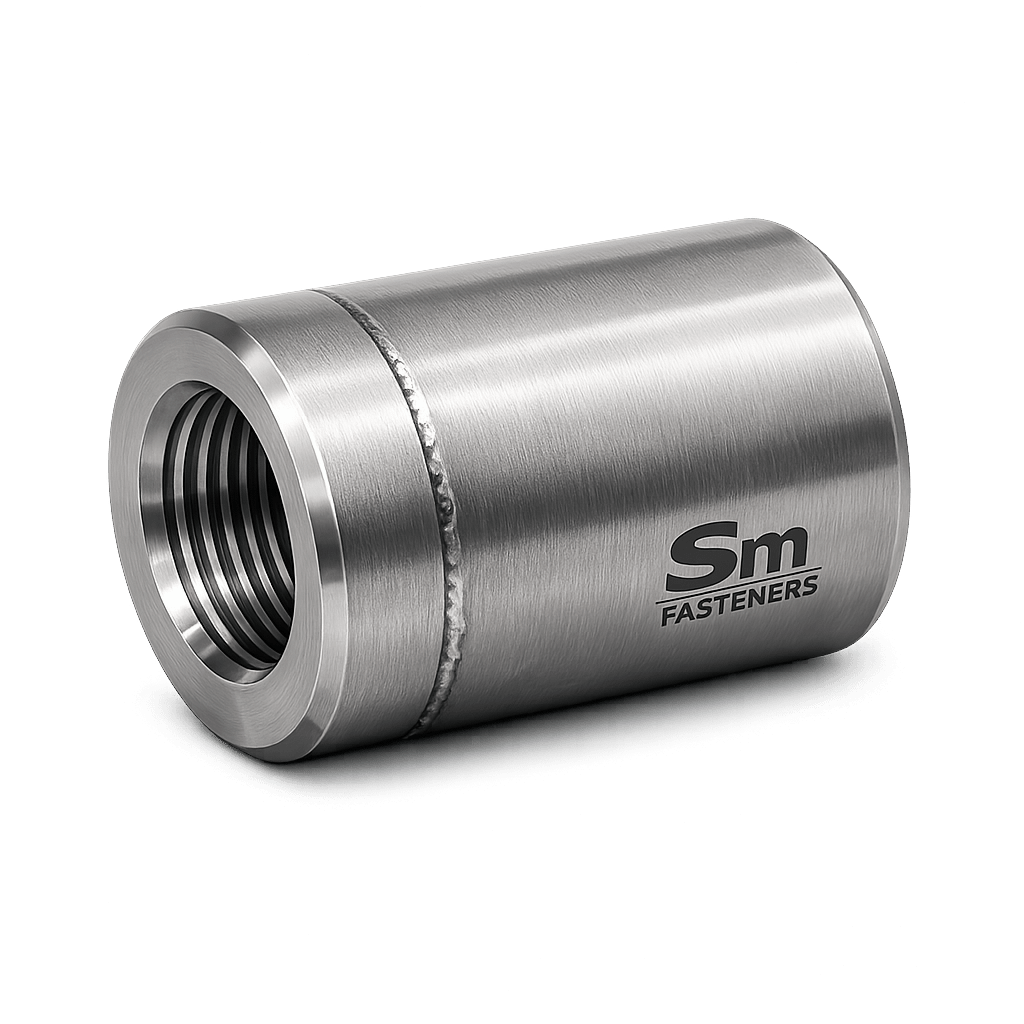
Barrel Nuts are precision internally threaded fastening components widely utilized in structural, mechanical, and equipment assemblies where:
- Access to one side of the joint is limited
- Flush or concealed fastening is required
- Load distribution must occur through transverse engagement
- Alignment tolerance between components must be accommodated
Unlike conventional hex nuts, the barrel nut operates as a cross-dowel fastening system, enabling perpendicular load transfer between mating members.
Within modern industrial engineering environments, barrel nuts are commonly deployed across:
- Heavy equipment assemblies
- Structural modular systems
- Oil & gas skids
- Machine frames
- Rail coach fabrication
- Offshore platforms
- Aerospace interiors
- Precision OEM equipment
SM Fasteners manufactures barrel nuts compliant with international mechanical and dimensional requirements, supporting EPC contractors, OEM manufacturers, and global infrastructure projects requiring traceable and certified fastening solutions.
2. Technical Definition
A Barrel Nut is defined as:
A cylindrical internally threaded fastener designed to accept a mating bolt or screw inserted perpendicular to its axis, creating a high-strength cross-locking mechanical joint.
Primary Components
| Feature | Function |
|---|---|
| Cylindrical Body | Provides shear bearing surface |
| Internal Thread | Receives bolt preload |
| Drive Slot / Hex / Cross Hole | Alignment during installation |
| Bearing Surface | Transfers clamping load |
| Cross Axis Engagement | Enables perpendicular joint formation |
Alternative Industry Terminology
- Cross Dowel Nut
- Cross Nut
- Furniture Connector Nut (non-industrial usage)
- Transverse Nut
- Joint Connector Nut
Industrial terminology generally favors Cross Dowel / Barrel Nut.
3. Functional Role in Engineering Assemblies
Barrel nuts serve a unique role where standard nut access is impossible.
Key engineering purposes:
- Blind joint fastening
- Orthogonal load transfer
- Compact structural integration
- Alignment correction during assembly
- Increased pull-out resistance in constrained spaces
4. Load Mechanics & Force Behaviour
4.1 Fundamental Load Path
When preload is applied:
- Bolt tension develops axial force.
- Barrel nut experiences internal thread loading.
- Load converts into radial compression + shear bearing.
- Joint members clamp together.
Force Distribution
| Force Type | Acting Location |
|---|---|
| Tensile Load | Bolt shank |
| Shear Load | Barrel body |
| Bearing Stress | Outer cylindrical surface |
| Compression | Clamped components |
| Frictional Resistance | Joint interface |
4.2 Preload and Clamping Principle
The barrel nut does not directly carry tensile load.
Instead:
Where:
- = Preload force (N)
- = Applied torque (Nm)
- = Nut factor (0.16–0.25 typical)
- = Nominal bolt diameter (m)
Worked Engineering Example
Bolt Size: M10
Torque Applied: 45 Nm
Nut Factor: 0.20
Result:
Joint preload ≈ 22.5 kN clamping force
5. Shear and Bearing Mechanics
Unlike conventional nuts, barrel nuts frequently operate under combined loading.
Shear Capacity Relationship
Where:
- = allowable shear stress
- = projected bearing area
Large barrel diameter increases:
- Shear resistance
- Anti-rotation stability
- Joint durability
6. Thread Engagement Requirements
Minimum engagement length:
| Bolt Grade | Minimum Engagement |
|---|---|
| Property Class 8.8 | 1.0 × Diameter |
| Property Class 10.9 | 1.2 × Diameter |
| Stainless A4-80 | 1.5 × Diameter |
| High Temp Nickel Alloy | 1.5–2.0 × Diameter |
Insufficient engagement leads to:
- Thread stripping
- Preload loss
- Fatigue cracking
7. Joint Design Principles
7.1 Design Objectives
A correctly engineered barrel nut joint must achieve:
- Controlled preload
- Alignment accuracy
- Fatigue resistance
- Accessibility during installation
- Long-term vibration stability
7.2 Design Guidelines
| Parameter | Engineering Recommendation |
|---|---|
| Hole Clearance | +0.1 to +0.2 mm |
| Barrel Fit | Sliding fit (H11 tolerance) |
| Load Direction | Perpendicular to barrel axis |
| Edge Distance | ≥ 2× diameter |
| Lubrication | Required for torque accuracy |
7.3 Alignment Considerations
Barrel nuts allow rotational alignment before tightening.
Advantages:
- Simplified field assembly
- Reduced installation error
- Compensation for fabrication tolerances
8. Torque–Tension Relationship
Torque applied divides into:
| Torque Portion | Approx. Distribution |
|---|---|
| Thread Friction | 40% |
| Bearing Friction | 50% |
| Useful Bolt Stretch | 10% |
Therefore:
- Surface condition strongly affects preload.
- Controlled lubrication improves reliability.
9. Failure Mechanisms
9.1 Thread Stripping
Caused by:
- Short engagement
- Soft materials
- Over-torque
9.2 Shear Failure
Occurs when:
- Transverse loads exceed bearing capacity.
- Barrel diameter is undersized.
9.3 Fatigue Failure
Common in:
- Rail vibration environments
- Rotating equipment
- Offshore platforms
Mitigation:
- Maintain ≥70% proof preload.
- Avoid cyclic slip.
9.4 Hydrogen Embrittlement
High-strength carbon steel barrel nuts require:
- Controlled plating processes
- Post-bake hydrogen relief
9.5 Stress Corrosion Cracking
Risk environments:
- Chlorides
- H₂S service
- Marine atmospheres
Material selection becomes critical.
10. Friction & Nut Factor Influence
Typical Nut Factor Values:
| Condition | Nut Factor (K) |
|---|---|
| Dry Steel | 0.22–0.25 |
| Oiled | 0.18–0.20 |
| PTFE Coated | 0.12–0.16 |
| MoS₂ Coated | 0.10–0.14 |
SM Fasteners supplies coated solutions enabling predictable preload control for EPC specifications.
11. Functional Advantages Over Conventional Nuts
| Characteristic | Barrel Nut | Hex Nut |
|---|---|---|
| Blind Assembly | Excellent | Poor |
| Flush Surface | Yes | No |
| Alignment Adjustment | High | Low |
| Space Requirement | Minimal | Higher |
| Structural Integration | Superior | Standard |
12. Engineering Selection Criteria
Selection must consider:
Mechanical Factors
- Required preload
- Shear load
- Fatigue life
Environmental Factors
- Corrosion exposure
- Temperature range
- Chemical compatibility
Installation Factors
- Tool access
- Assembly sequence
- Maintenance accessibility
13. Role in Modern Industrial Engineering
Barrel nuts support design trends toward:
- Modular construction
- Lightweight structures
- High-strength compact joints
- Maintenance-friendly assemblies
SM Fasteners integrates barrel nut engineering within ISO 9001 quality systems ensuring:
Global interchangeability
Material traceability
Dimensional repeatability
14. Product Types and Industrial Variants
Barrel nuts are produced in multiple engineered configurations to meet varying load requirements, installation constraints, alignment tolerances, and environmental conditions.
SM Fasteners manufactures both standardized and custom-engineered barrel nuts suitable for EPC projects, OEM assemblies, and export-grade industrial applications.
14.1 Standard Slotted Barrel Nut
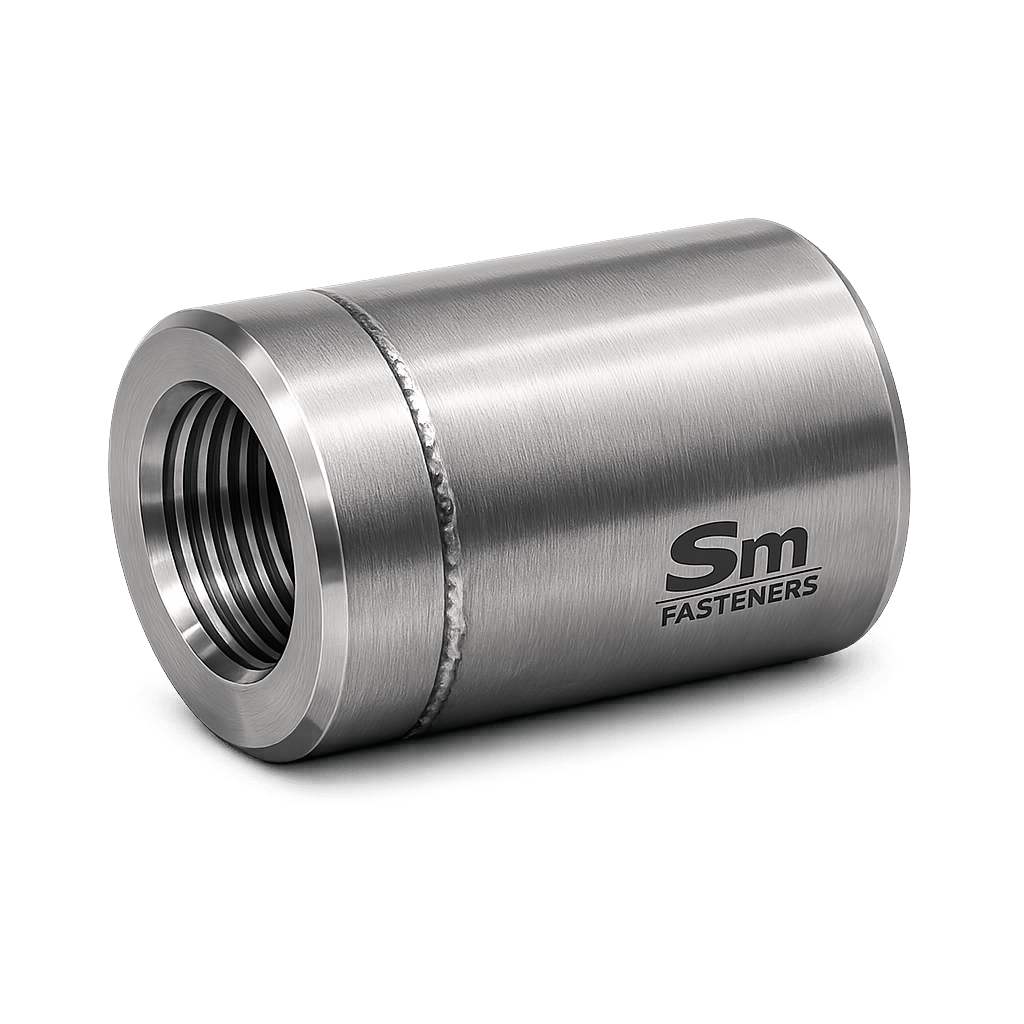
Description
- Cylindrical body
- Internal thread through axis
- External slot for alignment using screwdriver
Engineering Purpose
- Enables rotational alignment before bolt insertion
- Simplifies blind assembly operations
Typical Applications
- Structural frames
- Equipment panels
- Rail interiors
- Industrial enclosures
14.2 Hex Socket Barrel Nut
Configuration
- Internal hex drive
- Improved torque control
- Reduced installation slip
Advantages
- Higher installation precision
- Suitable for automated assembly lines
- Improved repeatability
Industries
- Automotive manufacturing
- Robotics
- Precision machinery
14.3 Cross-Hole Barrel Nut
Geometry
- Perpendicular cross-hole allows visual alignment
- Alignment pin or rod assists installation
Engineering Benefit
- Accurate thread positioning
- Faster field installation
Common in:
- Heavy equipment
- Steel fabrication
- Maintenance assemblies
14.4 Headed Barrel Nut
Includes:
- Flanged or headed end
- Increased bearing surface
Purpose
- Distributes compressive load
- Prevents pull-through in softer materials
Used in:
- Aluminum structures
- Composite assemblies
- Modular construction systems
14.5 Reduced Diameter Barrel Nut
Designed for:
- Thin wall assemblies
- Lightweight equipment
- Aerospace interiors
Provides:
- Weight reduction
- Space optimization
14.6 Custom Engineered Barrel Nuts — SM Fasteners Capability
SM Fasteners supplies engineered solutions including:
- Extended length engagement
- Dual threaded configurations
- Metric–Imperial hybrid threads
- High-temperature alloy variants
- PEEK barrel nuts for electrical isolation
Custom manufacturing supports:
- EPC project drawings
- OEM design integration
- Reverse engineering requirements
15. Dimensional Logic & Geometry Engineering
Barrel nut performance is strongly dependent on dimensional relationships between:
- Barrel diameter
- Thread size
- Engagement length
- Hole clearance
15.1 Critical Dimensional Parameters
| Parameter | Symbol | Engineering Function |
|---|---|---|
| Barrel Diameter | D₁ | Shear load capacity |
| Length | L | Thread engagement |
| Thread Diameter | d | Preload capability |
| Slot Width | S | Alignment control |
| Drive Depth | t | Installation torque capacity |
15.2 Dimensional Design Principles
1. Shear Capacity Dependency
Larger barrel diameter improves:
- Bearing strength
- Joint stability
- Fatigue resistance
2. Engagement Length Rule
Recommended:
For high-strength assemblies:
3. Hole Tolerance Selection
| Fit Type | Recommended Tolerance |
|---|---|
| Sliding Fit | H11 |
| Precision Assembly | H9 |
| Structural Assembly | H12 |
16. Standard Dimensional Specification Table
(Typical Industrial Reference — SM Fasteners Manufacturing Range)
| Thread Size | Pitch (mm) | Barrel Dia (mm) | Length (mm) | Slot Width (mm) | Recommended Bolt |
|—|—|—|—|—|
| M5 | 0.8 | 8 | 10–16 | 1.2 | M5 Socket Bolt |
| M6 | 1.0 | 10 | 12–20 | 1.5 | M6 Bolt |
| M8 | 1.25 | 12 | 14–30 | 2.0 | M8 Bolt |
| M10 | 1.5 | 16 | 20–40 | 2.5 | M10 Bolt |
| M12 | 1.75 | 18 | 25–50 | 3.0 | M12 Bolt |
| M16 | 2.0 | 24 | 35–70 | 4.0 | M16 Bolt |
| M20 | 2.5 | 30 | 45–80 | 5.0 | M20 Bolt |
(Dimensions configurable per project drawings.)
17. Barrel Nut Geometry vs Load Capacity
| Barrel Diameter | Relative Shear Capacity | Recommended Use |
|---|---|---|
| Small (≤10 mm) | Low | Panels & enclosures |
| Medium (12–18 mm) | Medium | Machinery |
| Large (>20 mm) | High | Structural joints |
18. Thread Forms & Compatibility
Barrel nuts must match global thread systems used across EPC projects.Z
18.1 Metric Thread Standards
| Standard | Designation | Application |
|---|---|---|
| ISO 261 | Metric coarse | General engineering |
| ISO 965 | Tolerances | Precision assemblies |
| ISO 68-1 | Thread profile | International standard |
Tolerance Classes:
- 6H — standard internal thread
- 5H — precision fit
- 7H — loose fit
18.2 Unified Thread Series (Imperial)
| Thread Type | Standard | Application |
|---|---|---|
| UNC | ASME B1.1 | Structural equipment |
| UNF | ASME B1.1 | Vibration resistance |
| UNEF | Aerospace | Fine adjustment |
18.3 British Thread Systems
| Standard | Application |
|---|---|
| BSW | Legacy heavy equipment |
| BSF | Fine pitch machinery |
| BSP | Pressure assemblies (non-structural) |
SM Fasteners supplies cross-compatible barrel nuts supporting global interchangeability.
19. Applicable International Standards
Although barrel nuts are often custom-engineered, compliance is guided by recognized fastener standards.
19.1 Dimensional & Thread Standards
| Standard | Scope |
|---|---|
| ISO 898-1 | Mechanical properties carbon steel |
| ISO 3506 | Stainless steel fasteners |
| ISO 965 | Thread tolerance |
| DIN 7979 / DIN 7965 (reference geometry) | Cross dowel concept |
| ASME B1.1 | Unified threads |
| BS 3692 | Metric fasteners |
19.2 Mechanical Property Classes
| Property Class | Typical Use |
|---|---|
| 8.8 | Structural assemblies |
| 10.9 | Heavy machinery |
| 12.9 | High-load compact joints |
| A2-70 | Corrosion resistant |
| A4-80 | Marine & offshore |
20. Thread Standards & Tolerance Table
| Thread System | Internal Class | External Class | Fit Type |
|---|---|---|---|
| Metric | 6H | 6g | Standard |
| Metric Precision | 5H | 5g6g | Close fit |
| UNC | 2B | 2A | General |
| UNF | 2B | 2A | High vibration |
| BSW | Medium | Medium | Legacy |
21. Interchangeability Considerations
Engineering procurement must confirm:
- Thread system compatibility
- Property class alignment
- Material equivalency
- Coating compatibility
- Torque specification equivalence
Improper interchangeability may result in:
- Galling
- Incorrect preload
- Thread failure
- Inspection rejection
SM Fasteners maintains controlled manufacturing documentation ensuring interchangeability across global standards.
22. Installation Geometry Requirements
Recommended installation parameters:
| Parameter | Recommendation |
|---|---|
| Alignment Slot Visibility | Required |
| Bolt Entry Angle | ≤ 2° deviation |
| Minimum Edge Distance | ≥ 2D |
| Counterbore Depth | Flush fit preferred |
23. Engineering Weight Chart — Barrel Nut
(Approximate Reference — ISO Density Basis)
| Size | Length (mm) | Weight / Piece (kg) | Weight / 100 pcs (kg) |
|---|---|---|---|
| M6 × 12 | 12 | 0.007 | 0.70 |
| M8 × 20 | 20 | 0.018 | 1.80 |
| M10 × 25 | 25 | 0.035 | 3.50 |
| M12 × 30 | 30 | 0.055 | 5.50 |
| M16 × 40 | 40 | 0.120 | 12.0 |
| M20 × 50 | 50 | 0.220 | 22.0 |
Weights aligned with SM Fasteners export packing calculations.
24. Design Integration in Modern Engineering Systems
Barrel nuts enable:
- Modular steel systems
- Pre-engineered buildings
- Maintenance-accessible machinery
- Precision mechanical assemblies
Their geometry supports high-strength fastening in confined or inaccessible zones, making them critical components in advanced industrial design.
25. Material Grades and Engineering Selection Criteria
Material selection for barrel nuts is a critical engineering decision directly influencing:
- Load carrying capacity
- Corrosion resistance
- Fatigue performance
- Temperature stability
- Sour service compliance
- Lifecycle cost
SM Fasteners manufactures barrel nuts across carbon steels, stainless steels, duplex alloys, nickel alloys, and advanced polymer materials (PEEK) to meet global industrial requirements.
25.1 Material Selection Logic
Material choice must consider:
| Engineering Factor | Influence |
|---|---|
| Mechanical load | Determines strength grade |
| Environment | Governs corrosion resistance |
| Temperature | Controls alloy selection |
| Inspection requirement | Determines traceability level |
| Industry standard | ISO / ASTM compliance |
26. Industrial Material Grades — SM Fasteners Capability
26.1 Carbon Steel Grades
| Material | Standard | Typical Property Class | Application |
|---|---|---|---|
| C35 / C45 | EN 10083 | 8.8 | Structural joints |
| 40Cr | EN 10083 | 10.9 | Machinery |
| 42CrMo4 | EN 10083 | 12.9 | Heavy load assemblies |
| ASTM A108 | ASTM | Custom | OEM equipment |
Advantages
- High strength
- Economical
- Excellent machinability
Limitation
- Requires protective coating
26.2 Stainless Steel Grades
| Grade | ISO Class | Corrosion Resistance | Industry Use |
|---|---|---|---|
| SS304 | A2-70 | General corrosion | Construction |
| SS316 | A4-70 | Marine | Offshore |
| SS316L | A4-80 | Chloride resistant | Chemical plants |
| SS321 | — | High temperature | Power plants |
26.3 Duplex & Super Duplex Alloys
| Grade | Standard | Benefit |
|---|---|---|
| Duplex 2205 | ASTM A182 | High strength + corrosion |
| Super Duplex 2507 | ASTM A182 | Offshore & subsea |
Used where carbon steel cannot survive chloride environments.
26.4 Nickel & High-Performance Alloys
SM Fasteners supports demanding EPC applications requiring:
| Alloy | Typical Environment |
|---|---|
| Inconel 625 | High temperature |
| Incoloy 825 | Acid service |
| Hastelloy C276 | Chemical processing |
| Monel 400 | Seawater |
| SMO 254 | Chloride exposure |
26.5 PEEK Barrel Nuts (Advanced Engineering Option)
Polyether Ether Ketone fasteners provide:
- Electrical insulation
- Chemical inertness
- Lightweight design
- Non-magnetic properties
- Continuous temperature up to ~250°C
Applications include:
- Semiconductor equipment
- LNG instrumentation
- Offshore electrical systems
- Hydrogen installations
27. Material Comparison Table
| Material | Yield Strength (MPa) | UTS (MPa) | Corrosion Resistance | Temp Limit °C | Relative Cost | Typical Industry |
|---|---|---|---|---|---|---|
| Carbon Steel 8.8 | 640 | 800 | Low | 300 | Low | Construction |
| Alloy Steel 10.9 | 900 | 1040 | Low | 350 | Medium | Machinery |
| SS304 | 450 | 700 | Medium | 400 | Medium | Infrastructure |
| SS316 | 450 | 700 | High | 450 | Medium | Marine |
| Duplex 2205 | 620 | 850 | Very High | 300 | High | Offshore |
| Inconel 625 | 460 | 830 | Excellent | 700 | Very High | Power/LNG |
| PEEK | 100 | 170 | Excellent | 250 | High | Electrical |
28. Corrosion Resistance vs Environment
| Environment | Carbon Steel | SS304 | SS316 | Duplex | Nickel Alloy | PEEK |
|---|---|---|---|---|---|---|
| Indoor Dry | ✔ | ✔ | ✔ | ✔ | ✔ | ✔ |
| Marine Atmosphere | ✖ | △ | ✔ | ✔ | ✔ | ✔ |
| Seawater | ✖ | ✖ | ✔ | ✔✔ | ✔✔ | ✔✔ |
| Acidic Chemical | ✖ | △ | ✔ | ✔ | ✔✔ | ✔✔ |
| H₂S / Sour Service | ✖ | △ | ✔ | ✔✔ | ✔✔ | ✔ |
| LNG Cryogenic | △ | ✔ | ✔ | ✔ | ✔✔ | ✔ |
✔✔ = Excellent
29. Mechanical Properties by Property Class
| Property Class | Yield Strength (MPa) | Tensile Strength (MPa) | Hardness (HRC) |
|---|---|---|---|
| 8.8 | ≥640 | ≥800 | 22–32 |
| 10.9 | ≥900 | ≥1040 | 32–39 |
| 12.9 | ≥1080 | ≥1220 | 39–44 |
| A2-70 | ≥450 | ≥700 | — |
| A4-80 | ≥600 | ≥800 | — |
30. NACE MR0175 / ISO 15156 Compliance
For oil & gas sour environments:
Requirements include:
- Hardness ≤ 22 HRC (carbon steels)
- Controlled heat treatment
- Sulfide stress cracking resistance
- Verified material chemistry
SM Fasteners supplies compliant barrel nuts upon project specification.
31. Heat Treatment Processes
Heat treatment defines final mechanical performance.
31.1 Quenching & Tempering
Used for:
- Property classes 8.8 / 10.9 / 12.9
Process:
- Austenitizing (~850–900°C)
- Oil or polymer quench
- Tempering (450–650°C)
Results:
- High tensile strength
- Improved fatigue resistance
31.2 Solution Annealing (Stainless Steel)
Purpose:
- Restore corrosion resistance
- Dissolve carbides
Temperature range:
1050–1100°C followed by rapid cooling.
31.3 Age Hardening (Nickel Alloys)
Enhances:
- Creep resistance
- High temperature strength
31.4 Stress Relieving
Applied after machining to:
- Reduce residual stress
- Improve dimensional stability
32. Hardness Control Requirements
| Application | Maximum Hardness |
|---|---|
| General Engineering | 44 HRC |
| Zinc Plated Fasteners | ≤ 39 HRC |
| Sour Service | ≤ 22 HRC |
| Stainless Steel | As per ISO 3506 |
33. End-to-End Manufacturing Workflow
SM Fasteners operates under ISO 9001 quality systems ensuring full process control.
33.1 Raw Material Verification
Incoming inspection includes:
- Mill Test Certificate (MTC)
- Chemical analysis verification
- Heat number traceability
- Ultrasonic inspection (if required)
33.2 Manufacturing Route Selection
| Method | Application |
|---|---|
| Cold forging | High volume |
| Hot forging | Large diameters |
| CNC machining | Precision/custom parts |
33.3 Forging Operations
Benefits:
- Grain flow alignment
- Higher fatigue strength
- Improved toughness
33.4 CNC Machining
Processes include:
- Turning
- Boring
- Cross drilling
- Slot milling
Ensures:
- Concentricity
- Tight tolerances
- Custom geometry capability
33.5 Thread Manufacturing
Thread Rolling (Preferred)
Advantages:
- Work-hardened threads
- Increased fatigue life
- Smooth surface finish
Thread Cutting
Used for:
- Hard alloys
- Small production runs
- Exotic materials
33.6 Heat Treatment Execution
Performed in controlled furnaces:
- Temperature monitoring
- Batch traceability
- Controlled atmosphere
33.7 Deburring & Surface Preparation
Processes:
- Vibratory finishing
- Shot blasting
- Mechanical polishing
34. Surface Finishing and Coatings
Surface engineering determines long-term durability.
34.1 Common Industrial Coatings
| Coating | Standard | Corrosion Protection |
|---|---|---|
| Zinc Plating | ISO 4042 | Moderate |
| Hot Dip Galvanizing | ISO 1461 | High |
| Mechanical Galvanizing | ASTM B695 | Uniform coating |
| Dacromet / Geomet | OEM Spec | Very High |
| Phosphate | MIL-DTL-16232 | Assembly lubrication |
| PTFE | Project Spec | Anti-galling |
| Black Oxide | ASTM D769 | Minimal protection |
35. Surface Finish Performance Comparison
| Coating | Salt Spray Resistance (hrs) | Friction Control | Hydrogen Risk |
|---|---|---|---|
| Zinc | 72–240 | Medium | Possible |
| HDG | 500–1000 | High friction | None |
| Dacromet | 1000+ | Stable | Low |
| PTFE | 1000+ | Excellent | None |
| Phosphate + Oil | 24–72 | Excellent | None |
36. Hydrogen Embrittlement Prevention
Critical for high-strength barrel nuts:
Controls include:
- Controlled electroplating
- Post-bake at 200°C
- Hardness limitation
- Process certification
37. Surface Engineering for Offshore & EPC Projects
Recommended systems:
| Environment | Recommended Finish |
|---|---|
| Offshore | Geomet / PTFE |
| Chemical Plant | Stainless / Nickel alloy |
| Infrastructure | HDG |
| Power Plant | Phosphate + Oil |
| LNG | Stainless or Nickel alloy |
38. Manufacturing Traceability — SM Fasteners System
Each production lot includes:
- Heat number marking
- Batch traceability
- Inspection records
- Process history
- Material certification linkage
Integrated within SM Fasteners’ ISO 9001 certified quality management system and verified under UKAF accreditation framework.
39. Engineering Reliability Philosophy
SM Fasteners manufacturing approach prioritizes:
- Controlled metallurgy
- Repeatable mechanical performance
- Global standards compliance
- EPC procurement acceptance
- Export-ready documentation
40. Inspection & Quality Control Philosophy
Barrel nuts used in industrial assemblies form part of load-critical fastening systems.
Therefore, inspection extends beyond dimensional verification and includes:
- Mechanical performance validation
- Metallurgical conformity
- Surface integrity confirmation
- Traceability assurance
SM Fasteners operates under an ISO 9001 certified quality management system, aligned with international third-party inspection practices followed by EPC contractors and global OEMs.
41. Incoming Material Inspection
Every manufacturing batch begins with raw material verification.
Inspection Scope
| Inspection | Method | Objective |
|---|---|---|
| Mill Test Certificate Review | EN 10204 | Chemistry verification |
| Chemical Analysis | Spectrometer | Alloy confirmation |
| Visual Inspection | ISO 3269 | Surface defects |
| Dimensional Check | Calibrated gauges | Stock conformity |
| Heat Number Identification | Traceability marking | Batch tracking |
42. In-Process Dimensional Inspection
Critical dimensions influencing performance:
- Barrel diameter
- Thread concentricity
- Slot alignment
- Bore straightness
- Thread pitch accuracy
Measurement Equipment
- Digital micrometers
- Plug gauges (GO/NO-GO)
- Coordinate Measuring Machine (CMM)
- Optical profile projector
43. Thread Inspection Requirements
| Test | Standard |
|---|---|
| Thread Gauge Inspection | ISO 1502 |
| Pitch Diameter | ASME B1.2 |
| Lead Accuracy | ISO 965 |
| Surface Finish | ISO 4287 |
Acceptance typically requires 6H internal tolerance class unless otherwise specified.
44. Mechanical Testing
Mechanical verification confirms property class compliance.
| Test | Standard | Purpose |
|---|---|---|
| Proof Load Test | ISO 898-1 | Load carrying capacity |
| Hardness Test | ISO 6508 | Heat treatment verification |
| Tensile Test | ASTM E8 | Strength validation |
| Impact Test | ASTM E23 | Toughness |
| Torque Test | ISO 16047 | Torque–tension relationship |
45. Non-Destructive Testing (NDT)
Applied for critical projects.
| Method | Application |
|---|---|
| Magnetic Particle Testing (MT) | Crack detection |
| Dye Penetrant Testing (PT) | Surface flaws |
| Ultrasonic Testing (UT) | Internal discontinuities |
| Eddy Current | Surface integrity |
46. Positive Material Identification (PMI)
Mandatory for:
- Duplex alloys
- Nickel alloys
- Sour service components
- LNG projects
PMI ensures alloy authenticity before dispatch.
47. Final Inspection & Documentation
Each shipment may include:
- Dimensional inspection report
- Mechanical test report
- Heat treatment report
- Coating thickness report
- Traceability record
Certification Standards
| Document | Standard |
|---|---|
| Mill Test Certificate | EN 10204 3.1 |
| Third Party Certification | EN 10204 3.2 |
| Certificate of Conformity | ISO 9001 |
| Inspection Release Note | Project specification |
48. Failure Prevention & Reliability Control
Engineering failures prevented through:
- Controlled preload verification
- Hardness limitation control
- Hydrogen embrittlement mitigation
- Coating compatibility checks
- Thread tolerance verification
49. Industry Applications
49.1 Construction & Structural Steel
Used in:
- Modular buildings
- Architectural steel assemblies
- Prefabricated structures
Benefits:
- Concealed fastening
- Simplified field installation
- Reduced structural protrusions
49.2 Oil & Gas Industry
Applications across:
Upstream
- Drilling equipment frames
- Skid structures
Midstream
- Pipeline supports
- Compressor packages
Downstream
- Refinery equipment panels
- Maintenance access structures
Compliance often requires:
- NACE MR0175 materials
- Traceable heat numbers
49.3 Power Generation
Used in:
- Turbine enclosures
- Boiler assemblies
- Generator housings
Materials:
- Alloy steel
- Stainless steel
- Nickel alloys
49.4 Petrochemical & Chemical Processing
Requirements:
- Corrosion resistance
- Chemical compatibility
- Controlled preload reliability
Common materials:
- SS316L
- Duplex
- Hastelloy
49.5 LNG & Offshore Platforms
Critical characteristics:
- Chloride resistance
- Fatigue resistance
- Low maintenance fastening
Preferred materials:
- Super Duplex
- Inconel
- SMO 254
49.6 Automotive & Heavy Equipment
Applications:
- Chassis assemblies
- Hydraulic systems
- Machinery frames
Advantages:
- Compact fastening
- High vibration resistance
49.7 Railways & Infrastructure
Used for:
- Coach interiors
- Equipment mounting
- Structural panels
Benefits:
- Anti-loosening reliability
- Service accessibility
49.8 Shipbuilding
Barrel nuts support:
- Marine structural systems
- Engine room installations
- Deck equipment mounting
Materials typically A4 stainless or duplex alloys.
49.9 PEEK Barrel Nut Applications
PEEK fasteners supplied by SM Fasteners support:
- Electrical isolation systems
- Semiconductor manufacturing equipment
- Hydrogen energy systems
- Offshore instrumentation
Advantages:
- Non-corrosive
- Lightweight
- Electrically insulating
50. Export Capability & Global Supply Readiness
SM Fasteners supports international procurement models including:
- EPC contracting
- OEM supply agreements
- Project-based exports
- Annual rate contracts
Industrial Packaging Standards
| Packaging Type | Purpose |
|---|---|
| VCI Packaging | Corrosion protection |
| Thread Protectors | Damage prevention |
| Heat-sealed bags | Moisture control |
| Wooden Crates | Heavy export loads |
Export Crating
- ISPM-15 compliant fumigated wooden crates
- Containerized shipment readiness
- Barcode traceability
- Batch segregation
Export Documentation Package
Each shipment may include:
- Commercial invoice
- Packing list
- Mill Test Certificate
- Inspection report
- Heat treatment certificate
- Coating compliance report
- Certificate of Origin
- Certificate of Conformity
51. Mechanical Properties Table — Grade Wise
| Grade | Proof Load (MPa) | Yield (MPa) | Tensile Strength (MPa) |
|---|---|---|---|
| 8.8 | 580 | 640 | 800 |
| 10.9 | 830 | 900 | 1040 |
| 12.9 | 970 | 1080 | 1220 |
| A2-70 | 450 | 450 | 700 |
| A4-80 | 600 | 600 | 800 |
52. Proof Load & Tensile Capacity (Typical Values)
| Size | Tensile Area (mm²) | Proof Load 8.8 (kN) | Proof Load 10.9 (kN) |
|---|---|---|---|
| M6 | 20.1 | 11.6 | 16.6 |
| M8 | 36.6 | 21.2 | 30.4 |
| M10 | 58.0 | 33.6 | 48.1 |
| M12 | 84.3 | 48.9 | 70.0 |
| M16 | 157 | 91.0 | 130.0 |
| M20 | 245 | 142 | 203 |
53. Tightening Torque Chart
(Lubricated condition — reference values)
| Size | Grade 8.8 (Nm) | Grade 10.9 (Nm) | Grade 12.9 (Nm) |
|---|---|---|---|
| M6 | 10 | 14 | 17 |
| M8 | 25 | 35 | 41 |
| M10 | 49 | 69 | 83 |
| M12 | 85 | 120 | 145 |
| M16 | 210 | 300 | 355 |
| M20 | 410 | 580 | 690 |
54. Preload Calculation — Engineering Example
Formula:
Example
- Bolt: M12
- Torque: 120 Nm
- Nut Factor: 0.18
Preload ≈ 55.5 kN
55. Surface Finish Comparison Table
| Finish | Corrosion Resistance | Friction Stability | Offshore Suitability |
|---|---|---|---|
| Zinc | Medium | Moderate | Limited |
| HDG | High | High | Good |
| Dacromet | Very High | Stable | Excellent |
| PTFE | Excellent | Low friction | Excellent |
| Stainless Passive | Excellent | Stable | Excellent |
56. Thread Standards & Tolerances Summary
| System | Standard | Internal Class |
|---|---|---|
| Metric | ISO 965 | 6H |
| UNC | ASME B1.1 | 2B |
| UNF | ASME B1.1 | 2B |
| BSW | BS 84 | Medium |
| BSF | BS 84 | Close |
57. Engineering Weight Chart — Export Reference
| Size | Length | Weight/Pc (kg) | Weight/100 pcs (kg) |
|---|---|---|---|
| M6×12 | 12 mm | 0.007 | 0.70 |
| M8×20 | 20 mm | 0.018 | 1.80 |
| M10×25 | 25 mm | 0.035 | 3.50 |
| M12×30 | 30 mm | 0.055 | 5.50 |
| M16×40 | 40 mm | 0.120 | 12.0 |
| M20×50 | 50 mm | 0.220 | 22.0 |
Aligned with SM Fasteners packing and logistics calculations.
58. SM FASTENERS — ENGINEERING & SUPPLY INTEGRATION
SM Fasteners supports global projects through:
- ISO 9001 certified manufacturing systems
- MSME registered industrial production
- UKAF accredited quality framework
- Advanced alloy manufacturing capability
- Custom fastener engineering
- PEEK and high-performance material solutions
The company’s manufacturing and inspection philosophy ensures:
✔ International standards compliance
✔ Full material traceability
✔ EPC procurement acceptance
✔ Consistent mechanical reliability
✔ Global export readiness