

Cross Dowel Nut
1. Industry Context
Cross Dowel Nuts — also known as Barrel Cross Nuts, Joint Connector Nuts, or Transverse Barrel Nuts — are precision internal-threaded fastening components engineered for orthogonal load transfer within concealed structural joints.
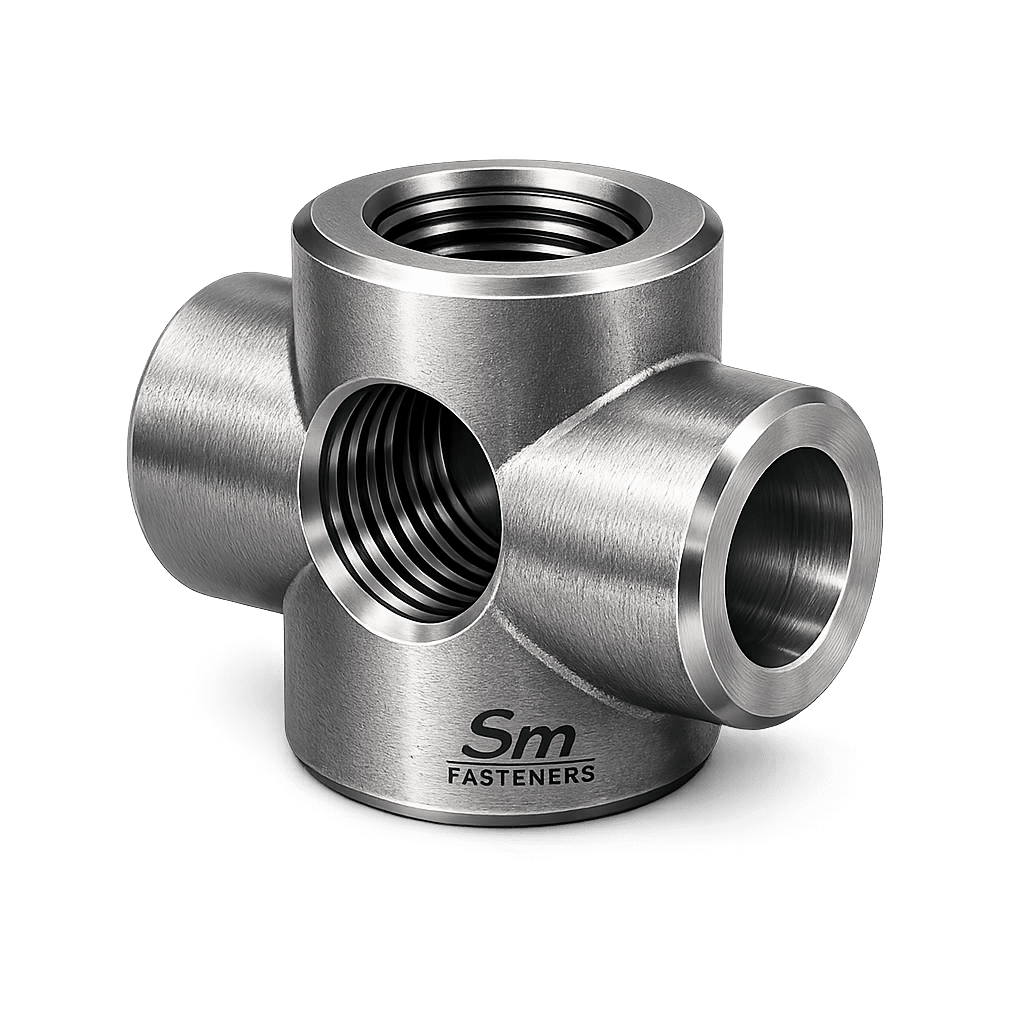
Unlike conventional hex nuts that clamp along a single axis, cross dowel nuts enable perpendicular bolt engagement, making them essential where:
- Access to rear-side tightening is restricted
- Joint thickness prevents through-bolting
- Structural alignment must be maintained during assembly
- High clamping force is required inside confined assemblies
Industrial adoption has expanded beyond furniture-origin applications into:
- Modular structural systems
- Heavy equipment assemblies
- Steel fabrications
- Transport equipment
- Offshore modules
- Rail coach structures
- Equipment enclosures
- Renewable energy frames
Modern EPC projects increasingly specify cross dowel systems for field-installable precision assemblies where welding is undesirable or restricted.
SM Fasteners manufactures cross dowel nuts under controlled ISO 9001 quality systems supporting global infrastructure and industrial procurement requirements.
2. Technical Definition
A Cross Dowel Nut is a cylindrical internally threaded fastener containing:
- A transverse threaded bore
- External cylindrical body
- Alignment slot or drive feature
- Precision-machined thread axis perpendicular to bolt axis
Functional Concept
The bolt engages from one direction while the dowel nut distributes load across the cylindrical body embedded inside a structural member.
This configuration converts tightening torque into:
- Radial bearing pressure
- Axial clamping force
- Distributed shear resistance
3. Functional Role in Engineering Assemblies
Cross dowel nuts perform several simultaneous functions:
| Function | Engineering Benefit |
|---|---|
| Hidden fastening | Improved aesthetics & protection |
| Orthogonal connection | Complex geometry assemblies |
| High clamp force | Structural rigidity |
| Load distribution | Reduced localized stress |
| Repeatable assembly | Maintenance accessibility |
Typical installation environments include:
- Hollow sections
- Aluminum profiles
- Thick polymer structures
- Composite panels
- Structural tubes
4. Load Mechanics & Force Behaviour
4.1 Load Transfer Mechanism
When torque is applied to the bolt:
- Bolt tension develops
- Thread flank friction converts torque → preload
- Dowel body transmits load radially
- Assembly experiences compression and shear stabilization
The cross dowel behaves as a bearing-supported nut rather than a free-standing threaded component.
4.2 Preload Development
Primary clamping force equation:
Where:
| Symbol | Meaning |
|---|---|
| | Preload force (N) |
| Applied torque (Nm) | |
| Nut factor | |
| Nominal bolt diameter (m) |
4.3 Worked Engineering Example
Bolt: M10 Class 8.8
Torque: 45 Nm
Nut Factor (Lubricated): 0.18
Diameter: 0.01 m
This preload creates compressive interface stress preventing slip.
4.4 Force Components Acting on Cross Dowel Nut
| Load Type | Behavior |
|---|---|
| Axial tension | Bolt preload |
| Radial compression | Bearing contact |
| Double shear | Bolt shank resistance |
| Bending restraint | Joint stabilization |
| Fatigue loading | Cyclic preload retention |
5. Joint Design Principles
5.1 Thread Engagement Requirement
Minimum engagement:
5.2 Alignment Control
Critical design requirement:
- Thread axis must align precisely with bolt axis.
- Misalignment causes:
- Thread galling
- Reduced preload
- Fatigue cracking
SM Fasteners maintains tight bore tolerances during CNC machining to ensure assembly reliability.
5.3 Bearing Surface Engineering
Cross dowel nuts distribute load over cylindrical contact area.
Bearing stress:
Where:
- = dowel diameter
- = engagement length
5.4 Torque–Tension Relationship
Preload loss sources:
- Thread friction (≈40%)
- Under-head friction (≈50%)
- Useful tension (≈10%)
Therefore, surface finishing and lubrication significantly influence performance.
5.5 Failure Mechanisms
| Failure Mode | Cause | Prevention |
|---|---|---|
| Thread stripping | Soft material | Proper grade selection |
| Dowel rotation | Poor alignment | Slot orientation control |
| Fatigue cracking | Cyclic load | Correct preload |
| Shear failure | Undersized bolt | Engineering calculation |
| Hydrogen embrittlement | Improper plating | Controlled coating process |
| Stress corrosion cracking | Chloride exposure | Duplex/SMO materials |
5.6 Joint Design Selection Criteria
Engineers must evaluate:
- Load magnitude
- Joint thickness
- Installation access
- Environment exposure
- Maintenance requirements
- Disassembly frequency
5.7 Advantages Over Conventional Nuts
| Parameter | Cross Dowel Nut | Hex Nut |
|---|---|---|
| Access requirement | One side | Two sides |
| Load distribution | Cylindrical | Point |
| Hidden installation | Yes | No |
| Alignment capability | High | Low |
| Structural integration | Excellent | Moderate |
6. Engineering Relevance in Industrial Sectors
Cross dowel nuts enable modular construction widely used in:
- EPC skid packages
- Offshore equipment frames
- Rail interiors
- Wind turbine service platforms
- Industrial enclosures
- Heavy machinery guards
7. SM Fasteners Engineering Position
SM Fasteners supplies precision cross dowel nuts manufactured using:
- ISO 9001 certified production systems
- UKAF accredited quality management
- MSME recognized manufacturing infrastructure
- Advanced CNC machining capability
- Global material sourcing with traceable MTC certification
Manufacturing capability includes:
- Metric and imperial threads
- Exotic alloys
- PEEK engineered polymer variants
- Custom geometry development
8. Product Types and Variants
Cross dowel nuts are manufactured in multiple engineered configurations depending on installation method, load requirement, accessibility, and alignment control.
Unlike standard nuts, geometry variation directly influences assembly performance and preload reliability.
8.1 Standard Slotted Cross Dowel Nut
Description
- Cylindrical body
- Internal transverse thread
- External screwdriver alignment slot
Engineering Purpose
- Allows rotational positioning before bolt insertion
- Visual alignment reference during installation
Typical Use
- Structural frames
- Machine guards
- Modular assemblies
- Aluminum extrusion systems
8.2 Hex Socket Drive Cross Dowel Nut
Features
- Internal hex drive
- Torque-controlled alignment
- Reduced installation error
Advantages
- Suitable for automated assembly
- Higher installation accuracy
- Reduced risk of rotation during tightening
Common in:
- Automotive assemblies
- Rail coach manufacturing
- Equipment housings
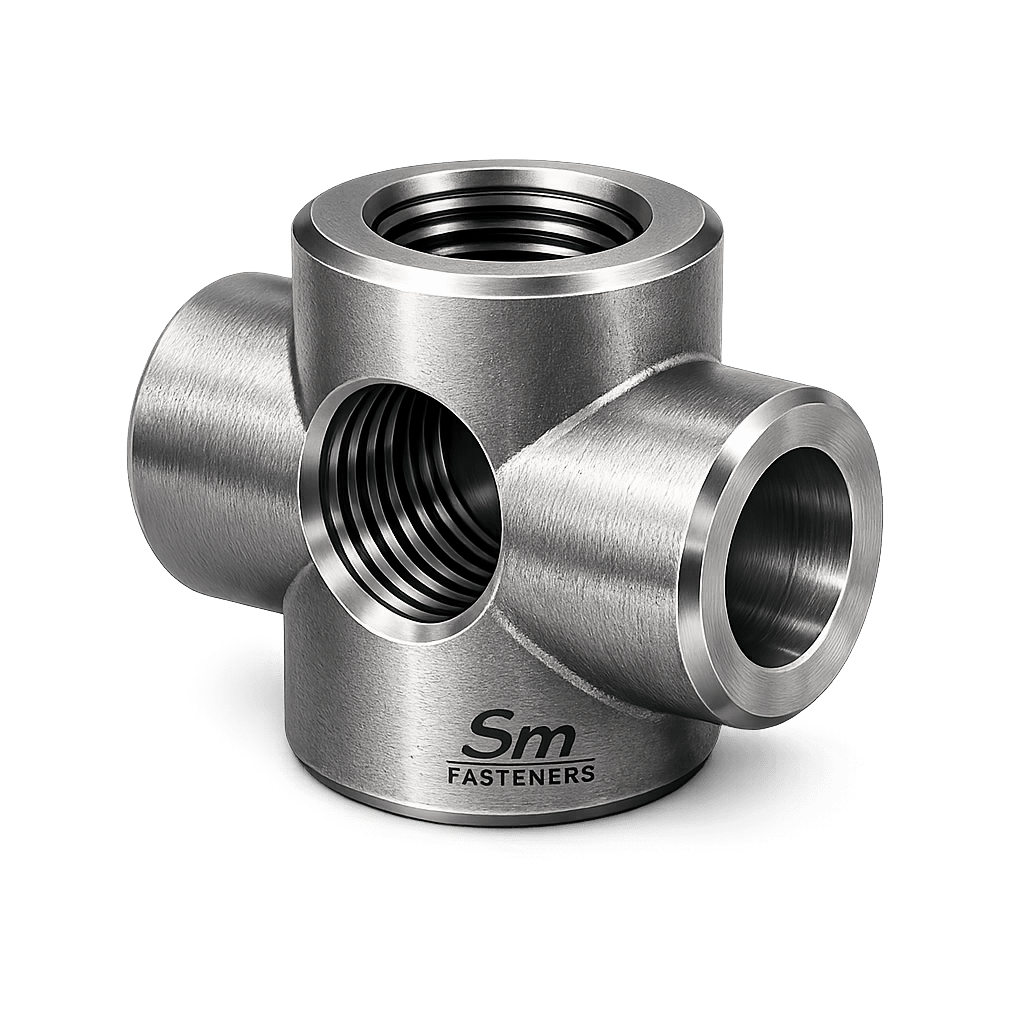
8.3 Flat-End Precision Cross Dowel
Machined with tight perpendicularity tolerances.
Used where:
- High clamp precision required
- CNC-machined structures
- Aerospace ground equipment
- Robotics frames
8.4 Chamfered-End Cross Dowel
Provides easier insertion into drilled bore.
Benefits:
- Faster field assembly
- Reduced bore damage
- Improved alignment tolerance
8.5 Flanged Cross Dowel Nut
**
Includes integral shoulder flange.
Engineering Advantages:
- Increased bearing area
- Reduced embedment stress
- Improved pull-through resistance
Recommended for:
- Aluminum structures
- Polymer assemblies
- Composite panels
8.6 Offset Thread Cross Dowel
Thread centerline slightly offset from geometric center.
Purpose:
- Compensates manufacturing tolerances
- Enables preload correction during installation
Used in adjustable mechanical structures.
8.7 Double Thread Cross Dowel
Contains threaded openings from both directions.
Applications:
- Multi-member joints
- Cross-rail assemblies
- Equipment racks
8.8 PEEK Cross Dowel Nuts (High-Performance Polymer Variant)
SM Fasteners manufactures engineered polymer cross dowels using PEEK (Polyether Ether Ketone).
Key Properties:
- Electrically insulating
- Non-magnetic
- Chemical resistant
- Lightweight
- Suitable up to ~260°C
Used in:
- Semiconductor equipment
- Medical devices
- Offshore instrumentation
- Cryogenic systems
9. Dimensional Logic and Geometry
Cross dowel geometry is governed by three critical relationships:
- Bolt diameter
- Dowel outside diameter
- Thread engagement length
9.1 Fundamental Geometric Parameters
| Symbol | Parameter |
|---|---|
| D | External dowel diameter |
| L | Overall dowel length |
| d | Internal thread size |
| S | Alignment slot width |
| E | Thread center offset |
| Le | Thread engagement length |
9.2 Engineering Proportion Guidelines
Typical design ratios:
| Parameter | Recommended Ratio |
|---|---|
| D ≈ | 1.6–2.2 × bolt diameter |
| L ≈ | 1.2–1.5 × D |
| Thread engagement | ≥ 1 × bolt diameter |
| Wall thickness | ≥ 0.25 × bolt diameter |
These ratios ensure adequate resistance against:
- Radial collapse
- Thread stripping
- Shear deformation
10. Standard Dimensional Specification Table
(Representative manufacturing sizes — SM Fasteners customizable)
| Thread Size | Pitch (mm) | Dowel OD (mm) | Length L (mm) | Slot Width (mm) | Recommended Hole Ø |
|---|---|---|---|---|---|
| M5 | 0.8 | 8 | 10 | 1.2 | 8.1 |
| M6 | 1.0 | 10 | 12 | 1.5 | 10.1 |
| M8 | 1.25 | 12 | 14 | 1.8 | 12.1 |
| M10 | 1.5 | 14 | 16 | 2.0 | 14.1 |
| M12 | 1.75 | 16 | 18 | 2.5 | 16.1 |
| M16 | 2.0 | 22 | 24 | 3.0 | 22.2 |
| M20 | 2.5 | 28 | 30 | 4.0 | 28.2 |
11. Dimensional Tolerances
Typical precision levels maintained by SM Fasteners:
| Feature | Tolerance |
|---|---|
| External diameter | h9 |
| Thread tolerance | 6H (Metric) |
| Perpendicularity | ≤0.05 mm |
| Length tolerance | ±0.10 mm |
| Slot position | ±0.15 mm |
Tight tolerances ensure repeatable preload behavior during installation.
12. Thread Standards & Interchangeability
Cross dowel nuts are produced according to global thread systems.
Thread Standard Comparison
| Standard | Region | Typical Use |
|---|---|---|
| ISO Metric | Global | Industrial equipment |
| UNC | North America | Machinery |
| UNF | Aerospace/Automotive | Fine adjustment |
| BSW | UK legacy | Structural |
| BSF | British precision | Maintenance |
| ISO 261/965 | Metric tolerance | EPC projects |
Thread Tolerance Classes
| Thread Type | Class |
|---|---|
| Metric Internal | 6H |
| Metric External Bolt | 6g |
| UNC/UNF | 2B |
| Precision assemblies | 3B |
13. Applicable International Standards
While cross dowel nuts are largely application-defined fasteners, manufacturing aligns with broader fastener standards.
ISO Standards
| Standard | Scope |
|---|---|
| ISO 898-1 | Mechanical properties of fasteners |
| ISO 965 | Thread tolerances |
| ISO 4759 | Dimensional tolerances |
| ISO 3269 | Acceptance inspection |
| ISO 4042 | Electroplating |
| ISO 3506 | Stainless fasteners |
| ISO 6157 | Surface discontinuities |
ASTM Standards
| ASTM | Application |
|---|---|
| ASTM A193 | Alloy steel fasteners |
| ASTM A194 | Nut materials |
| ASTM F568M | Metric mechanical properties |
| ASTM B633 | Zinc coating |
| ASTM A453 | High-temperature alloy fasteners |
DIN Standards (Reference Geometry)
| DIN | Relevance |
|---|---|
| DIN 7979 | Precision cylindrical components |
| DIN 13 | Thread dimensions |
| DIN 267 | Mechanical properties |
BS Standards
| BS Standard | Scope |
|---|---|
| BS 3692 | ISO metric fasteners |
| BS 4190 | Hex fastener requirements |
| BS EN ISO 898 | Mechanical properties |
14. Property Class Compatibility
Cross dowel nuts must match bolt strength.
| Bolt Property Class | Compatible Dowel Material |
|---|---|
| 4.6 | Low carbon steel |
| 8.8 | Carbon steel Q&T |
| 10.9 | Alloy steel hardened |
| 12.9 | High strength alloy |
| A2-70 | Stainless steel |
| A4-80 | Marine stainless |
| Duplex 2205 | Offshore |
| SMO 254 | Chloride exposure |
Incorrect pairing leads to thread failure.
15. Dimensional Design Considerations for Engineers
Key calculations:
Bore Depth Requirement
Minimum Edge Distance
Hole Alignment
Misalignment limit:
16. Installation Geometry Guidelines
Correct assembly sequence:
- Drill precision cross-hole
- Insert cross dowel
- Align slot to bolt axis
- Insert bolt
- Apply calibrated torque
SM Fasteners supports custom installation drawings for EPC customers.
17. Weight Chart — Cross Dowel Nuts
(Approximate values aligned with SM Fasteners manufacturing density data)
| Size | Weight / Piece (g) | Weight / 100 pcs (kg) |
|---|---|---|
| M5 | 3.5 | 0.35 |
| M6 | 6 | 0.60 |
| M8 | 10 | 1.00 |
| M10 | 18 | 1.80 |
| M12 | 28 | 2.80 |
| M16 | 65 | 6.50 |
| M20 | 120 | 12.0 |
Custom alloys and PEEK variants differ based on density.
18. Engineering Selection Summary
When selecting a cross dowel nut, engineers evaluate:
- Bolt diameter
- Required preload
- Joint thickness
- Environment severity
- Maintenance accessibility
- Material compatibility
- Standard compliance
SM Fasteners provides engineering assistance for custom dimensional optimization and global project standard compliance.
19. Material Grades and Selection Criteria
Material selection for Cross Dowel Nuts directly determines:
- Load capacity
- Fatigue life
- Corrosion resistance
- Temperature stability
- Sour service compliance
- Assembly reliability
Unlike standard nuts, cross dowel nuts experience combined bearing, shear, and thread loading, requiring careful metallurgical selection.
SM Fasteners manufactures cross dowel nuts across a complete industrial material spectrum suitable for EPC, offshore, petrochemical, and heavy engineering projects.
19.1 Carbon Steel Grades
Used where strength and economy are primary requirements.
| Material | Standard | Typical Property Class | Applications |
|---|---|---|---|
| C15 / C20 | EN 10083 | 4.6 | Light structures |
| C35 | EN 10083 | 6.8 | Machinery |
| C45 | EN 10083 | 8.8 | Structural assemblies |
| Boron Steel | ASTM F568M | 10.9 | Heavy equipment |
Advantages
- High machinability
- Cost efficiency
- Good mechanical strength
Limitations
- Requires coating for corrosion protection.
19.2 Alloy Steel Grades
Selected for high preload applications.
| Material | ASTM/ISO | Typical Class | Service Condition |
|---|---|---|---|
| 4140 | ASTM A193 B7 | 10.9 | High stress joints |
| 4340 | ASTM A320 L7 | 12.9 | Low temperature |
| 42CrMo4 | EN 10269 | 10.9–12.9 | Heavy machinery |
Provides:
- High fatigue resistance
- Improved toughness
- Stable preload retention
19.3 Stainless Steel Grades
Used for corrosion-critical environments.
| Grade | ISO | UTS (MPa) | Environment |
|---|---|---|---|
| A2-70 (304) | ISO 3506 | 700 | Industrial |
| A4-80 (316) | ISO 3506 | 800 | Marine |
| 316L | ASTM A193 B8M | 620 | Chemical plants |
| 904L | ASTM | 650 | Acidic media |
19.4 Duplex & Super Duplex Stainless Steels
For aggressive chloride environments.
| Material | Yield Strength | Key Advantage |
|---|---|---|
| Duplex 2205 | ~450 MPa | SCC resistance |
| Super Duplex 2507 | ~550 MPa | Offshore service |
| Lean Duplex | Cost optimized | Structural marine use |
Compliant with:
- NACE MR0175
- ISO 15156 sour service requirements
19.5 Nickel Alloys & Exotic Materials
SM Fasteners supports advanced metallurgy for extreme conditions.
| Alloy | Temperature Capability | Typical Use |
|---|---|---|
| Inconel 625 | 980°C | Turbines |
| Inconel 718 | 700°C | Aerospace ground equipment |
| Monel 400 | Seawater resistant | Offshore |
| Hastelloy C276 | Acid resistant | Chemical reactors |
| Incoloy 825 | H₂S environments | Oil & Gas |
| SMO 254 | Chloride resistant | Desalination |
19.6 Engineering Polymer — PEEK Cross Dowel Nuts
PEEK provides specialized performance where metals are unsuitable.
| Property | Value |
|---|---|
| Continuous temperature | 260°C |
| Density | 1.3 g/cm³ |
| Chemical resistance | Excellent |
| Electrical insulation | Outstanding |
| Magnetic response | None |
Applications:
- Semiconductor equipment
- LNG instrumentation
- Medical manufacturing
- Electrical isolation joints
20. Material Comparison Table
| Material | UTS (MPa) | Yield (MPa) | Corrosion Resistance | Cost Level | Typical Industry |
|---|---|---|---|---|---|
| Carbon Steel | 400–800 | 240–640 | Low | Low | Construction |
| Alloy Steel | 900–1200 | 800+ | Moderate | Medium | Heavy equipment |
| SS 304 | ~700 | ~450 | Good | Medium | Industrial |
| SS 316 | ~800 | ~600 | Very Good | Medium-High | Marine |
| Duplex 2205 | ~850 | ~450 | Excellent | High | Offshore |
| SMO 254 | ~680 | ~300 | Outstanding | Very High | Chemical |
| Inconel | 1000+ | High | Extreme | Premium | Power/O&G |
| PEEK | 95–100 | — | Chemical resistant | High | Electronics |
21. Mechanical Property Classes
Mechanical performance must match mating bolt strength.
| Property Class | Proof Stress (MPa) | Hardness Range |
|---|---|---|
| 4 | 225 | 120–180 HB |
| 6 | 330 | 170–220 HB |
| 8 | 600 | 22–32 HRC |
| 10 | 830 | 32–39 HRC |
| 12 | 970 | 39–44 HRC |
22. Heat Treatment Processes
Heat treatment ensures required mechanical performance and dimensional stability.
22.1 Quenching & Tempering
Process:
- Austenitizing
- Oil or polymer quench
- Tempering
Effects:
- Increased tensile strength
- Improved fatigue resistance
- Controlled hardness
Used for property class 8.8–12.9.
22.2 Normalizing
Applied to medium carbon steels.
Benefits:
- Grain refinement
- Uniform microstructure
- Improved machinability
22.3 Solution Annealing (Stainless Steel)
Performed at 1040–1100°C.
Purpose:
- Restores corrosion resistance
- Removes carbide precipitation
- Prevents intergranular corrosion
22.4 Age Hardening (Nickel Alloys)
Used for Inconel 718.
Produces:
- Exceptional creep strength
- High-temperature stability
22.5 Sour Service Hardness Control
For H₂S environments:
Required under:
- NACE MR0175
- ISO 15156
23. End-to-End Manufacturing Workflow
SM Fasteners applies a fully traceable manufacturing process compliant with ISO 9001.
23.1 Raw Material Verification
Incoming material undergoes:
- Mill Test Certificate (MTC) verification
- Chemical composition check
- PMI (Positive Material Identification)
- Heat number traceability
23.2 Material Preparation
Operations include:
- Bar cutting
- CNC blank preparation
- Center drilling
23.3 Forging vs CNC Machining
| Process | Use Case |
|---|---|
| Cold forming | High-volume carbon steel |
| Hot forging | Larger sizes |
| CNC machining | Exotic alloys & precision parts |
Cross dowel nuts typically require precision machining to maintain perpendicular thread accuracy.
23.4 Cross Hole Drilling
Critical step ensuring:
- True perpendicularity
- Thread alignment
- Controlled positional tolerance
Advanced CNC multi-axis machines used by SM Fasteners ensure repeatability.
23.5 Thread Manufacturing
Thread Rolling
- Higher fatigue strength
- Compressive grain flow
- Preferred for carbon/alloy steel
Thread Cutting
- Used for hard alloys
- Stainless steel
- Nickel alloys
- PEEK components
23.6 Deburring & Edge Conditioning
Removes stress concentrators preventing fatigue initiation.
23.7 Heat Treatment Execution
Performed via:
- Controlled atmosphere furnaces
- Automated quench systems
- Hardness validation
23.8 Dimensional Calibration
Inspection includes:
- GO/NO-GO gauges
- Optical measurement
- Coordinate Measuring Machine (CMM)
24. Surface Finishing & Coating Technologies
Surface engineering significantly influences torque consistency and corrosion resistance.
24.1 Surface Finish Comparison Table
| Coating | Corrosion Resistance | Friction Control | Typical Use |
|---|---|---|---|
| Black Oxide | Low | Good | Indoor machinery |
| Zinc Plating | Moderate | Good | Construction |
| Zinc Nickel | High | Excellent | Automotive |
| Hot Dip Galvanized | Very High | Moderate | Structural |
| Mechanical Galvanized | High | Stable | Infrastructure |
| PTFE/Xylan | Excellent | Low friction | Offshore |
| Dacromet/Geomet | High | Consistent | Automotive |
| Passivation | Stainless protection | — | Marine |
| Electropolishing | High purity | Low friction | Pharma |
24.2 Corrosion Resistance vs Environment
| Environment | Recommended Material/Coating |
|---|---|
| Indoor dry | Zinc plated |
| Outdoor atmosphere | HDG / Zn-Ni |
| Marine | A4-80 / Duplex |
| Seawater immersion | Super Duplex / Monel |
| Acid exposure | Hastelloy |
| H₂S service | NACE compliant alloy |
| Cryogenic | Inconel |
| Electrical insulation | PEEK |
24.3 Hydrogen Embrittlement Prevention
SM Fasteners implements:
- Controlled electroplating
- Baking within 2 hours
- Hardness monitoring
- ISO 4042 compliance
24.4 Friction & Torque Stability
Coatings influence nut factor (K):
| Surface | Typical K Factor |
|---|---|
| Dry steel | 0.20–0.25 |
| Oiled | 0.18 |
| PTFE coated | 0.10–0.14 |
| Zinc flake | 0.12–0.16 |
Proper specification ensures predictable preload.
25. Manufacturing Traceability
Every batch supplied by SM Fasteners includes:
- Heat number marking
- Production lot traceability
- Inspection records
- Material certification linkage
Supporting global EPC audit requirements.
26. Engineering Summary — Materials & Manufacturing
Cross dowel nut performance depends on integration of:
- Correct metallurgy
- Controlled heat treatment
- Precision perpendicular machining
- Verified coatings
- Certified inspection systems
SM Fasteners integrates advanced materials—including Duplex, Nickel alloys, and PEEK—with ISO 9001 manufacturing discipline to support global industrial applications requiring reliability, traceability, and compliance.
27. Inspection & Quality Control Systems
Cross dowel nuts are precision fastening components where geometric accuracy directly affects preload performance.
Unlike conventional nuts, inspection must validate:
- Thread integrity
- Bore alignment
- Perpendicularity
- Material traceability
- Surface condition
SM Fasteners operates under ISO 9001 certified quality management systems, supported by UKAF accreditation and MSME manufacturing compliance.
27.1 Incoming Material Inspection
Every production lot undergoes:
| Inspection Activity | Method |
|---|---|
| Material verification | MTC review |
| Chemical composition | Spectrometer / PMI |
| Heat number traceability | ERP-controlled |
| Surface condition | Visual inspection |
| Mechanical property validation | Sample testing |
Materials remain traceable throughout manufacturing.
27.2 Dimensional Inspection
Critical dimensions verified:
- External diameter
- Length tolerance
- Thread perpendicularity
- Slot alignment
- Internal thread tolerance
Inspection tools include:
- Digital micrometers
- Thread plug gauges
- Optical comparators
- Coordinate Measuring Machine (CMM)
27.3 Mechanical Testing
| Test | Standard |
|---|---|
| Proof load testing | ISO 898 |
| Hardness test | ASTM E18 |
| Tensile verification | ASTM F606 |
| Impact testing | ASTM A370 |
| Torque capability | Internal validation |
27.4 Non-Destructive Testing (NDT)
Applied for critical industries:
| NDT Method | Purpose |
|---|---|
| Magnetic Particle Testing | Surface crack detection |
| Dye Penetrant Testing | Micro crack identification |
| Ultrasonic Testing | Internal defect detection |
| Eddy Current | Surface integrity |
27.5 Positive Material Identification (PMI)
Mandatory for:
- Duplex
- Super Duplex
- Nickel alloys
- Sour service fasteners
Ensures compliance with project specifications and NACE requirements.
27.6 Documentation & Certification
SM Fasteners supplies:
- EN 10204 3.1 Material Test Certificate
- Optional 3.2 Third-Party Certification
- Heat treatment report
- Coating thickness report
- Dimensional inspection report
- Certificate of Conformity (CoC)
28. Failure Mechanisms & Preventive Engineering
28.1 Fatigue Failure
Occurs under cyclic loading.
Prevention
- Correct preload
- Rolled threads
- Proper lubrication
28.2 Shear Failure
Triggered by undersized dowel or excessive lateral load.
Engineering solution:
- Increase dowel diameter
- Upgrade material grade
28.3 Thread Stripping
Caused by:
- Soft material pairing
- Insufficient engagement length
Rule:
28.4 Hydrogen Embrittlement
Risk for hardened plated components.
Control measures:
- Post plating baking
- Hardness limits
- Controlled electroplating process
28.5 Stress Corrosion Cracking
Common in chloride or H₂S environments.
Recommended materials:
- Duplex stainless
- SMO 254
- Nickel alloys
29. Industrial Application Mapping
29.1 Construction & Structural Steel
Applications:
- Modular steel frames
- Architectural assemblies
- Equipment platforms
- Access systems
Benefits:
- Hidden structural joints
- Reduced welding requirements
- Field assembly efficiency
29.2 Oil & Gas Industry
Upstream
- Drilling equipment frames
- Control panels
- Skid packages
Midstream
- Pipeline instrumentation mounts
Downstream
- Refinery access platforms
- Analyzer shelters
Materials:
- A4-80
- Duplex 2205
- Inconel
- NACE compliant alloys
29.3 Power Generation
Used in:
- Turbine auxiliary structures
- Electrical enclosures
- Generator frames
- Renewable energy mounting systems
High-temperature alloys frequently specified.
29.4 Petrochemical & Chemical Processing
Requirements:
- Chemical resistance
- Non-galling threads
- High corrosion performance
Preferred materials:
- Hastelloy
- SMO 254
- PTFE coated stainless
29.5 LNG & Offshore Platforms
Critical factors:
- Salt spray exposure
- Dynamic vibration
- Maintenance accessibility
Recommended:
- Super Duplex
- Monel
- Zinc-flake coated alloy steel
29.6 Automotive & Heavy Equipment
Used for:
- Chassis connections
- Machine guarding
- Equipment housings
- Rail interiors
Advantages:
- Rapid assembly
- High repeatability
- Compact joint design
29.7 Railways & Infrastructure
Applications include:
- Coach interiors
- Structural seating systems
- Equipment cabinets
Standards aligned with international rail specifications.
29.8 Shipbuilding & Marine Systems
Requirements:
- Corrosion resistance
- Anti-galling threads
- Long service life
Preferred materials:
- A4 stainless
- Duplex stainless
- Monel alloys
29.9 PEEK Fastener Applications
Where metal fasteners are unsuitable:
- Electrical insulation joints
- Semiconductor processing
- MRI equipment
- Chemical dosing systems
SM Fasteners supplies engineered PEEK cross dowel nuts with precision machining capability.
30. Export Capability & Global Supply Readiness
SM Fasteners supports international EPC procurement programs.
30.1 Industrial Packaging
| Method | Purpose |
|---|---|
| VCI packaging | Corrosion protection |
| Thread protectors | Damage prevention |
| Oil coating | Transit preservation |
| Vacuum sealing | Marine shipments |
30.2 Export Crating
- ISPM-15 compliant wooden crates
- Moisture barrier lining
- Shock-resistant packaging
- Containerized palletization
30.3 Supply Documentation Package
Each shipment may include:
- Commercial Invoice
- Packing List
- MTC (EN 10204 3.1 / 3.2)
- Inspection Reports
- Coating Certificates
- Heat Treatment Reports
- Certificate of Origin
- Compliance declaration
31. Mechanical Properties Table (Grade-Wise)
| Grade | Tensile Strength MPa | Yield MPa | Hardness |
|---|---|---|---|
| 4.6 | 400 | 240 | 120–180 HB |
| 8.8 | 800 | 640 | 22–32 HRC |
| 10.9 | 1000 | 900 | 32–39 HRC |
| 12.9 | 1200 | 1080 | 39–44 HRC |
| A2-70 | 700 | 450 | ≤95 HRB |
| A4-80 | 800 | 600 | ≤100 HRB |
| Duplex 2205 | 850 | 450 | 28–32 HRC |
32. Proof Load & Tensile Strength Table
| Size | Proof Load (kN) 8.8 | Proof Load (kN) 10.9 | Ultimate Tensile (kN) |
|---|---|---|---|
| M6 | 8.8 | 12 | 14 |
| M8 | 16 | 22 | 26 |
| M10 | 25 | 35 | 42 |
| M12 | 36 | 50 | 60 |
| M16 | 70 | 98 | 120 |
| M20 | 110 | 155 | 185 |
33. Tightening Torque Chart
(Lubricated condition)
| Size | Grade 8.8 (Nm) | Grade 10.9 (Nm) |
|---|---|---|
| M6 | 10 | 14 |
| M8 | 25 | 36 |
| M10 | 49 | 70 |
| M12 | 85 | 120 |
| M16 | 210 | 300 |
| M20 | 410 | 580 |
34. Preload Calculation — Engineering Example
Given:
- Bolt: M12 Grade 8.8
- Torque: 85 Nm
- Nut Factor: 0.18
- Diameter: 0.012 m
This preload prevents joint separation under service load.
35. Thread Standards & Tolerance Table
| Thread | Standard | Tolerance |
|---|---|---|
| Metric | ISO 261 | 6H |
| UNC | ASME B1.1 | 2B |
| UNF | ASME B1.1 | 2B |
| BSW | BS 84 | Medium |
| BSF | BS 84 | Close |
36. Surface Finish Performance Comparison
| Finish | Salt Spray Resistance | Friction Stability | Industry Use |
|---|---|---|---|
| Zinc Plated | 96 hr | Good | General industry |
| HDG | 500 hr | Moderate | Structural |
| Zinc-Nickel | 720 hr | Excellent | Automotive |
| PTFE Coated | 1000 hr | Excellent | Offshore |
| Passivated SS | High | Stable | Marine |
| Electropolished | Very High | Low friction | Pharma |
37. Corrosion Resistance vs Environment
| Environment | Recommended Material |
|---|---|
| Industrial atmosphere | Zinc plated steel |
| Coastal | A4 stainless |
| Offshore splash | Duplex |
| Seawater immersion | Super Duplex / Monel |
| Acid processing | Hastelloy |
| H₂S | NACE compliant alloy |
| Cryogenic | Inconel |
| Electrical isolation | PEEK |
38. Cross Dowel Nut Weight Chart
(Aligned with SM Fasteners manufacturing data)
| Size | Weight/Piece (g) | Weight/100 pcs (kg) |
|---|---|---|
| M5 | 3.5 | 0.35 |
| M6 | 6 | 0.60 |
| M8 | 10 | 1.00 |
| M10 | 18 | 1.80 |
| M12 | 28 | 2.80 |
| M16 | 65 | 6.50 |
| M20 | 120 | 12.00 |
39. Engineering Selection Checklist
Before procurement engineers should verify:
- Load requirement
- Bolt property class compatibility
- Environment exposure
- Coating specification
- Thread standard
- Required certification level
- Inspection documentation
SM Fasteners provides custom engineering consultation supporting EPC procurement specifications worldwide.
40. SM FASTENERS — ENGINEERING & GLOBAL SUPPLY POSITION
SM Fasteners operates as a precision manufacturer delivering:
- ISO 9001 certified production
- UKAF accredited quality systems
- MSME recognized manufacturing capability
- Advanced CNC machining
- Full exotic alloy capability
- PEEK engineered fasteners
- Custom dimensional engineering
- Global export packaging and documentation readiness
The integration of engineering design, metallurgical expertise, controlled manufacturing, and certified inspection ensures cross dowel nuts supplied by SM Fasteners meet the reliability expectations of modern infrastructure, offshore, petrochemical, and heavy industrial projects.