

Zinc Electroplated
1. Introduction to Zinc Electroplated Fasteners
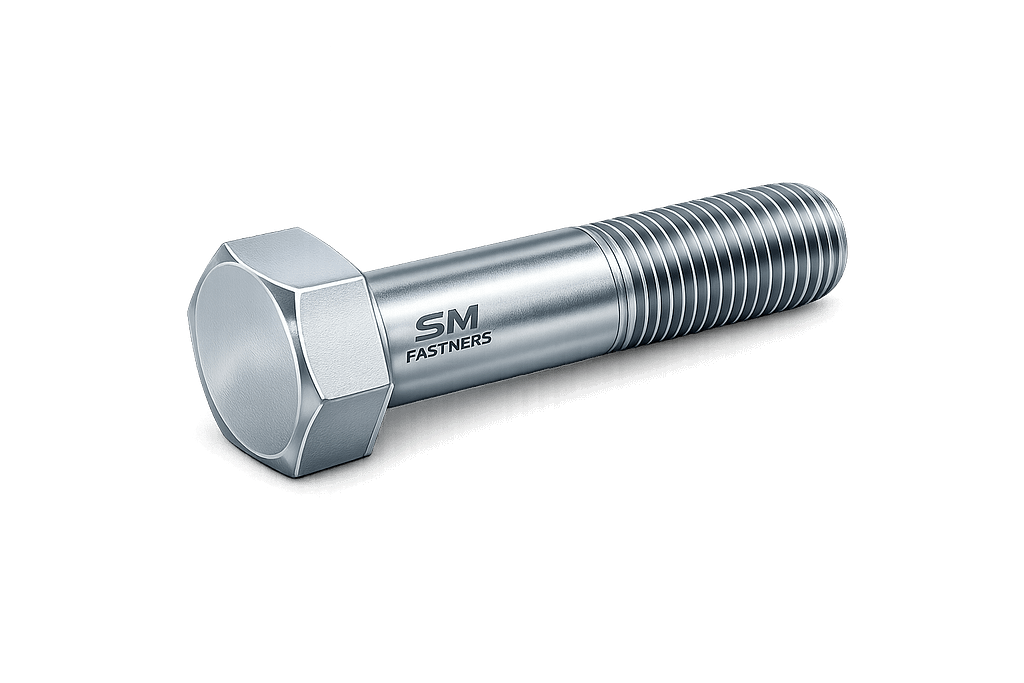
Zinc electroplated fasteners are threaded fastening components coated with a thin electrolytically deposited zinc layer to improve corrosion resistance, appearance consistency, assembly reliability, and service life in moderate atmospheric environments. The coating process uses electrochemical deposition to create a controlled zinc barrier over ferrous substrates including carbon steel, alloy steel, and selected stainless steel grades.
Electroplated zinc coatings are extensively used in:
- Structural assemblies
- Industrial machinery
- HVAC systems
- Electrical enclosures
- Automotive systems
- Rail infrastructure
- Material handling equipment
- Power distribution systems
- OEM fabrication
- General industrial manufacturing
Unlike hot-dip galvanizing, electroplating produces a thinner, more dimensionally controlled coating suitable for precision-threaded fasteners where tight tolerance retention is critical.


SM Fasteners manufactures and supplies zinc electroplated fasteners for industrial and EPC applications under controlled quality systems aligned with ISO 9001 requirements, including traceability, inspection documentation, dimensional verification, and export-oriented packaging systems.
2. Technical Definition of Zinc Electroplating
Zinc electroplating is an electrolytic deposition process in which zinc ions from an electrolyte solution are reduced and deposited onto the surface of conductive metallic fasteners.
The zinc layer acts through:
- Barrier Protection
Prevents moisture and oxygen contact with the base steel. - Sacrificial Protection
Zinc corrodes preferentially to steel due to its anodic potential. - Passivation Enhancement
Chromate conversion coatings improve corrosion performance.
3. Typical Zinc Electroplating System Structure
| Layer | Function | Typical Thickness |
|---|---|---|
| Base Material | Structural strength | Parent material |
| Zinc Deposit | Sacrificial corrosion protection | 5–25 µm |
| Chromate Passivation | Corrosion enhancement | Micron-level |
| Sealer / Topcoat | Salt spray improvement | Optional |
4. Electroplating Chemistry Overview
The electroplating process includes:
| Process Stage | Purpose |
|---|---|
| Degreasing | Oil removal |
| Pickling | Oxide removal |
| Electro-cleaning | Surface activation |
| Zinc Deposition | Coating formation |
| Passivation | Corrosion resistance |
| Drying | Surface stabilization |
| Inspection | Thickness and adhesion verification |
Common bath systems:
- Acid chloride zinc
- Alkaline non-cyanide zinc
- Cyanide zinc (restricted usage due to environmental controls)
5. Functional Role of Zinc Electroplated Fasteners
5.1 Primary Engineering Functions
Clamping Force Generation
Fasteners create preload within a joint to maintain compression between assembled components.
Load Transfer
Fasteners distribute tensile, shear, bending, and dynamic loads through the assembly.
Corrosion Mitigation
The zinc coating delays substrate oxidation in atmospheric and mildly corrosive environments.
Serviceability
Electroplated coatings improve installation consistency and reduce galling compared to uncoated carbon steel.
6. Load Mechanics and Force Behavior
Threaded fasteners operate primarily as elastic springs.
When torque is applied:
- Bolt elongates
- Joint compresses
- Clamping force develops
- Friction stabilizes the assembly
The preload generated is critical to joint integrity.
6.1 Bolt Preload Fundamentals
Bolt preload is the tensile force induced during tightening.
The preload must satisfy:
Where:
- = preload force
- = external separating load
Insufficient preload causes:
- Joint loosening
- Fatigue failure
- Vibration damage
- Leakage
- Fretting corrosion
6.2 Torque–Tension Relationship
The relationship between tightening torque and preload is approximated by:
Where:
| Variable | Description |
|---|---|
| T | Tightening torque |
| K | Nut factor |
| F | Desired preload |
| D | Nominal diameter |
6.3 Typical Nut Factors
| Condition | Nut Factor (K) |
|---|---|
| Dry zinc plated | 0.18–0.24 |
| Waxed zinc plated | 0.12–0.18 |
| Lubricated assembly | 0.10–0.16 |
Electroplated coatings significantly influence friction behavior and preload consistency.
7. Preload Calculation Example
Example — M16 Property Class 8.8 Zinc Electroplated Bolt
Assumptions:
- Diameter = 16 mm
- Tensile stress area = 157 mm²
- Yield strength = 640 MPa
- Target preload = 75% of yield
Preload:
Calculation:
Approximate torque using K = 0.20:
8. Joint Design Principles
8.1 Joint Stiffness
Joint stiffness determines load sharing between:
- Fastener elasticity
- Joint compression characteristics
High-stiffness joints maintain preload more effectively under dynamic loading.
8.2 Thread Engagement Requirements
Minimum thread engagement:
| Material | Minimum Engagement |
|---|---|
| Steel | 1 × diameter |
| Cast iron | 1.5 × diameter |
| Aluminum | 2 × diameter |
8.3 Grip Length Optimization
Effective grip length improves fatigue resistance by increasing elastic stretch.
Short grip lengths produce:
- Higher stress concentration
- Reduced fatigue life
- Poor preload retention
8.4 Shear Plane Considerations
Threads should ideally remain outside primary shear planes in structural joints.
Preferred practice:
- Use partially threaded bolts
- Position smooth shank across shear interface
9. Friction and Clamp Load Behavior
Approximately 85–90% of applied torque is lost to friction.
Distribution:
| Torque Consumption | Percentage |
|---|---|
| Thread friction | 40% |
| Bearing friction | 50% |
| Useful preload | 10% |
This explains the importance of controlled coating thickness and lubrication consistency in electroplated fasteners.
10. Failure Mechanisms
10.1 Hydrogen Embrittlement
Hydrogen embrittlement is the most critical risk associated with electroplated high-strength fasteners.
Risk Threshold
Generally critical above:
- Property class 10.9
- Hardness > 320 HV
- Tensile strength > 1000 MPa
Sources
Hydrogen may enter during:
- Acid pickling
- Electroplating
- Cleaning processes
Prevention Measures
| Method | Purpose |
|---|---|
| Controlled pickling | Reduce hydrogen ingress |
| Immediate baking | Hydrogen diffusion |
| Process monitoring | Minimize contamination |
| Hardness control | Prevent susceptibility |
Typical baking:
- 190–230°C
- Within 1 hour after plating
- 2–24 hours depending on grade
10.2 Fatigue Failure
Cyclic loading causes progressive crack propagation.
Primary contributing factors:
- Low preload
- Surface defects
- Thread stress concentration
- Corrosion pits
- Improper joint design
Electroplated coatings improve fatigue resistance only when coating integrity is maintained.
10.3 Stress Corrosion Cracking
Occurs under combined:
- Tensile stress
- Corrosive environment
- Susceptible metallurgy
Common in:
- Chloride exposure
- H₂S environments
- Offshore systems
11. Environmental Suitability
Recommended Environments
| Environment | Suitability |
|---|---|
| Indoor dry service | Excellent |
| HVAC systems | Excellent |
| Automotive interiors | Good |
| Mild outdoor exposure | Moderate |
| Industrial atmosphere | Moderate |
| Marine atmosphere | Limited |
| Immersion service | Poor |
12. Corrosion Resistance vs Environment Table
| Environment | Zinc Electroplated | Hot Dip Galvanized | Stainless Steel |
|---|---|---|---|
| Indoor dry | Excellent | Excellent | Excellent |
| Outdoor rural | Good | Excellent | Excellent |
| Coastal atmosphere | Fair | Good | Excellent |
| Seawater immersion | Poor | Moderate | Excellent |
| Acidic environment | Poor | Poor | Grade dependent |
| H₂S service | Limited | Limited | NACE compliant alloys |
| Petrochemical exposure | Moderate | Moderate | Preferred |
| High humidity | Moderate | Good | Excellent |
13. Application Engineering Considerations
13.1 Structural Steel
Used in:
- Secondary steel
- Access systems
- Cable trays
- Light structural supports
Not generally preferred for primary corrosion-critical structural connections exposed to marine weathering.
13.2 Oil & Gas
Suitable for:
- Indoor skids
- Instrumentation supports
- Electrical systems
- Temporary assemblies
Critical sour service applications may require:
- PTFE-coated systems
- Stainless steel
- Duplex alloys
- NACE-compliant materials
13.3 Automotive & Heavy Equipment
Widely used due to:
- Controlled dimensions
- Uniform appearance
- Automated assembly compatibility
- Moderate corrosion resistance
13.4 PEEK Fastener Integration
For electrically isolated or chemically aggressive systems, PEEK fasteners may replace zinc-plated steel.
Applications include:
- Semiconductor systems
- Chemical plants
- Electronics
- High-purity process equipment
SM Fasteners supports advanced engineered polymer fastening systems including PEEK fasteners for specialized industrial environments.
14. Industrial Advantages of Zinc Electroplated Fasteners
| Parameter | Engineering Benefit |
|---|---|
| Thin coating | Precision thread retention |
| Uniform appearance | OEM quality finish |
| Lower cost | Economical protection |
| Controlled dimensions | Automated assembly compatibility |
| Good paint adhesion | Secondary finishing compatibility |
| Wide availability | Global interchangeability |
15. Engineering Limitations
| Limitation | Engineering Impact |
|---|---|
| Limited coating thickness | Reduced outdoor life |
| Hydrogen embrittlement risk | High-strength fastener concern |
| Moderate salt spray resistance | Unsuitable for marine immersion |
| Temperature limitations | Coating degradation at elevated temperatures |
| Acid sensitivity | Poor chemical resistance |
16. Temperature Performance
| Temperature Range | Performance |
|---|---|
| -50°C to 120°C | Normal operation |
| 120°C–200°C | Passivation degradation possible |
| >200°C | Accelerated oxidation |
| >300°C | Zinc deterioration significant |
17. Service Life Expectations
Approximate corrosion performance depends on:
- Coating thickness
- Chromate system
- Humidity
- Chloride exposure
- Installation damage
| Coating Thickness | Typical Indoor Life |
|---|---|
| 5 µm | 1–3 years |
| 8 µm | 3–5 years |
| 12 µm | 5–8 years |
| 25 µm | 8–15 years |
18. Procurement Engineering Considerations
Industrial buyers typically specify:
- ISO/DIN dimensional standards
- Property class
- Coating thickness
- Chromate type
- Salt spray requirement
- Hydrogen embrittlement relief
- Traceability requirements
- EN 10204 certification
Typical EPC specifications include:
- ISO 4042
- ASTM B633
- ISO 898-1
- DIN 267
- ASTM F1941/F1941M
19. Summary of Engineering Characteristics
| Property | Zinc Electroplated Fasteners |
|---|---|
| Corrosion protection | Moderate |
| Dimensional accuracy | Excellent |
| Surface appearance | Excellent |
| Cost efficiency | High |
| Thread precision | Excellent |
| Outdoor durability | Moderate |
| Marine suitability | Limited |
| Automated assembly suitability | Excellent |
| High-strength compatibility | Requires embrittlement control |
20. Product Types and Variants of Zinc Electroplated Fasteners
Zinc electroplated coatings are applicable across a broad range of industrial fastening systems. Selection depends on:
- Joint geometry
- Mechanical load
- Assembly accessibility
- Service environment
- Torque transmission requirements
- Disassembly frequency
- Corrosion exposure classification
SM Fasteners manufactures zinc electroplated fastening systems for industrial, infrastructure, EPC, OEM, petrochemical, and heavy engineering applications with dimensional conformity aligned to ISO, DIN, ASTM, and BS standards.
21. Zinc Electroplated Bolt Types
21.1 Hex Head Bolts
Hex head bolts are the most widely used industrial fastening systems for structural and mechanical joints.
Engineering Characteristics
| Parameter | Description |
|---|---|
| Head Geometry | Six-sided external drive |
| Torque Transmission | High |
| Tool Compatibility | Standard sockets/spanners |
| Joint Type | Structural & mechanical |
| Installation | Manual or powered tooling |
Typical Standards
| Standard | Description |
|---|---|
| ISO 4014 | Partially threaded hex bolts |
| ISO 4017 | Fully threaded hex bolts |
| DIN 931 | Hex bolts partial thread |
| DIN 933 | Hex bolts full thread |
| ASTM A307 | Carbon steel bolts |
| ASTM F568M | Metric mechanical fasteners |


21.2 Heavy Hex Bolts
Used in:
- Structural steel
- Flanged joints
- Petrochemical piping
- Heavy machinery
Advantages
- Larger bearing surface
- Higher preload capability
- Improved wrench engagement
- Better fatigue distribution
Standards
| Standard | Description |
|---|---|
| ASTM A325 | Structural bolts |
| ASTM A490 | High-strength structural bolts |
| DIN 6914 | HV structural bolts |
21.3 Socket Head Cap Screws
Designed for:
- Precision machinery
- Restricted access assemblies
- High preload applications
Characteristics
| Feature | Benefit |
|---|---|
| Internal hex drive | Compact installation |
| Cylindrical head | High strength |
| Deep socket | Torque efficiency |
| Precision geometry | Automated assembly suitability |
Standards
| Standard | Description |
|---|---|
| ISO 4762 | Socket head cap screws |
| DIN 912 | SHCS dimensional standard |
21.4 Countersunk Screws
Used where flush surfaces are required.
Applications include:
- Equipment panels
- Rail interiors
- Automotive systems
- Precision assemblies
Standards
| Standard | Description |
|---|---|
| ISO 10642 | Hex socket countersunk |
| DIN 7991 | Countersunk socket screws |
21.5 Stud Bolts and Threaded Rods
Widely used in:
- Pressure vessel flanges
- Heat exchangers
- Pipe connections
- Structural anchoring
Types
| Type | Description |
|---|---|
| Fully threaded rod | Continuous thread |
| Double-end stud | Threads both ends |
| Tap-end stud | One threaded insertion end |
Standards
| Standard | Description |
|---|---|
| ASTM A193 | Alloy steel stud bolts |
| ASTM A320 | Low-temperature bolting |
| DIN 975 | Threaded rod |
| DIN 976 | Studding |
22. Zinc Electroplated Nut Types
22.1 Hex Nut
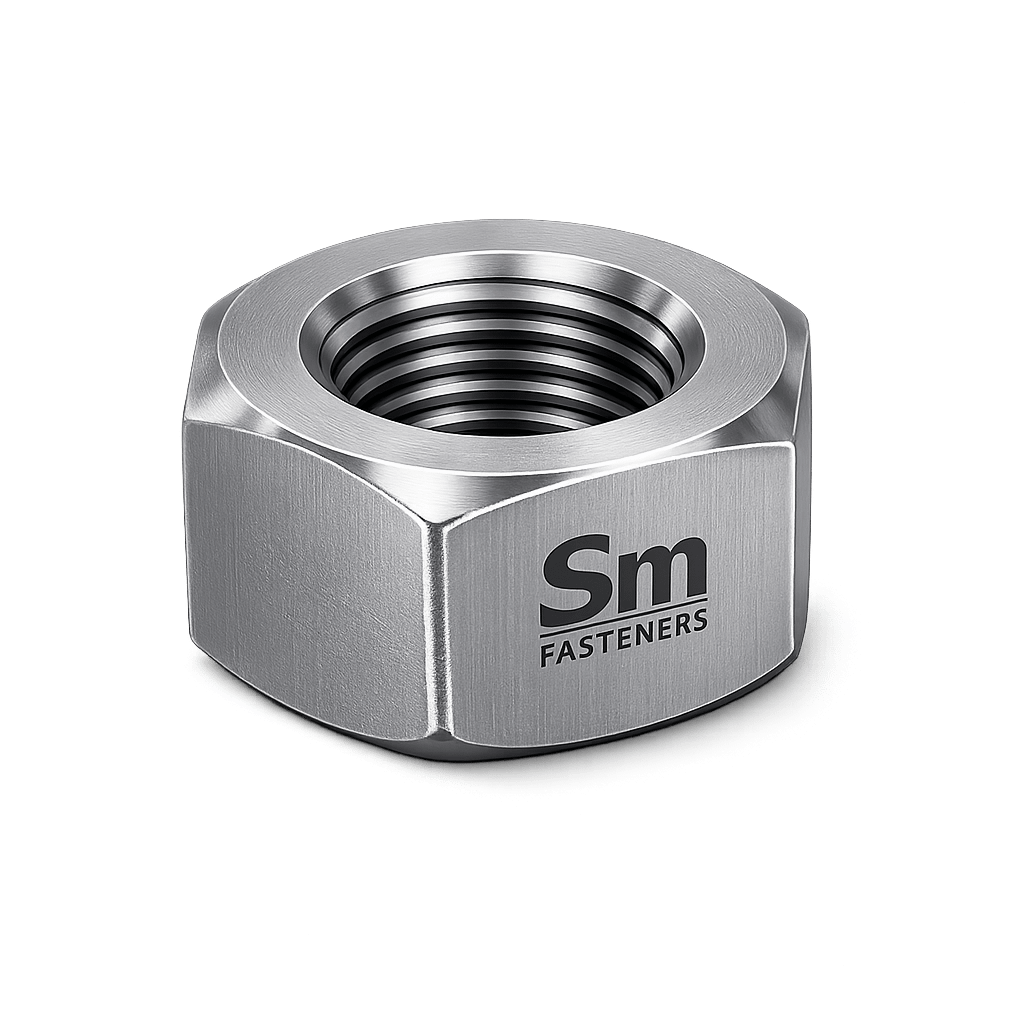
Most common mating fastener.
Standards
| Standard | Description |
|---|---|
| ISO 4032 | Hex nuts style 1 |
| DIN 934 | Hex nuts |
| ASTM A563 | Carbon/alloy nuts |
22.2 Heavy Hex Nut
Used with structural and high-pressure bolting systems.
Advantages
- Improved load distribution
- Higher stripping resistance
- Better bearing performance
22.3 Lock Nuts
Designed to resist loosening under vibration.
Variants
| Type | Mechanism |
|---|---|
| Nylon insert | Friction locking |
| All-metal lock nut | Deformed thread |
| Prevailing torque nut | Mechanical interference |
23. Zinc Electroplated Washer Types
23.1 Flat Washers
Functions:
- Load distribution
- Surface protection
- Bearing stress reduction
Standards
| Standard | Description |
|---|---|
| ISO 7089 | Plain washers |
| DIN 125 | Flat washers |
| ASTM F844 | Hardened washers |
23.2 Spring Washers
Provide resistance against vibration loosening.
Limitations
Modern engineering standards often prefer:
- Nord-lock systems
- Chemical locking
- Prevailing torque nuts
For critical dynamic joints.
23.3 Structural Washers
Used in:
- Structural steel
- Bridge assemblies
- Heavy bolting systems
Typically hardened and dimensionally larger.
24. Thread Geometry and Dimensional Logic
Thread geometry directly affects:
- Load carrying capacity
- Fatigue resistance
- Assembly torque
- Self-loosening tendency
- Manufacturing efficiency
25. Metric Thread System
The ISO metric thread profile is globally dominant.
Characteristics
| Parameter | Value |
|---|---|
| Thread angle | 60° |
| Crest type | Flat |
| Root type | Rounded |
| Units | Millimeters |
25.1 Coarse vs Fine Thread Selection
| Parameter | Coarse Thread | Fine Thread |
|—|—|
| Assembly speed | Faster | Slower |
| Vibration resistance | Moderate | Better |
| Tensile stress area | Lower | Higher |
| Damage resistance | Better | Lower |
| Adjustment precision | Lower | Higher |
| Field installation | Preferred | Specialized |
26. Unified Thread Systems
Used primarily in North America.
UNC Threads
Unified National Coarse.
Applications:
- General engineering
- Structural assemblies
UNF Threads
Unified National Fine.
Applications:
- Automotive
- Aerospace
- Precision assemblies
27. British Thread Systems
BSW — British Standard Whitworth
| Feature | Specification |
|---|---|
| Thread angle | 55° |
| Crest/root | Rounded |
| Usage | Legacy equipment |
BSF — British Standard Fine
Fine pitch version of Whitworth threads.
28. Thread Standards & Tolerances Table
| Thread Standard | Thread Angle | Application | Tolerance System |
|---|---|---|---|
| ISO Metric | 60° | Global industrial | 6g / 6H |
| UNC | 60° | General US industrial | Class 2A/2B |
| UNF | 60° | Precision applications | Class 2A/2B |
| BSW | 55° | Legacy British systems | BS standards |
| BSF | 55° | Fine British systems | BS standards |
29. Thread Tolerance Classes
External Threads
| Class | Fit |
|---|---|
| 6g | Standard commercial fit |
| 4g6g | Precision fit |
| 8g | Loose fit |
Internal Threads
| Class | Fit |
|---|---|
| 6H | Standard nut fit |
| 5H | Precision applications |
| 7H | Loose fit |
Electroplating thickness influences thread tolerance compliance and must be considered during manufacturing.
30. Effect of Electroplating on Threads
Electroplated zinc coatings increase thread dimensions.
Engineering controls include:
- Pre-plate thread undersizing
- Controlled coating thickness
- Go/No-Go gauge inspection
- Post-plate verification
31. Dimensional Specifications Table — Hex Bolts (ISO 4017 / DIN 933)
| Size | Pitch (mm) | Across Flats (mm) | Head Height (mm) | Thread Length | Typical Length Range |
|---|---|---|---|---|---|
| M6 | 1.0 | 10 | 4 | Full | 10–80 mm |
| M8 | 1.25 | 13 | 5.3 | Full | 12–100 mm |
| M10 | 1.5 | 16 | 6.4 | Full | 16–120 mm |
| M12 | 1.75 | 18 | 7.5 | Full | 20–160 mm |
| M16 | 2.0 | 24 | 10 | Full | 25–220 mm |
| M20 | 2.5 | 30 | 12.5 | Full | 30–300 mm |
| M24 | 3.0 | 36 | 15 | Full | 40–300 mm |
32. Tensile Stress Area Table
| Size | Tensile Stress Area (mm²) |
|---|---|
| M6 | 20.1 |
| M8 | 36.6 |
| M10 | 58 |
| M12 | 84.3 |
| M16 | 157 |
| M20 | 245 |
| M24 | 353 |
33. Mechanical Property Classes
ISO Property Classes
| Class | Ultimate Tensile Strength (MPa) | Yield Ratio | Yield Strength (MPa) |
|---|---|---|---|
| 4.6 | 400 | 0.6 | 240 |
| 5.8 | 500 | 0.8 | 400 |
| 8.8 | 800 | 0.8 | 640 |
| 10.9 | 1000 | 0.9 | 900 |
| 12.9 | 1200 | 0.9 | 1080 |
34. Proof Load & Tensile Strength Table
| Size | Property Class | Proof Load (kN) | Minimum Tensile Load (kN) |
|---|---|---|---|
| M8 | 8.8 | 23.2 | 29.3 |
| M10 | 8.8 | 36.7 | 46.4 |
| M12 | 8.8 | 53.4 | 67.4 |
| M16 | 8.8 | 99.9 | 126 |
| M20 | 8.8 | 156 | 196 |
| M12 | 10.9 | 75.9 | 84.3 |
| M16 | 10.9 | 141 | 157 |
| M20 | 10.9 | 220 | 245 |
35. Tightening Torque Chart — Zinc Electroplated Fasteners
Dry Condition
| Size | Grade 8.8 (Nm) | Grade 10.9 (Nm) |
|---|---|---|
| M6 | 10 | 14 |
| M8 | 25 | 36 |
| M10 | 49 | 70 |
| M12 | 86 | 121 |
| M16 | 210 | 295 |
| M20 | 410 | 580 |
| M24 | 710 | 1000 |
Lubricated Condition
| Size | Grade 8.8 (Nm) | Grade 10.9 (Nm) |
|---|---|---|
| M6 | 8 | 11 |
| M8 | 20 | 29 |
| M10 | 39 | 56 |
| M12 | 69 | 97 |
| M16 | 168 | 236 |
| M20 | 328 | 464 |
| M24 | 568 | 800 |
36. Bearing Surface Engineering
The bearing face under bolt heads and nuts influences:
- Torque scatter
- Clamp load consistency
- Surface indentation
- Joint relaxation
Electroplated finishes reduce friction variability when coating thickness is tightly controlled.
37. Head Geometry Selection Logic
| Head Type | Engineering Advantage |
|---|---|
| Hex head | High torque capability |
| Socket head | Compact geometry |
| Countersunk | Flush installation |
| Flange head | Integrated load distribution |
| Button head | Low-profile appearance |
38. Fastener Length Selection Principles
Proper bolt length ensures:
- Adequate thread engagement
- Correct grip length
- Full nut engagement
- Load transfer efficiency
Recommended Projection
At least:
- 1–3 threads beyond nut face
39. Washer Selection Engineering
Washer hardness must match joint requirements.
Improper washer selection can cause:
- Embedment
- Preload loss
- Surface yielding
- Joint relaxation
40. Structural Joint Considerations
Structural bolting systems require:
- Controlled preload
- Hardened washers
- Calibrated tightening
- Certified property class verification
Applicable standards include:
| Standard | Description |
|---|---|
| ASTM F3125 | Structural bolts |
| EN 14399 | High-strength preloaded systems |
| ISO 7412 | Structural hex bolts |
41. Dimensional Inspection Requirements
Critical inspection points:
| Parameter | Inspection Method |
|---|---|
| Major diameter | Micrometer |
| Pitch diameter | Thread gauges |
| Thread pitch | Pitch gauge |
| Head dimensions | Vernier caliper |
| Coating thickness | XRF / magnetic testing |
| Thread fit | Go/No-Go gauges |
42. Weight Chart — Approximate Hex Bolt Weights
Zinc Electroplated Hex Bolts
| Size × Length | Approx Weight / Pc | Approx Weight / 100 Pcs |
|---|---|---|
| M6 × 25 | 0.008 kg | 0.8 kg |
| M8 × 40 | 0.017 kg | 1.7 kg |
| M10 × 50 | 0.036 kg | 3.6 kg |
| M12 × 60 | 0.067 kg | 6.7 kg |
| M16 × 80 | 0.165 kg | 16.5 kg |
| M20 × 100 | 0.320 kg | 32 kg |
| M24 × 120 | 0.590 kg | 59 kg |
Weight values may vary based on:
- Thread type
- Head geometry
- Coating thickness
- Manufacturing tolerance
SM Fasteners maintains production-aligned weight control systems for export packing optimization and EPC quantity verification.
43. Coating Thickness Standards
| Standard | Typical Requirement |
|---|---|
| ASTM B633 | Zinc electroplating |
| ISO 4042 | Electroplated coatings |
| ASTM F1941 | Mechanical/electro coatings |
| DIN 267 | Fastener coatings |
44. Salt Spray Performance Expectations
| Coating System | White Rust Resistance | Red Rust Resistance |
|---|---|---|
| Clear zinc | 12–24 hrs | 48–96 hrs |
| Blue passivation | 24–72 hrs | 96–240 hrs |
| Yellow chromate | 72–120 hrs | 200–500 hrs |
| Trivalent passivation + sealer | 120–240 hrs | 500–1000 hrs |
Performance depends on:
- Coating thickness
- Base metal condition
- Passivation chemistry
- Sealers/topcoats
45. Interchangeability Considerations
Engineering interchangeability requires:
- Thread compatibility
- Property class equivalence
- Dimensional compliance
- Coating compatibility
- Torque recalculation
Mixing standards without verification may cause:
- Galling
- Thread mismatch
- Improper preload
- Joint failure
46. Procurement Specification Example
Typical EPC procurement specification:
| Parameter | Requirement |
|---|---|
| Product | Hex bolt |
| Standard | DIN 933 |
| Material | Carbon steel |
| Grade | 8.8 |
| Finish | Zinc electroplated |
| Coating Thickness | 8–12 µm |
| Passivation | Trivalent |
| Certification | EN 10204 3.1 |
| Inspection | Third-party |
| Packaging | Export grade |