

Dacromet coating
1 Industrial Context
1.1 Industrial Context of Dacromet Coated Fasteners
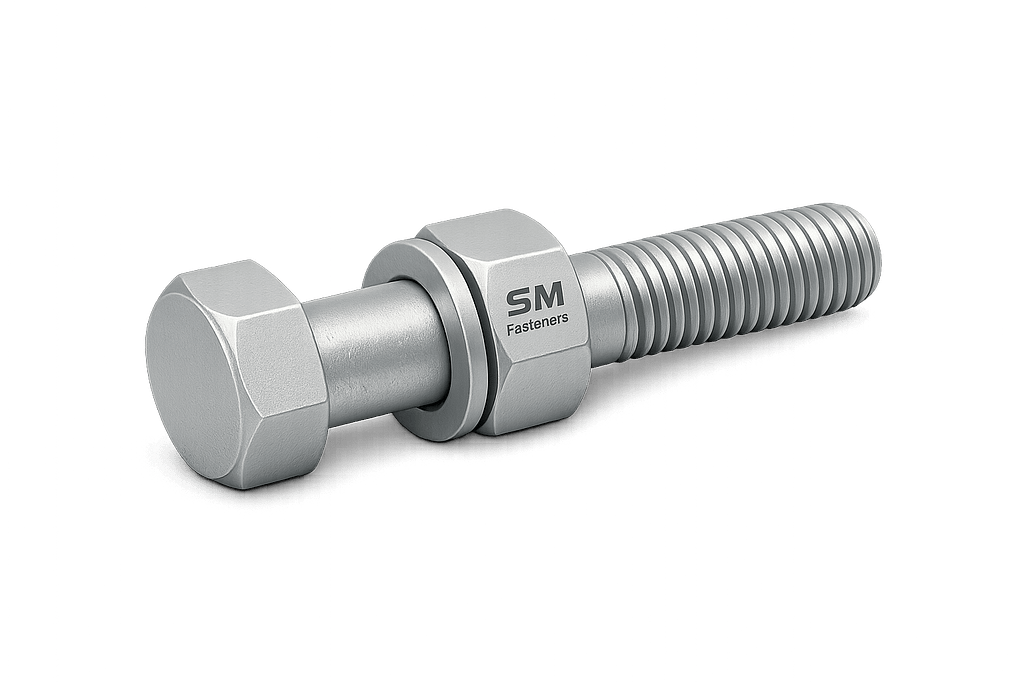
Dacromet coating technology is extensively used where conventional zinc electroplating or hot-dip galvanizing may be inadequate due to:
- Severe atmospheric exposure
- Marine chloride environments
- High humidity conditions
- Temperature cycling
- Corrosive industrial emissions
- Offshore installations
- Automotive underbody exposure
- Petrochemical processing environments
Dacromet is classified as a water-based inorganic zinc-aluminum flake coating system designed to provide sacrificial and barrier corrosion protection without hydrogen embrittlement risk associated with electroplating processes.
The coating system is widely adopted across:
- Offshore structures
- Wind turbines
- Bridge infrastructure
- Automotive chassis assemblies
- LNG terminals
- Pipe support systems
- Transmission towers
- Rail infrastructure
- Structural steel assemblies
- EPC modular fabrication
Compared with conventional electro-zinc coatings, Dacromet systems provide:
- Superior salt spray resistance
- Lower friction variability
- Better temperature resistance
- Improved galvanic compatibility
- Enhanced coating uniformity on threaded assemblies
1.2 Technical Definition of Dacromet Coating
Dacromet coating consists primarily of:
- Zinc flakes
- Aluminum flakes
- Chromium-based or chromium-free inorganic binder
- Water-based carrier medium
The coating is applied through:
- Dip-spin process
- Spray application
- Dip-drain method
The coated fastener is then cured at elevated temperatures typically between:
- 280°C to 320°C
The resulting coating forms:
- Layered metallic flake structures
- Barrier protection against moisture ingress
- Sacrificial zinc protection
- Controlled galvanic shielding
Typical coating thickness:
- 5 µm to 20 µm
Unlike electroplating:
- No hydrogen generation occurs during application
- Risk of hydrogen embrittlement is significantly reduced
This makes Dacromet highly suitable for:
- High tensile bolts
- Property class 10.9 and 12.9 fasteners
- ASTM A490 structural bolts
- High-strength automotive fasteners
1.3 Functional Role in Mechanical Assemblies
Dacromet-coated fasteners perform several simultaneous engineering functions:
Structural Functions
- Joint clamping
- Tensile load transfer
- Shear resistance
- Dynamic load stabilization
Corrosion Functions
- Barrier protection
- Sacrificial corrosion resistance
- Thread protection
- Surface isolation
Maintenance Functions
- Reduced seizure risk
- Improved dismantling capability
- Lower maintenance frequency
- Better preload retention
1.4 Load Mechanics and Force Behavior
Fastener joints function by generating clamp load through controlled elastic deformation.
Primary load conditions include:
- Tensile loading
- Shear loading
- Combined loading
- Cyclic fatigue loading
- Vibrational loading
- Thermal expansion loading
The effectiveness of Dacromet-coated fasteners depends on maintaining:
- Stable preload
- Controlled friction coefficient
- Thread integrity
- Corrosion resistance
1.5 Torque–Tension Relationship
Fastener preload is generated through tightening torque.
Fundamental relationship:
Where:
- T = tightening torque
- K = nut factor
- F = preload force
- d = nominal diameter
For Dacromet-coated fasteners:
- Typical nut factor range: 0.12–0.18
- More consistent than hot-dip galvanized systems
- Reduced torque scatter compared to zinc-plated fasteners
1.6 Preload Principles
Proper preload ensures:
- Joint integrity
- Fatigue resistance
- Vibration resistance
- Load distribution
- Leak prevention
Recommended preload:
- 70%–85% of proof load
Insufficient preload may cause:
- Joint separation
- Fatigue failure
- Loosening
Excessive preload may cause:
- Thread stripping
- Bolt yielding
- Stress concentration
1.7 Worked Preload Calculation Example
Example:
M16 × 2.0 — Property Class 10.9 — Dacromet Coated
Assumptions:
- Proof load stress area = 157 mm²
- Proof stress = 830 MPa
- Target preload = 75%
- Nut factor K = 0.14
Step 1 — Proof Load
Step 2 — Target Preload
Step 3 — Torque Requirement
1.8 Friction Behavior in Dacromet Coatings
Friction coefficient stability is critical for:
- Torque-controlled tightening
- Clamp load accuracy
- Automated assembly systems
Typical coefficient of friction:
- 0.10–0.18
Topcoat lubricants may further reduce friction variability.
1.9 Thread Engagement Principles
Minimum thread engagement depends on:
- Material strength
- Loading direction
- Thread form
- Base material hardness
Recommended engagement:
- Steel-to-steel: 1 × diameter
- Aluminum base materials: 1.5 × diameter
- Cast iron: 1.5–2 × diameter
1.10 Joint Design Principles
Important Design Considerations
Clamp Load Distribution
Higher clamp force improves fatigue performance.
Grip Length
Short grip lengths increase bending stress.
Washer Usage
Washers improve:
- Bearing distribution
- Coating protection
- Surface isolation
Differential Thermal Expansion
Dacromet-coated joints perform well under thermal cycling due to stable coating integrity.
1.11 Fatigue Behavior
Fatigue failures initiate from:
- Thread roots
- Surface defects
- Corrosion pits
- Stress concentrations
Dacromet coatings improve fatigue life by:
- Preventing corrosion pitting
- Reducing surface degradation
- Stabilizing friction behavior
1.12 Failure Mechanisms
Fatigue Failure
Occurs under cyclic loading.
Shear Failure
Occurs when transverse loads exceed material shear capacity.
Hydrogen Embrittlement
Dacromet significantly reduces risk due to non-electrolytic application.
Stress Corrosion Cracking
Improved resistance compared with electro-zinc systems.
Galling
Reduced with lubricated topcoats.
1.13 Environmental Performance
Dacromet coatings are highly effective in:
- Marine atmospheres
- Chloride exposure
- Industrial pollution
- Offshore installations
- Humid climates
Limitations:
- Strong acids
- High-abrasion applications
- Continuous immersion in aggressive chemicals
1.14 Corrosion Resistance vs Environment Table
| Environment | Dacromet Performance | Typical Life Expectancy | Remarks |
|---|---|---|---|
| Marine Atmosphere | Excellent | 15–25 Years | Offshore suitable |
| Coastal Infrastructure | Excellent | 15–20 Years | Chloride resistant |
| Industrial Pollution | Very Good | 10–15 Years | SO₂ resistant |
| High Humidity | Excellent | 15+ Years | Stable coating |
| H₂S Environment | Good | Depends on substrate | NACE compliance required |
| Mild Acids | Moderate | Limited | Additional topcoat preferred |
| Strong Acids | Poor | Not recommended | Use alloy materials |
| LNG Facilities | Excellent | Long-term | Low-temperature suitable |
| Automotive Undercarriage | Excellent | OEM standard | High salt resistance |
| Rail Infrastructure | Excellent | Long service life | Weather resistant |
1.15 Mechanical Properties Table — Metric Property Classes
| Property Class | Tensile Strength MPa | Yield Strength MPa | Typical Use |
|---|---|---|---|
| 4.6 | 400 | 240 | Light assemblies |
| 5.8 | 500 | 400 | General engineering |
| 8.8 | 800 | 640 | Structural joints |
| 10.9 | 1040 | 940 | Heavy-duty machinery |
| 12.9 | 1220 | 1100 | High-load precision assemblies |
1.16 Typical Salt Spray Resistance
| Coating System | Salt Spray Resistance (Hours) |
|---|---|
| Electro Zinc | 72–240 |
| Zinc Nickel | 500–1000 |
| Hot Dip Galvanized | 300–1000 |
| Dacromet | 1000–2000+ |
| Geomet | 1500–3000 |
1.17 Dacromet vs Hot Dip Galvanized
| Parameter | Dacromet | Hot Dip Galvanized |
|---|---|---|
| Coating Thickness | Thin | Thick |
| Thread Fit | Excellent | Requires oversize tapping |
| Hydrogen Embrittlement | Minimal risk | None |
| Torque Consistency | Excellent | Moderate |
| Surface Finish | Smooth | Rough |
| High Strength Bolts | Highly suitable | Limited |
| Salt Spray Resistance | Excellent | Very good |
| Temperature Resistance | Higher | Moderate |
1.18 Relevance in EPC and Industrial Procurement
EPC buyers select Dacromet-coated fasteners for:
- Long project life
- Reduced maintenance cost
- Corrosion-critical installations
- Standardized torque performance
- Global standards compliance
- Offshore durability
- Improved lifecycle reliability
SM Fasteners supports EPC procurement with:
- Full material traceability
- Batch identification
- EN 10204 certification
- Controlled coating systems
- Global export packaging
- Project-specific documentation
- Custom engineered fastener capability
2. Product Types of Dacromet Coated
2.1 Product Types of Dacromet Coated Fasteners
Dacromet coating systems are applicable across a broad range of industrial fastening products where corrosion resistance, controlled friction behavior, and long-term mechanical reliability are required.
SM Fasteners manufactures Dacromet-coated fastening systems for:
- Structural steel assemblies
- Petrochemical modules
- Offshore platforms
- LNG terminals
- Transmission infrastructure
- Rail systems
- OEM equipment
- Heavy engineering systems
- Automotive structural applications
- Wind and renewable energy systems
2.2 Dacromet Coated Bolts
Hex Head Bolts
Most widely used industrial fastener type for:
- Structural joints
- Pipe supports
- Flange systems
- Mechanical assemblies
- Equipment mounting
Typical standards:
- ISO 4014
- ISO 4017
- DIN 931
- DIN 933
- ASTM A325
- ASTM A490
Advantages with Dacromet:
- Stable tightening torque
- Corrosion resistance
- Reduced thread seizure
- High preload reliability
Heavy Hex Bolt
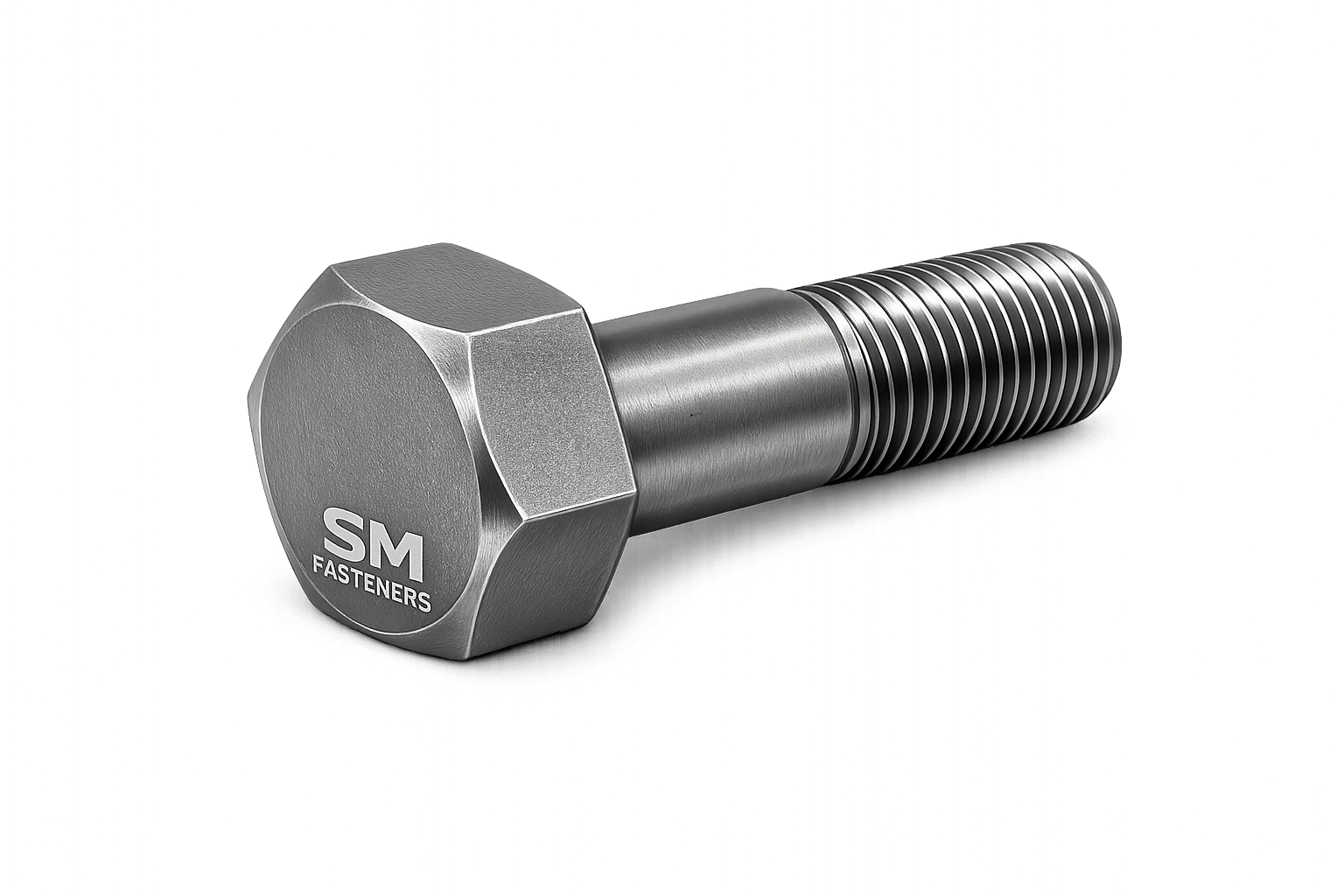
Used in:
- Structural steel connections
- Offshore modules
- Wind towers
- Bridge construction
Characteristics:
- Larger bearing surface
- Higher preload capability
- Improved structural load distribution
Applicable standards:
- ASTM A325
- ASTM A490
- EN 14399
Socket Head Cap Screws
Used in:
- Precision machinery
- Compact assemblies
- OEM systems
- Automation equipment
Standards:
- ISO 4762
- DIN 912
Dacromet advantages:
- Reduced corrosion inside recesses
- Improved installation repeatability
Flange Bolt
Integrated flange improves:
- Load distribution
- Surface protection
- Anti-loosening performance
Common in:
- Automotive assemblies
- Heavy equipment
- Vibrational systems
2.3 Dacromet Coated Nuts
Hex Nuts
Used with:
- Structural bolts
- Stud systems
- Threaded rods
Standards:
- ISO 4032
- DIN 934
- ASTM A563
Heavy Hex Nuts
Used for:
- Structural assemblies
- High preload joints
- Offshore steelwork
Characteristics:
- Increased wrenching area
- Higher proof load capability
Lock Nuts
Used in:
- Dynamic loading environments
- Vibrating machinery
- Rotating systems
Variants:
- Nylon insert
- All-metal prevailing torque
- Serrated flange
2.4 Dacromet Coated Screws
Self-Drilling Screws
Applications:
- Roofing systems
- Cladding
- HVAC systems
- Light structural assemblies
Advantages:
- Fast installation
- Corrosion resistance
- Outdoor durability
Self-Tapping Screws
Used in:
- Sheet metal assemblies
- Automotive interiors
- Electrical enclosures
Machine Screws
Applications:
- Precision assemblies
- Electronics housings
- Equipment covers
2.5 Dacromet Coated Washers
Washers protect coated surfaces and improve preload consistency.
Flat Washers
Functions:
- Load distribution
- Surface protection
- Prevention of embedding
Standards:
- ISO 7089
- DIN 125
Spring Washers
Used for:
- Anti-vibration applications
- Moderate locking requirements
Structural Washers
Used in:
- Structural steel assemblies
- High-strength bolting systems
Standards:
- ASTM F436
2.6 Dacromet Coated Threaded Rods
Used in:
- Pipe support systems
- Structural anchoring
- Equipment support
- HVAC suspension
Thread forms:
- Metric coarse
- Metric fine
- UNC
- UNF
2.7 Specialty and Custom Fasteners
SM Fasteners manufactures:
- Stud bolts
- Anchor bolts
- U-bolts
- Eye bolts
- Foundation bolts
- Custom cold-forged fasteners
- CNC-machined components
- Large-diameter structural fasteners
Custom engineering capability includes:
- Non-standard dimensions
- Project-specific coatings
- Hybrid material assemblies
- High-temperature applications
- Offshore-grade fasteners
2.8 PEEK Fasteners with Dacromet-Compatible Assemblies
PEEK fasteners are used where:
- Electrical insulation is required
- Chemical exposure is severe
- Weight reduction is critical
- Non-metallic fastening is necessary
Applications:
- Semiconductor systems
- Chemical processing
- Aerospace interiors
- Electrical insulation assemblies
Hybrid assemblies may combine:
- Dacromet-coated steel bolts
- PEEK spacers
- PEEK washers
- Composite insulating systems
2.9 Dimensional Logic of Fasteners
Fastener geometry directly influences:
- Clamp load
- Fatigue resistance
- Stress concentration
- Joint stiffness
- Installation torque
Critical dimensions include:
- Nominal diameter
- Thread pitch
- Head height
- Across flats dimension
- Grip length
- Thread length
- Fillet radius
2.10 Metric Thread Geometry
Metric threads follow ISO profile standards.
Fundamental thread angle:
- 60°
Key parameters:
- Major diameter
- Minor diameter
- Pitch diameter
- Pitch spacing
2.11 Coarse vs Fine Threads
| Parameter | Coarse Thread | Fine Thread |
|---|---|---|
| Installation Speed | Faster | Slower |
| Stripping Resistance | Better | Moderate |
| Vibration Resistance | Moderate | Better |
| Tensile Stress Area | Lower | Higher |
| Adjustment Precision | Lower | Higher |
| Dirty Environment Suitability | Better | Moderate |
2.12 Thread Standards and Tolerances Table
| Thread Standard | Region | Thread Angle | Typical Applications |
|---|---|---|---|
| ISO Metric | Global | 60° | General engineering |
| UNC | USA | 60° | Structural & industrial |
| UNF | USA | 60° | Precision assemblies |
| BSW | UK | 55° | Legacy equipment |
| BSF | UK | 55° | Fine-thread assemblies |
| NPT | USA | 60° | Pipe threads |
| BSP | UK/Global | 55° | Piping systems |
2.13 Metric Thread Pitch Table
| Diameter | Coarse Pitch | Fine Pitch |
|---|---|---|
| M6 | 1.0 | 0.75 |
| M8 | 1.25 | 1.0 |
| M10 | 1.5 | 1.25 |
| M12 | 1.75 | 1.5 |
| M16 | 2.0 | 1.5 |
| M20 | 2.5 | 1.5 |
| M24 | 3.0 | 2.0 |
| M30 | 3.5 | 2.0 |
2.14 Dimensional Specification Table — Hex Bolts
| Size | Pitch | Head Across Flats (mm) | Head Height (mm) | Standard Thread Length |
|---|---|---|---|---|
| M6 | 1.0 | 10 | 4 | 18 |
| M8 | 1.25 | 13 | 5.3 | 22 |
| M10 | 1.5 | 17 | 6.4 | 26 |
| M12 | 1.75 | 19 | 7.5 | 30 |
| M16 | 2.0 | 24 | 10 | 38 |
| M20 | 2.5 | 30 | 12.5 | 46 |
| M24 | 3.0 | 36 | 15 | 54 |
| M30 | 3.5 | 46 | 18.7 | 66 |
2.15 Length Selection Logic
Proper bolt length ensures:
- Full nut engagement
- Adequate clamp length
- Thread protrusion
Recommended protrusion:
- 2–3 threads beyond nut face
Insufficient length may cause:
- Incomplete engagement
- Reduced proof load
Excessive length may create:
- Installation interference
- Corrosion exposure
2.16 Grip Length Principles
Grip length is the total thickness of clamped materials.
Important effects:
- Longer grip improves elasticity
- Reduced fatigue sensitivity
- Better preload retention
Short grip lengths may cause:
- Joint relaxation
- Higher bending stress
2.17 Head Geometry and Load Distribution
Hex Head
Best for:
- General industrial use
- High torque applications
Socket Head
Best for:
- Space-constrained assemblies
- Precision equipment
Countersunk Head
Best for:
- Flush surface requirements
Flange Head
Best for:
- Improved bearing area
2.18 Applicable ISO Standards
| Standard | Description |
|---|---|
| ISO 4014 | Hex bolts partially threaded |
| ISO 4017 | Hex bolts fully threaded |
| ISO 4032 | Hex nuts |
| ISO 4762 | Socket head cap screws |
| ISO 7089 | Plain washers |
| ISO 898-1 | Mechanical properties of bolts |
| ISO 898-2 | Mechanical properties of nuts |
| ISO 965 | Thread tolerances |
| ISO 10683 | Zinc flake coatings |
| ISO 9227 | Salt spray testing |
2.19 Applicable ASTM Standards
| ASTM Standard | Description |
|---|---|
| ASTM A325 | Structural bolts |
| ASTM A490 | High-strength structural bolts |
| ASTM A563 | Carbon steel nuts |
| ASTM F436 | Hardened washers |
| ASTM B117 | Salt spray testing |
| ASTM F3125 | Structural bolting assemblies |
| ASTM F1136 | Zinc/aluminum coatings |
| ASTM A193 | Alloy steel bolting |
| ASTM A194 | High-pressure nuts |
2.20 Applicable DIN Standards
| DIN Standard | Description |
|---|---|
| DIN 931 | Hex bolts partially threaded |
| DIN 933 | Fully threaded hex bolts |
| DIN 912 | Socket head cap screws |
| DIN 934 | Hex nuts |
| DIN 125 | Flat washers |
| DIN 127 | Spring washers |
| DIN 6921 | Flange bolts |
2.21 Applicable British Standards (BS)
| BS Standard | Description |
|---|---|
| BS 3692 | Metric precision fasteners |
| BS 4190 | ISO metric fasteners |
| BS 1083 | Hexagon bolts |
| BS 1768 | Hexagon nuts |
| BS 4320 | Washers |
2.22 Interchangeability Considerations
Critical interchangeability factors:
- Thread pitch compatibility
- Head dimensions
- Property class equivalence
- Coating thickness
- Tolerance class
Improper interchangeability may cause:
- Galling
- Preload inconsistency
- Thread interference
- Reduced fatigue performance
2.23 Structural Fastener Geometry Requirements
Structural assemblies require:
- Hardened washers
- Controlled thread engagement
- Specified grip lengths
- Tight dimensional tolerances
Critical in:
- Bridges
- Offshore structures
- Steel buildings
- Heavy industrial modules
2.24 Dacromet Coating Thickness Logic
Typical thickness ranges:
| Coating Thickness | Application |
|---|---|
| 5–8 µm | Automotive |
| 8–12 µm | General industrial |
| 12–15 µm | Structural outdoor |
| 15–20 µm | Offshore & marine |
Excessive thickness may affect:
- Thread fit
- Torque consistency
- Assembly compatibility
2.25 Surface Finish and Friction Classes
| Surface Finish | Friction Coefficient | Typical Use |
|---|---|---|
| Plain Dacromet | 0.14–0.18 | Structural joints |
| Lubricated Dacromet | 0.10–0.14 | Controlled preload |
| Topcoat-Sealed | 0.12–0.16 | Offshore systems |
| Waxed Finish | 0.09–0.13 | Automated assembly |
2.26 Proof Load and Tensile Strength Table
| Size | Property Class | Proof Load (kN) | Ultimate Tensile Load (kN) |
|---|---|---|---|
| M8 | 8.8 | 23 | 26 |
| M10 | 8.8 | 36 | 42 |
| M12 | 8.8 | 52 | 60 |
| M16 | 8.8 | 96 | 116 |
| M20 | 8.8 | 150 | 181 |
| M12 | 10.9 | 75 | 84 |
| M16 | 10.9 | 136 | 157 |
| M20 | 10.9 | 212 | 245 |
| M24 | 10.9 | 305 | 353 |
2.27 Tightening Torque Chart — Dacromet Coated Fasteners
| Size | Grade | Dry Torque (Nm) | Lubricated Torque (Nm) |
|---|---|---|---|
| M8 | 8.8 | 25 | 20 |
| M10 | 8.8 | 49 | 39 |
| M12 | 8.8 | 86 | 68 |
| M16 | 8.8 | 210 | 168 |
| M20 | 8.8 | 410 | 328 |
| M12 | 10.9 | 121 | 97 |
| M16 | 10.9 | 295 | 236 |
| M20 | 10.9 | 580 | 464 |
| M24 | 10.9 | 1000 | 800 |
2.28 Weight Chart — Hex Bolts
| Size × Length | Approx. Weight Per Piece | Approx. Weight Per 100 pcs |
|---|---|---|
| M8 × 30 | 0.017 kg | 1.7 kg |
| M10 × 50 | 0.039 kg | 3.9 kg |
| M12 × 60 | 0.068 kg | 6.8 kg |
| M16 × 80 | 0.158 kg | 15.8 kg |
| M20 × 100 | 0.312 kg | 31.2 kg |
| M24 × 120 | 0.590 kg | 59.0 kg |
| M30 × 150 | 1.180 kg | 118 kg |
SM Fasteners weight charts are aligned with:
- ISO dimensional standards
- Manufacturing tolerances
- Coating allowance
- Industrial packing calculations
- Export shipment planning
2.29 Selection Criteria for Engineers and Procurement Teams
Selection of Dacromet-coated fasteners should consider:
- Corrosion severity
- Mechanical loading
- Torque requirements
- Service temperature
- Inspection requirements
- Regulatory compliance
- Dissimilar metal interaction
- Lifecycle maintenance expectations
Critical procurement considerations:
- Traceability
- Coating certification
- Salt spray validation
- Mechanical property compliance
- Batch-level inspection records
- EN 10204 documentation
- Packaging integrity
- Export compliance
SM Fasteners supports project procurement through:
- Custom dimensional manufacturing
- Controlled coating systems
- Batch traceability
- EPC-grade documentation
- International standards compliance
- Large-volume export capability
3. MATERIAL GRADES, HEAT TREATMENT, MANUFACTURING
3.1 Material Selection Principles for Dacromet Coated Fasteners
Material selection for Dacromet-coated fasteners depends on:
- Mechanical load requirements
- Environmental exposure
- Temperature conditions
- Corrosion severity
- Fatigue loading
- Sour service requirements
- Weight considerations
- Galvanic compatibility
- Lifecycle expectations
The Dacromet coating itself provides corrosion protection; however, substrate material selection remains critical for:
- Tensile performance
- Yield strength
- Fracture resistance
- Thermal stability
- Long-term reliability
SM Fasteners manufactures Dacromet-coated fasteners in:
- Carbon steel
- Alloy steel
- Stainless steel
- Duplex stainless steel
- Super duplex stainless steel
- Nickel alloys
- Hastelloy
- Inconel
- Incoloy
- Monel
- SMO 254
- Engineering polymers including PEEK
3.2 Carbon Steel Grades
Carbon steel is widely used for:
- Structural assemblies
- Construction
- General industrial equipment
- Infrastructure projects
Typical grades:
- SAE 1018
- SAE 1022
- SAE 1045
- ASTM A307
- ASTM A325
Advantages:
- High strength-to-cost ratio
- Good machinability
- Suitable for coating systems
Limitations:
- Requires corrosion protection
- Limited high-temperature resistance
3.3 Alloy Steel Grades
Alloy steels provide:
- Higher tensile strength
- Improved fatigue resistance
- Better heat resistance
- Enhanced hardenability
Typical grades:
- ASTM A193 B7
- ASTM A320 L7
- 4140
- 4142
- 4340
Applications:
- Pressure vessels
- Flange bolting
- Oil & gas
- Petrochemical systems
- Offshore modules
3.4 Stainless Steel Grades
Austenitic Stainless Steel
SS 304 / A2
Applications:
- General corrosion environments
- Food processing
- Water systems
SS 316 / A4
Applications:
- Marine environments
- Chloride exposure
- Offshore installations
Advantages:
- Excellent corrosion resistance
- Non-magnetic properties
- Good formability
Limitations:
- Lower strength compared with alloy steel
3.5 Duplex & Super Duplex Stainless Steel
Duplex Stainless Steel
Typical grades:
- UNS S31803
- UNS S32205
Super Duplex Stainless Steel
Typical grades:
- UNS S32750
- UNS S32760
Advantages:
- High chloride resistance
- Excellent strength
- Superior pitting resistance
- Offshore suitability
Applications:
- Seawater systems
- Offshore oil platforms
- Desalination systems
- Chemical processing
3.6 Nickel Alloy Fasteners
Inconel
Applications:
- High-temperature service
- Gas turbines
- Exhaust systems
Incoloy
Applications:
- Chemical processing
- Heat exchangers
Monel
Applications:
- Marine systems
- Hydrofluoric acid exposure
Hastelloy
Applications:
- Aggressive chemical environments
- Acidic process systems
3.7 SMO 254 Fasteners
SMO 254 provides:
- Exceptional chloride resistance
- Superior pitting resistance
- Excellent crevice corrosion resistance
Used in:
- Seawater systems
- Offshore platforms
- Chemical plants
- LNG systems
3.8 PEEK Fasteners
PEEK (Polyether Ether Ketone) fasteners are used where:
- Metal-free assemblies are required
- Electrical insulation is necessary
- Chemical resistance is critical
- Weight reduction is important
Applications:
- Semiconductor systems
- Aerospace interiors
- Electronics
- Chemical handling systems
Temperature capability:
- Continuous service up to approximately 250°C
3.9 Material Comparison Table
| Material | UTS (MPa) | Yield Strength (MPa) | Corrosion Resistance | Relative Cost | Typical Applications |
|---|---|---|---|---|---|
| Carbon Steel | 400–800 | 240–640 | Moderate | Low | Structural |
| Alloy Steel | 800–1200 | 640–1100 | Moderate | Medium | High-strength joints |
| SS 304 | 515–700 | 205–310 | Good | Medium | Water systems |
| SS 316 | 515–700 | 205–310 | Very Good | Medium-High | Marine |
| Duplex SS | 620–880 | 450–650 | Excellent | High | Offshore |
| Super Duplex | 750–950 | 550–750 | Exceptional | Very High | Seawater |
| Inconel | 900–1400 | 500–1100 | Exceptional | Premium | High-temperature |
| Hastelloy | 700–1200 | 300–700 | Exceptional | Premium | Acidic systems |
| Monel | 550–900 | 240–550 | Excellent | Premium | Marine |
| SMO 254 | 680–850 | 300–500 | Exceptional | Premium | Chloride service |
| PEEK | 90–110 | 80–100 | Exceptional | High | Non-metallic systems |
3.10 Mechanical Property Considerations
Key mechanical selection parameters:
- Tensile strength
- Yield strength
- Hardness
- Elongation
- Impact toughness
- Fatigue resistance
Critical in:
- Dynamic loading
- Offshore systems
- Rotating equipment
- Pressure systems
3.11 NACE MR0175 / ISO 15156 Compliance
Sour gas environments containing H₂S require strict hardness control.
Critical considerations:
- Sulfide stress cracking resistance
- Hardness limitation
- Controlled heat treatment
- Traceability
Common hardness limits:
- Maximum 22 HRC for many sour service alloy steels
Applicable industries:
- Upstream oil & gas
- Refining
- LNG
- Offshore production
SM Fasteners supports:
- NACE-compliant manufacturing
- Controlled heat treatment
- Batch-level hardness verification
3.12 Temperature Resistance of Materials
| Material | Maximum Recommended Temperature |
|---|---|
| Carbon Steel | 400°C |
| Alloy Steel | 500°C |
| SS 304 | 870°C |
| SS 316 | 925°C |
| Duplex SS | 300°C |
| Super Duplex | 300°C |
| Inconel | 1000°C+ |
| Hastelloy | 1000°C+ |
| PEEK | 250°C |
3.13 Heat Treatment Objectives
Heat treatment is performed to:
- Increase strength
- Improve toughness
- Reduce brittleness
- Optimize hardness
- Improve fatigue resistance
3.14 Common Heat Treatment Processes
Annealing
Purpose:
- Reduce hardness
- Improve machinability
- Relieve stresses
Normalizing
Purpose:
- Refine grain structure
- Improve mechanical consistency
Quenching
Purpose:
- Increase hardness and strength
Media:
- Oil
- Water
- Polymer
Tempering
Purpose:
- Reduce brittleness after quenching
- Improve toughness
3.15 Heat Treatment of High-Strength Fasteners
Property classes:
- 8.8
- 10.9
- 12.9
Typically undergo:
- Austenitizing
- Quenching
- Tempering
Mechanical performance depends on:
- Time-temperature cycle
- Cooling rate
- Alloy chemistry
3.16 Heat Treatment Impact on Mechanical Properties
| Process | Strength | Hardness | Toughness |
|---|---|---|---|
| Annealing | Decreases | Decreases | Increases |
| Quenching | Increases | Increases | Decreases |
| Tempering | Controlled | Controlled | Improves |
| Normalizing | Moderate increase | Moderate | Good |
3.17 Hydrogen Embrittlement Considerations
High-strength fasteners above:
- 1000 MPa tensile strength
are vulnerable to hydrogen embrittlement.
Dacromet coating minimizes risk because:
- No acid pickling dependency
- No electrolytic hydrogen charging
- Non-electroplated process
This is a major advantage over:
- Electro zinc plating
- Cadmium plating
3.18 End-to-End Manufacturing Workflow
SM Fasteners follows controlled industrial manufacturing systems aligned with ISO 9001 quality management requirements.
Manufacturing stages include:
- Raw material verification
- Cutting and preparation
- Forging or machining
- Heat treatment
- Thread manufacturing
- Surface preparation
- Dacromet coating
- Curing
- Inspection
- Packaging
- Traceability marking
- Dispatch documentation
3.19 Raw Material Verification
Incoming raw materials are verified through:
- Mill Test Certificates (MTC)
- Chemical composition analysis
- Mechanical property review
- PMI testing where applicable
- Heat number traceability
Applicable standards:
- ASTM
- EN
- ISO
- ASME
3.20 Forging vs Machining
Cold Forging
Advantages:
- High production efficiency
- Improved grain flow
- Better fatigue performance
- Reduced material waste
Used for:
- Bolts
- Screws
- Nuts
Hot Forging
Used for:
- Large diameters
- High-strength components
- Structural bolts
Advantages:
- Better formability
- Lower forming stress
CNC Machining
Used for:
- Precision fasteners
- Custom geometries
- Special tolerances
- Low-volume production
3.21 Thread Rolling vs Thread Cutting
Thread Rolling
Advantages:
- Improved fatigue strength
- Compressive surface stress
- Better dimensional consistency
Preferred for:
- High-strength fasteners
- Dynamic loading applications
Thread Cutting
Advantages:
- Flexible manufacturing
- Large-diameter threading
- Custom thread forms
Limitations:
- Lower fatigue resistance
3.22 Surface Preparation Before Coating
Proper surface preparation is essential for:
- Coating adhesion
- Corrosion resistance
- Uniform thickness
Typical preparation methods:
- Degreasing
- Shot blasting
- Alkaline cleaning
- Mechanical cleaning
3.23 Dacromet Coating Application Process
Step 1 — Cleaning
Removal of:
- Oil
- Scale
- Oxides
- Contaminants
Step 2 — Dip-Spin Coating
Fasteners are immersed in coating slurry.
Excess coating removed through spinning.
Step 3 — Drying
Initial moisture removal.
Step 4 — Thermal Curing
Typical curing temperature:
- 280–320°C
Result:
- Inorganic metallic bonded layer formation
3.24 Coating Thickness Control
Controlled through:
- Viscosity management
- Spin speed
- Immersion time
- Number of coating layers
Typical thickness:
- 5–20 µm
3.25 Surface Finish Comparison Table
| Surface Finish | Corrosion Resistance | Friction Stability | Temperature Resistance | Hydrogen Embrittlement Risk |
|---|---|---|---|---|
| Electro Zinc | Moderate | Moderate | Moderate | High |
| Hot Dip Galvanized | Very Good | Moderate | Moderate | Low |
| Phosphate | Low | Good | Moderate | Low |
| Dacromet | Excellent | Excellent | High | Very Low |
| Geomet | Exceptional | Excellent | High | Very Low |
| PTFE Coated | Excellent | Exceptional | Moderate | Low |
3.26 Dacromet vs Geomet Coating
| Parameter | Dacromet | Geomet |
|---|---|---|
| Chromium Content | May contain Cr | Chromium-free |
| Environmental Compliance | Good | Superior |
| Salt Spray Resistance | Excellent | Exceptional |
| Friction Control | Excellent | Excellent |
| OEM Acceptance | Extensive | Increasing |
| Offshore Suitability | Excellent | Excellent |
3.27 Topcoat Systems
Topcoats improve:
- Friction control
- Chemical resistance
- UV resistance
- Color identification
Variants:
- Organic sealers
- PTFE lubricants
- Wax topcoats
- Color-coded systems
3.28 Galvanic Corrosion Considerations
When dissimilar metals are connected:
- Galvanic corrosion may occur
Critical combinations:
- Carbon steel with aluminum
- Stainless steel with carbon steel
- Copper alloys with steel
Dacromet coatings help reduce:
- Direct galvanic contact
- Surface oxidation
3.29 Coating Performance in Marine Environments
Dacromet performs well under:
- Salt spray
- Humidity
- Atmospheric chlorides
- Splash zones
Used extensively in:
- Offshore platforms
- Coastal bridges
- Marine terminals
- Shipbuilding structures
3.30 Manufacturing Traceability
SM Fasteners maintains traceability through:
- Heat number identification
- Batch coding
- Production routing records
- Inspection records
- Coating batch control
- Packaging traceability
This supports:
- EPC audit requirements
- Third-party inspection
- Global export compliance
- Long-term maintenance documentation
4. INSPECTION, QUALITY CONTROL, INDUSTRY APPLICATIONS
4.1 Inspection Philosophy for Dacromet Coated Fasteners
Industrial fastening systems used in EPC, offshore, structural, petrochemical, and power generation environments require strict inspection systems to ensure:
- Mechanical integrity
- Dimensional conformity
- Coating performance
- Corrosion resistance
- Traceability
- Long-term reliability
SM Fasteners operates under ISO 9001 quality management systems with documented inspection procedures aligned with:
- ISO standards
- ASTM standards
- DIN standards
- BS standards
- Project-specific EPC specifications
Inspection activities are performed across:
- Incoming raw materials
- In-process manufacturing
- Heat treatment
- Thread verification
- Coating application
- Final inspection
- Dispatch verification
4.2 Dimensional Inspection
Dimensional inspection ensures compliance with:
- ISO tolerances
- Thread class requirements
- Assembly interchangeability
- Structural fit-up requirements
Measured parameters include:
- Major diameter
- Minor diameter
- Pitch diameter
- Thread pitch
- Head dimensions
- Overall length
- Grip length
- Washer thickness
- Nut height
- Coating thickness
Inspection tools:
- Vernier calipers
- Micrometers
- Thread plug gauges
- Ring gauges
- Optical comparators
- Coordinate measuring machines (CMM)
4.3 Thread Tolerance Verification
Thread tolerances directly influence:
- Clamp load generation
- Assembly fit
- Galling resistance
- Torque consistency
Typical tolerance classes:
| Thread System | External Thread | Internal Thread |
|---|---|---|
| ISO Metric | 6g | 6H |
| UNC/UNF | 2A | 2B |
| Precision Assemblies | 4g6g | 5H |
Critical inspections:
- Go/No-Go gauge verification
- Pitch consistency
- Crest and root profile inspection
4.4 Mechanical Testing
Mechanical testing validates:
- Tensile performance
- Yield strength
- Hardness
- Ductility
- Proof load capacity
Applicable standards:
- ISO 898-1
- ASTM F606
- ASTM A370
4.5 Tensile Testing
Tensile testing determines:
- Ultimate tensile strength (UTS)
- Yield strength
- Elongation
- Reduction of area
Performed using:
- Universal Testing Machines (UTM)
4.6 Proof Load Testing
Proof load testing validates:
- Elastic performance
- Thread integrity
- Load-bearing capability
The fastener must withstand specified proof load without:
- Permanent deformation
- Thread failure
4.7 Hardness Testing
Hardness testing verifies:
- Heat treatment effectiveness
- NACE compliance
- Surface condition
Common methods:
- Rockwell
- Brinell
- Vickers
4.8 Hardness Limits for Sour Service
NACE MR0175 / ISO 15156 environments require controlled hardness.
| Material Category | Typical Maximum Hardness |
|---|---|
| Carbon Steel | 22 HRC |
| Alloy Steel | 22 HRC |
| Stainless Steel | Project-specific |
| Duplex Stainless | Controlled by procedure |
Importance:
- Prevention of sulfide stress cracking
- H₂S resistance
- Long-term reliability
4.9 Coating Thickness Inspection
Coating thickness directly affects:
- Corrosion resistance
- Thread fit
- Torque behavior
Measurement methods:
- Magnetic thickness gauges
- X-ray fluorescence (XRF)
- Microscopic cross-section analysis
Typical Dacromet thickness:
- 5–20 µm
4.10 Salt Spray Testing
Salt spray testing evaluates:
- Corrosion resistance
- Coating integrity
- Red rust formation resistance
Applicable standards:
- ASTM B117
- ISO 9227
Typical Dacromet performance:
- 1000–2000+ hours
4.11 Adhesion Testing
Adhesion testing ensures:
- Coating bonding integrity
- Resistance to peeling
- Handling durability
Methods:
- Cross-hatch testing
- Bend testing
- Impact testing
4.12 Non-Destructive Testing (NDT)
NDT methods identify defects without damaging components.
Magnetic Particle Inspection (MPI)
Detects:
- Surface cracks
- Near-surface discontinuities
Applicable for:
- Alloy steel fasteners
- Structural bolts
Dye Penetrant Testing (PT)
Used for:
- Surface crack detection
- Stainless steel inspection
Ultrasonic Testing (UT)
Used for:
- Large diameter fasteners
- Internal flaw detection
4.13 Positive Material Identification (PMI)
PMI confirms alloy composition using:
- XRF analyzers
- Optical emission spectroscopy
Critical for:
- Duplex stainless steel
- Nickel alloys
- Offshore projects
- Refinery systems
4.14 Chemical Composition Verification
Material chemistry is verified against:
- ASTM specifications
- EN standards
- Customer requirements
Elements monitored:
- Carbon
- Chromium
- Nickel
- Molybdenum
- Sulfur
- Phosphorus
4.15 Coating Friction Testing
Controlled friction is critical for:
- Torque-preload relationship
- Automated assembly systems
- Structural tightening procedures
Measured parameters:
- Coefficient of friction
- Torque scatter
- Clamp load consistency
4.16 Failure Analysis Procedures
Failure investigations may include:
- Fractography
- Metallography
- Hardness mapping
- SEM analysis
- Corrosion analysis
- Load reconstruction
Common failure causes:
- Improper preload
- Fatigue
- Hydrogen embrittlement
- Stress corrosion cracking
- Over-torquing
- Coating damage
4.17 EN 10204 Certification Requirements
SM Fasteners supports:
- EN 10204 3.1 certification
- EN 10204 3.2 certification
Documentation may include:
- Material Test Certificates
- Mechanical test reports
- Coating reports
- Heat treatment records
- PMI reports
- Dimensional inspection reports
4.18 ISO 9001 Quality Integration
ISO 9001 systems support:
- Process control
- Calibration management
- Traceability
- Corrective actions
- Supplier qualification
- Inspection documentation
- Continuous improvement
SM Fasteners integrates ISO 9001 quality systems throughout:
- Procurement
- Manufacturing
- Inspection
- Packaging
- Export logistics
4.19 Industry Applications — Construction & Structural Steel
Dacromet-coated fasteners are widely used in:
- Structural steel connections
- Bridges
- Stadiums
- Industrial buildings
- Transmission towers
Advantages:
- Weather resistance
- Long-term durability
- Reduced maintenance
Typical products:
- ASTM A325 bolts
- Structural washers
- Heavy hex nuts
4.20 Oil & Gas Applications
Upstream
Used in:
- Drilling structures
- Offshore platforms
- Wellhead equipment
Midstream
Used in:
- Pipeline supports
- Compressor stations
Downstream
Used in:
- Refineries
- Process plants
- Pressure systems
Critical requirements:
- NACE compliance
- Corrosion resistance
- Traceability
- High preload integrity
4.21 Power Generation Applications
Applications include:
- Turbine assemblies
- Boiler systems
- Structural support systems
- Renewable energy infrastructure
Power sectors:
- Thermal
- Nuclear
- Hydro
- Wind
- Solar
4.22 Petrochemical & Chemical Processing
Requirements:
- Chemical resistance
- Corrosion resistance
- Temperature resistance
- Reliability under cyclic conditions
Common materials:
- Alloy steel
- Duplex stainless steel
- Hastelloy
- Inconel
4.23 LNG & Offshore Applications
Offshore environments expose fasteners to:
- Chlorides
- Humidity
- Salt spray
- Cyclic loading
Dacromet systems provide:
- Long-term atmospheric protection
- Controlled friction behavior
- Reduced maintenance requirements
Used in:
- FPSOs
- LNG terminals
- Offshore modules
- Subsea support structures
4.24 Automotive & Heavy Equipment
Applications:
- Chassis systems
- Suspension systems
- Undercarriage assemblies
- Engine compartment structures
Advantages:
- OEM-approved corrosion resistance
- Controlled torque behavior
- High-volume production compatibility
4.25 Railway & Infrastructure Applications
Used in:
- Rail fastening systems
- Signal infrastructure
- Bridge systems
- Electrification assemblies
Requirements:
- Weather resistance
- Fatigue durability
- Vibration resistance