

Fish Bolt
1. Industry Context
Fish Bolts are specialized structural fastening elements primarily engineered for railway joint assemblies, heavy structural alignment systems, and vibration-intensive mechanical connections. Unlike conventional bolts designed purely for clamping, fish bolts function within dynamic load environments where joint continuity, shear transfer, and cyclic stress resistance are critical.
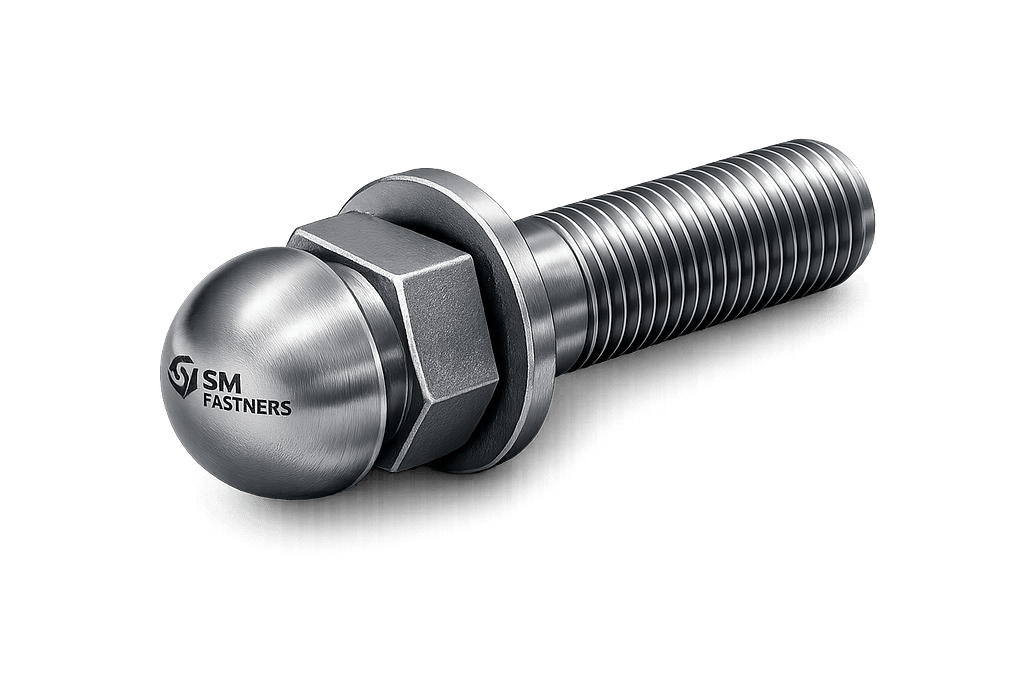
They are extensively deployed across:
- Railway track systems
- Crane rails
- Mining rail infrastructure
- Metro and transit systems
- Steel bridge expansion joints
- Heavy equipment guideways
- Industrial rail-mounted machinery
Within modern infrastructure projects, fish bolts form a safety-critical connection between rail ends through fish plates (joint bars). Their design ensures:
- Controlled joint flexibility
- Load transfer continuity
- Alignment retention under dynamic traffic loads
- Resistance to vibration-induced loosening
EPC contractors and railway authorities classify fish bolts as structural integrity fasteners, requiring traceability, certified metallurgy, and strict dimensional control.
SM Fasteners manufactures fish bolts under certified systems aligned with:
- ISO 9001 Quality Management
- UKAF-accredited procedures
- MSME-certified industrial manufacturing
ensuring global project compliance.
2. Technical Definition
A Fish Bolt is defined as:
A partially threaded structural bolt designed specifically to secure fish plates or joint bars joining rail sections while sustaining combined shear, tensile, and fatigue loading.
Primary Functional Elements
- Oval or square neck preventing rotation
- Precision shank diameter matching plate hole tolerances
- Controlled thread length for load distribution
- High-strength material grades suitable for cyclic loading
Unlike standard hex bolts, fish bolts are engineered to:
- Transfer shear forces through the shank
- Maintain joint preload stability
- Resist vibration loosening from passing loads
3. Typical Fish Bolt Assembly
A standard railway joint includes:
- Rail ends
- Fish plates (joint bars)
- Fish bolts
- heavy hex nut
- Spring or lock washers
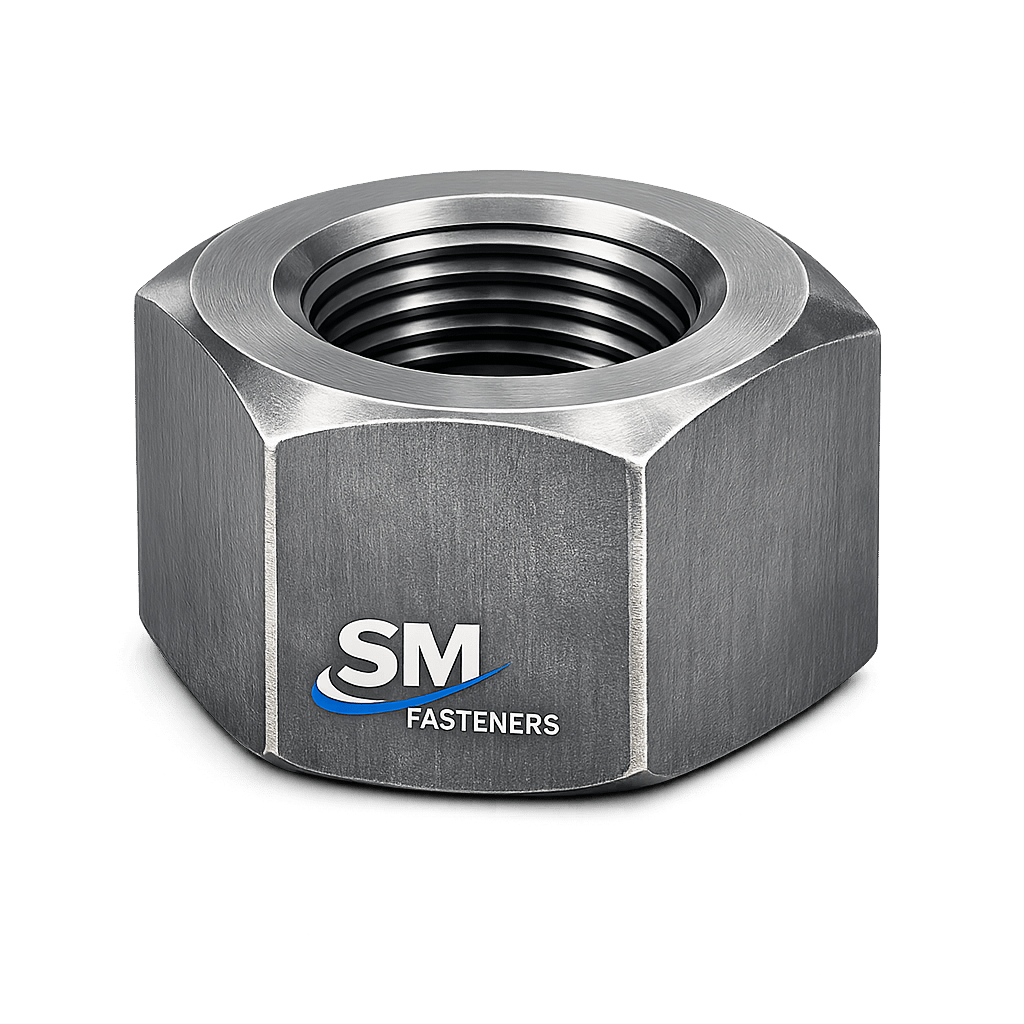
The bolt does not merely clamp — it integrates rails into a continuous structural beam.
4. Functional Role in Assemblies
4.1 Structural Functions
| Function | Engineering Purpose |
|---|---|
| Rail Alignment | Maintains track geometry |
| Load Transfer | Transfers wheel loads across joint |
| Shear Resistance | Prevents rail displacement |
| Fatigue Resistance | Withstands cyclic train loading |
| Vibration Control | Maintains preload stability |
5. Load Mechanics & Force Behavior
Fish bolts operate under combined loading conditions.
Applied Forces
- Axial tensile load
- Double shear load
- Bending stress
- Impact loading
- Thermal expansion forces
- Cyclic fatigue loading
5.1 Load Path in Rail Joint
Train wheel load → Rail → Fish Plate → Fish Bolt Shank → Adjacent Rail
Correct bolt selection ensures stress transfers through the unthreaded shank, not threads.
6. Preload and Clamping Force Principle
Preload is essential to prevent joint slip.
Fundamental Relationship
Where:
- F = Preload force (N)
- T = Applied torque (Nm)
- K = Nut factor (0.18–0.25 typical)
- D = Nominal diameter (m)
Worked Example
M24 Fish Bolt
Torque = 600 Nm
Nut Factor = 0.20
Preload ≈ 125 kN
This preload ensures rail contact integrity.
7. Torque–Tension Relationship
Approximately:
- 10% torque → bolt stretch
- 40% → thread friction
- 50% → bearing friction
Hence lubrication condition critically affects preload accuracy.
8. Joint Design Principles
8.1 Engineering Requirements
- Shear carried by shank
- Threads positioned outside shear plane
- Minimum engagement = 1 × diameter
- Controlled elasticity prevents brittle failure
8.2 Joint Stiffness Concept
Rail joint stiffness depends on:
- Bolt modulus
- Plate thickness
- Clamping force
- Friction coefficient
Higher stiffness → reduced impact loading.
9. Thread Engagement Principles
Recommended engagement:
| Material | Minimum Engagement |
|---|---|
| Carbon Steel | 1.0 × Diameter |
| Stainless Steel | 1.25 × Diameter |
| Alloy Steel | 1.0 × Diameter |
| Nickel Alloy | 1.5 × Diameter |
10. Mechanical Behavior Under Service
Fish bolts experience:
Elastic Stretch
Allows load redistribution.
Micro-Slip
Occurs under cyclic load if preload insufficient.
Fatigue Cycling
Millions of stress reversals during railway operation.
11. Friction and Nut Factor Influence
Nut factor varies with surface condition:
| Condition | Nut Factor (K) |
|---|---|
| Dry | 0.22–0.25 |
| Oiled | 0.18 |
| Zinc Coated | 0.20 |
| PTFE Coated | 0.14 |
Improper assumptions lead to preload errors >30%.
12. Failure Mechanisms
12.1 Fatigue Failure
Primary cause in rail systems.
Initiated at:
- Thread root
- Corrosion pits
- Surface defects
12.2 Shear Failure
Occurs when:
- Shank undersized
- Joint loosened
- Excessive impact load
12.3 Hydrogen Embrittlement
Risk increases with:
- High hardness (>34 HRC)
- Electroplated coatings
SM Fasteners applies controlled baking procedures compliant with international standards.
12.4 Stress Corrosion Cracking
Critical environments:
- Coastal railways
- Chemical terminals
- H₂S exposure
Material selection per NACE MR0175 / ISO 15156 required.
13. Fatigue Design Considerations
Key engineering practices:
- Rolled threads preferred
- Smooth fillet radius
- Shot peening (where required)
- Correct torque application
- Corrosion-resistant coatings
14. Dynamic Load Behavior
Railway joints undergo:
- Vertical wheel load
- Longitudinal traction force
- Braking force
- Thermal expansion stress
Fish bolts must maintain preload despite vibration amplitudes exceeding conventional structural connections.
15. Selection Criteria for Engineers & EPC Buyers
| Parameter | Engineering Consideration |
|---|---|
| Rail Section | Determines bolt size |
| Load Frequency | Fatigue grade selection |
| Environment | Coating/material choice |
| Temperature | Alloy selection |
| Maintenance Interval | Preload retention capability |
| Inspection Requirements | Certification level |
16. Interchangeability Philosophy
Global railway systems adopt compatible geometry allowing interchange across:
- ISO
- BS
- AREMA
- DIN railway specifications
SM Fasteners supplies fish bolts engineered for international interchangeability while maintaining certified traceability.
17. Product Types and Variants of Fish Bolts
Fish bolts are engineered based on rail profile, joint design philosophy, loading intensity, and maintenance methodology. Variations primarily arise from head geometry, shank configuration, and thread system compatibility.
Unlike conventional structural bolts, fish bolt variants are dictated by railway engineering standards rather than general fastener standards.
17.1 Standard Fish Bolt Types
| Type | Description | Typical Application |
|---|---|---|
| Standard Oval Neck Fish Bolt | Prevents rotation inside fish plate | Conventional railway tracks |
| Square Neck Fish Bolt | High anti-rotation capability | Heavy haul railways |
| Hex Head Fish Bolt | Easy field installation | Industrial rail systems |
| Countersunk Fish Bolt | Flush surface requirement | Bridges & crossings |
| High Strength Fish Bolt | Heat-treated alloy steel | High-speed rail |
| Insulated Fish Bolt Assembly | Electrical isolation | Signaling zones |
| Shouldered Fish Bolt | Controlled shear transfer | Crane rails |
| Custom Engineered Fish Bolt | Project-specific geometry | EPC infrastructure |
SM Fasteners manufactures all configurations including custom rail authority drawings.
18. Functional Geometry Logic
Fish bolt geometry is fundamentally different from general-purpose bolts.
Key Design Principles
- Shear Plane Located in Shank
- Threads Outside Load Zone
- Anti-Rotation Neck Feature
- Controlled Grip Length
- High Bearing Surface Contact
18.1 Major Geometric Features
| Feature | Engineering Function |
|---|---|
| Head | Torque transmission |
| Neck | Prevent rotation |
| Shank | Shear load transfer |
| Thread | Clamping force generation |
| Fillet Radius | Fatigue resistance |
| Grip Length | Joint alignment stability |
19. Dimensional Logic for Rail Compatibility
Fish bolt dimensions are governed by:
- Rail section size
- Fish plate thickness
- Hole clearance tolerance
- Required preload capacity
Typical rail standards:
- UIC Rails
- BS Railway Sections
- IRS (Indian Railway Standard)
- AREMA Rail Profiles
20. Standard Dimensional Specification Table
Fish Bolt Dimensional Chart (Typical Engineering Range)
| Nominal Size | Thread Pitch | Length Range (mm) | Head Width (mm) | Head Height (mm) | Neck Size | Thread Length |
|---|---|---|---|---|---|---|
| M16 | 2.0 | 80–140 | 27 | 10 | Oval/Square | 40 |
| M20 | 2.5 | 100–180 | 32 | 13 | Oval/Square | 50 |
| M22 | 2.5 | 110–190 | 36 | 14 | Oval/Square | 55 |
| M24 | 3.0 | 120–220 | 41 | 15 | Oval/Square | 60 |
| M27 | 3.0 | 140–240 | 46 | 17 | Square | 65 |
| M30 | 3.5 | 160–260 | 50 | 19 | Square | 70 |
(Dimensions aligned with SM Fasteners manufacturing capability and railway standards.)
21. Thread Forms Used in Fish Bolts
Railway systems worldwide utilize multiple thread systems for interchangeability.
Thread Standard Compatibility Table
| Thread System | Standard | Typical Region |
|---|---|---|
| Metric Coarse | ISO 261 / ISO 965 | Global |
| Metric Fine | ISO | High preload applications |
| UNC | ASME B1.1 | North America |
| UNF | ASME B1.1 | High vibration zones |
| BSW | BS 84 | Legacy railways |
| BSF | BS 84 | British rail systems |
| IRS Threads | Indian Railway Standards | India |
SM Fasteners supports multi-standard thread rolling ensuring EPC project compatibility.
22. Thread Tolerances and Classes
Metric Thread Tolerance Classes
| Component | Class |
|---|---|
| External Thread | 6g |
| Internal Thread | 6H |
| Precision Assembly | 4g6g |
| Heavy Structural | 8g |
Unified Thread Classes
| Class | Application |
|---|---|
| 2A/2B | General structural |
| 3A/3B | Precision rail assemblies |
23. Applicable International Standards
Fish bolts comply with a combination of fastener standards and railway authority specifications.
23.1 ISO Standards
| Standard | Scope |
|---|---|
| ISO 898-1 | Mechanical properties |
| ISO 4014 | Hex bolts reference |
| ISO 965 | Thread tolerances |
| ISO 3269 | Acceptance inspection |
| ISO 4759 | Dimensional tolerances |
23.3 DIN Standards
| DIN Standard | Scope |
|---|---|
| DIN 6914 | High-strength structural bolts |
| DIN 933 | Thread geometry reference |
| DIN 267 | Fastener properties |
23.4 British Standards (BS)
| Standard | Application |
|---|---|
| BS 64 | Railway fish bolts |
| BS 916 | Rail joint fasteners |
| BS EN 14399 | Structural bolting assemblies |
23.5 Indian Railway Standards (IRS)
Widely adopted across Asia and Africa projects:
- IRS T-23 Fish Bolt Specification
- IRS Mechanical Property Requirements
- IRS Rail Joint Assembly Requirements
SM Fasteners supports IRS-compliant manufacturing with traceable documentation.
24. Property Class Systems
Mechanical property classes determine load capacity.
Metric Property Classes
| Class | Yield Strength (MPa) | Tensile Strength (MPa) |
|---|---|---|
| 4.6 | 240 | 400 |
| 5.6 | 300 | 500 |
| 8.8 | 640 | 800 |
| 10.9 | 900 | 1040 |
| 12.9 | 1080 | 1220 |
Railway applications commonly specify:
- 8.8 — Standard rail joints
- 10.9 — Heavy haul systems
- 12.9 — High dynamic loading
25. Interchangeability Considerations
Global rail infrastructure requires cross-standard compatibility.
Critical parameters:
- Shank diameter tolerance
- Thread pitch matching
- Head seating geometry
- Nut compatibility
- Washer interface
SM Fasteners performs dimensional validation ensuring interchangeability between:
- ISO ↔ BS
- DIN ↔ IRS
- ASTM ↔ UIC systems
26. Dimensional Tolerance Philosophy
Fish bolts operate in safety-critical environments requiring strict control.
Typical tolerances:
| Parameter | Tolerance |
|---|---|
| Shank Diameter | h9 |
| Length | ±1 mm |
| Thread Pitch | ISO 965 compliant |
| Head Width | ±0.3 mm |
| Straightness | ≤0.2% length |
27. Grip Length Engineering
Grip length must equal total clamped thickness.
Incorrect grip causes:
- Thread shear loading
- Fatigue crack initiation
- Joint loosening
Recommended:
28. Hole Clearance Design
| Bolt Size | Hole Clearance |
|---|---|
| M20 | +1.5 mm |
| M24 | +2.0 mm |
| M27 | +2.5 mm |
| M30 | +3.0 mm |
Provides assembly tolerance while maintaining shear resistance.
29. Head Geometry Engineering
Fish bolt heads are optimized for field installation.
Design objectives:
- Torque application under confined conditions
- Minimal protrusion
- Resistance to tool slip
- High bearing contact
30. Weight Chart — SM Fasteners Reference Data
(Approximate values aligned with SM Fasteners production standards)
| Size | Length | Weight per Piece (kg) | Weight per 100 pcs (kg) |
|---|---|---|---|
| M20 × 120 | 0.36 | 36 | |
| M22 × 130 | 0.45 | 45 | |
| M24 × 150 | 0.58 | 58 | |
| M27 × 160 | 0.75 | 75 | |
| M30 × 180 | 1.05 | 105 |
Weight data supports logistics planning and EPC procurement estimation.
31. Engineering Selection Flow
- Identify rail standard
- Determine bolt diameter
- Select property class
- Confirm thread system
- Evaluate environment
- Select coating/material
- Validate preload requirement
- Specify inspection level
32. Integration with SM Fasteners Manufacturing Capability
SM Fasteners provides:
- Multi-standard tooling
- Precision hot forging
- Rolled thread technology
- Certified inspection systems
- Custom drawing execution
- Global EPC project supply
All fish bolts are produced within ISO 9001 controlled processes ensuring traceability from raw material to shipment.
33. Material Engineering for Fish Bolts
Material selection is the most critical engineering decision influencing strength, fatigue resistance, corrosion performance, and service life of fish bolts.
Rail joints operate under:
- Continuous cyclic loading
- Environmental exposure
- Temperature fluctuations
- Vibration and impact stresses
Therefore, material selection must balance:
- Mechanical strength
- Toughness
- Corrosion resistance
- Manufacturability
- Cost efficiency
SM Fasteners manufactures fish bolts using a full industrial material portfolio compliant with global specifications.
34. Industrial Material Grades Used
34.1 Carbon Steel Grades
| Standard | Typical Grade | Application |
|---|---|---|
| ASTM A36 | Mild Carbon Steel | Light rail systems |
| ASTM A307 | General structural | Low load joints |
| EN 10025 | S355 | Structural rail fastening |
| IS 2062 | E350 | Indian railway systems |
Advantages
- Economical
- Good machinability
- Suitable for coating systems
Limitations
- Requires corrosion protection
- Moderate fatigue resistance
34.2 Alloy Steel Grades
| Standard | Grade | Typical Property Class |
|---|---|---|
| ASTM A193 | B7 | High strength |
| EN 10083 | 42CrMo4 | 10.9 / 12.9 |
| AISI 4140 | Alloy Steel | Heavy haul rail |
| AISI 4340 | Ultra high strength | Extreme fatigue |
Used for:
- High-speed rail
- Mining rail systems
- Heavy axle load infrastructure
34.3 Stainless Steel Grades
| Grade | Characteristics | Application |
|---|---|---|
| SS304 | General corrosion resistance | Urban rail |
| SS316 | Chloride resistance | Coastal railways |
| SS316L | Low carbon | Chemical zones |
| SS410 | High strength martensitic | Wear environments |
34.4 Duplex & Super Duplex Stainless Steel
| Grade | Standard | Benefits |
|---|---|---|
| Duplex 2205 | UNS S32205 | High strength + corrosion resistance |
| Super Duplex 2507 | UNS S32750 | Offshore performance |
Used in:
- Offshore terminals
- LNG facilities
- Aggressive chemical exposure
34.5 Nickel Alloy Materials
SM Fasteners supplies advanced metallurgy for severe service:
| Alloy | Key Property | Environment |
|---|---|---|
| Inconel 625 | High temperature strength | Power & LNG |
| Incoloy 825 | Acid resistance | Chemical plants |
| Monel 400 | Seawater resistance | Marine rail |
| Hastelloy C276 | Extreme corrosion resistance | Acid plants |
| SMO 254 | Chloride resistance | Coastal infrastructure |
34.6 PEEK Fasteners (Special Applications)
PEEK fish bolt assemblies are used where:
- Electrical insulation required
- Non-magnetic behavior needed
- Chemical exposure extreme
- Weight reduction required
Applications include:
- Signaling systems
- Electrified rail tracks
- Chemical processing plants
35. Material Comparison Table
| Material | UTS (MPa) | Yield (MPa) | Corrosion Resistance | Temp Limit | Cost Level | Typical Use |
|---|---|---|---|---|---|---|
| Carbon Steel | 400–800 | 250–640 | Low | 300°C | Low | Standard rail |
| Alloy Steel | 900–1200 | 800–1000 | Moderate | 450°C | Medium | Heavy rail |
| SS304 | 515 | 205 | Good | 870°C | Medium | Urban rail |
| SS316 | 515 | 205 | Excellent | 870°C | Medium | Coastal |
| Duplex 2205 | 800 | 550 | Very High | 300°C | High | Offshore |
| Inconel 625 | 930 | 517 | Extreme | 980°C | Very High | LNG |
| PEEK | — | — | Chemical resistant | 260°C | High | Electrical isolation |
36. Mechanical Properties by Property Class
| Property Class | Tensile Strength (MPa) | Yield Strength (MPa) | Hardness (HRC) |
|---|---|---|---|
| 4.6 | 400 | 240 | 12–22 |
| 5.6 | 500 | 300 | 15–25 |
| 8.8 | 800 | 640 | 22–32 |
| 10.9 | 1040 | 900 | 32–39 |
| 12.9 | 1220 | 1080 | 39–44 |
Railway fish bolts typically limited to ≤34 HRC for sour-service safety.
37. NACE MR0175 / ISO 15156 Compliance
For H₂S environments:
- Hardness ≤ 34 HRC
- Controlled heat treatment
- Sulfide stress cracking resistance
- Material traceability mandatory
SM Fasteners supplies NACE-compliant materials upon project requirement.
38. Heat Treatment Processes
Heat treatment determines mechanical performance.
38.1 Process Flow
- Austenitizing
- Quenching
- Tempering
- Stress relieving
38.2 Heat Treatment Types
| Process | Purpose |
|---|---|
| Normalizing | Grain refinement |
| Quenching | Strength increase |
| Tempering | Toughness restoration |
| Annealing | Machinability improvement |
| Solution Annealing | Stainless steels |
| Aging | Nickel alloys |
38.3 Mechanical Impact of Heat Treatment
| Treatment | Strength | Toughness | Fatigue Resistance |
|---|---|---|---|
| Untreated | Low | High | Low |
| Quenched | High | Low | Medium |
| Q&T | High | High | Excellent |
Q&T is standard for high-strength fish bolts.
39. Hardness Control Requirements
| Application | Max Hardness |
|---|---|
| General Rail | 34 HRC |
| Sour Service | 22 HRC max |
| Stainless Steel | HRB 95 typical |
| Nickel Alloy | Controlled by spec |
40. End-to-End Manufacturing Workflow
(SM Fasteners ISO 9001 Certified System)
40.1 Raw Material Procurement
- Approved mills only
- EN 10204 3.1 MTC verification
- Chemical composition validation
- Heat number traceability
40.2 Incoming Inspection
- Spectrochemical testing
- Visual inspection
- Dimensional verification
- PMI (Positive Material Identification)
40.3 Forging Operations
Hot Forging Preferred
Benefits:
- Grain flow continuity
- Improved fatigue resistance
- Higher strength integrity
Steps:
- Bar cutting
- Induction heating
- Closed die forging
- Trimming
- Controlled cooling
40.4 Machining Operations
Applied when required:
- Special head geometry
- Custom rail standards
- Tight tolerances
40.5 Thread Manufacturing
Thread Rolling (Preferred)
Advantages:
- Compressive residual stress
- Improved fatigue life
- Smooth surface finish
Thread Cutting
Used for:
- Large diameters
- Exotic alloys
40.6 Heat Treatment Execution
- Computer-controlled furnaces
- Batch traceability
- Temperature uniformity validation
- Hardness verification
40.7 Straightening & Calibration
Post-treatment correction ensures:
- Straightness tolerance compliance
- Accurate shank geometry
- Assembly reliability
41. Surface Finishing & Coating Engineering
Surface engineering determines corrosion life and friction behavior.
41.1 Surface Finish Comparison Table
| Coating | Corrosion Protection | Friction Control | Temperature Limit | Typical Use |
|---|---|---|---|---|
| Black Oxide | Low | Stable | 300°C | Indoor rail |
| Zinc Plating | Moderate | Good | 120°C | General use |
| HDG | High | Higher friction | 450°C | Outdoor rail |
| Zinc Flake | Very High | Controlled | 300°C | Railways |
| Phosphate | Assembly aid | Excellent | 250°C | Preload control |
| PTFE | Excellent | Low friction | 260°C | Chemical zones |
| Xylan | Superior | Stable | 260°C | Offshore |
| Cadmium (restricted) | Marine | Excellent | Aerospace |
41.2 Hydrogen Embrittlement Prevention
SM Fasteners applies:
- Controlled electroplating parameters
- Post-bake treatment
- Hardness monitoring
- Process validation records
42. Corrosion Resistance vs Environment Table
| Environment | Recommended Material/Coating |
|---|---|
| Dry Inland | Carbon steel + Zinc |
| Coastal | SS316 / Duplex |
| Marine Splash | Super Duplex |
| Acid Plant | Hastelloy |
| LNG | Inconel |
| H₂S Service | NACE Alloy Steel |
| Chemical Exposure | PEEK / PTFE coated |
43. Friction Coefficient Control
Surface finish affects preload accuracy.
| Surface | Friction Coefficient |
|---|---|
| Dry Steel | 0.20–0.25 |
| Oiled | 0.16–0.18 |
| Zinc Flake | 0.12–0.16 |
| PTFE | 0.08–0.12 |
Controlled friction ensures predictable torque–tension relationship.
44. Identification & Traceability
Each SM Fasteners fish bolt batch includes:
- Heat number marking
- Grade identification
- Manufacturer traceability
- Inspection linkage
Ensuring audit-ready supply for EPC and railway authorities.
45. Engineering Advantages of SM Fasteners Manufacturing System
- Certified ISO 9001 quality control
- Advanced alloy processing capability
- Precision hot forging technology
- Thread rolling expertise
- Capability for exotic materials including PEEK
- Global export manufacturing readiness
46. Inspection & Quality Control Philosophy
Fish bolts are categorized as safety-critical fastening components because failure directly affects structural continuity and operational safety.
SM Fasteners integrates inspection within an ISO 9001 certified quality management system, ensuring full traceability from raw material to shipment.
Quality assurance objectives:
- Mechanical reliability
- Dimensional conformity
- Metallurgical integrity
- Traceable documentation
- Compliance with EPC inspection protocols
47. Incoming Material Quality Control
Every production batch begins with controlled raw material validation.
Verification Steps
| Inspection Stage | Method |
|---|---|
| Mill Test Certificate Review | EN 10204 3.1 |
| Chemical Analysis | Optical Emission Spectroscopy |
| Positive Material Identification | PMI Testing |
| Surface Inspection | Visual & Magnetic |
| Heat Number Traceability | Barcode/Batch Control |
Materials failing verification are rejected prior to manufacturing.
48. In-Process Manufacturing Inspection
Quality checks are embedded throughout production.
| Stage | Inspection |
|---|---|
| Forging | Grain flow & head integrity |
| Machining | Dimensional verification |
| Thread Rolling | Pitch gauge validation |
| Heat Treatment | Hardness testing |
| Straightening | Runout measurement |
| Surface Coating | Thickness testing |
49. Final Inspection & Mechanical Testing
Mechanical Testing Program
| Test | Standard | Purpose |
|---|---|---|
| Tensile Test | ISO 898-1 | Strength validation |
| Proof Load Test | ASTM / ISO | Elastic performance |
| Hardness Test | Rockwell/Brinell | Heat treatment verification |
| Impact Test | Charpy V-Notch | Toughness evaluation |
| Shear Test | Project requirement | Joint performance |
| Elongation Test | ISO | Ductility |
50. Non-Destructive Testing (NDT)
NDT ensures absence of critical defects.
| Method | Application |
|---|---|
| Magnetic Particle Inspection | Surface cracks |
| Ultrasonic Testing | Internal discontinuities |
| Dye Penetrant | Surface flaws |
| Eddy Current | Thread defects |
51. Dimensional Inspection Requirements
Critical measurements include:
- Shank diameter
- Head geometry
- Thread pitch
- Grip length
- Straightness
- Oval neck dimensions
Inspection tools:
- Coordinate Measuring Machine (CMM)
- Thread ring gauges
- Digital micrometers
- Go/No-Go gauges
52. Certification & Documentation
SM Fasteners provides complete EPC documentation packages.
Standard Documentation
| Document | Description |
|---|---|
| EN 10204 3.1 MTC | Chemical & mechanical certification |
| Heat Treatment Report | Furnace cycle records |
| Inspection Report | Dimensional verification |
| Coating Certificate | Thickness & process |
| NDT Report | Defect validation |
| Certificate of Conformance | Compliance declaration |
Optional Documentation
- EN 10204 3.2 Third-Party Certification
- TPI inspection approval
- IBR / Railway Authority documentation
53. Mechanical Properties Table — Fish Bolts
| Property Class | Proof Load (MPa) | Yield Strength (MPa) | Tensile Strength (MPa) |
|---|---|---|---|
| 4.6 | 225 | 240 | 400 |
| 5.6 | 280 | 300 | 500 |
| 8.8 | 580 | 640 | 800 |
| 10.9 | 830 | 900 | 1040 |
| 12.9 | 970 | 1080 | 1220 |
54. Proof Load & Tensile Capacity by Size
| Size | Stress Area (mm²) | Proof Load 8.8 (kN) | Ultimate Load 8.8 (kN) |
|---|---|---|---|
| M20 | 245 | 142 | 196 |
| M22 | 303 | 176 | 242 |
| M24 | 353 | 205 | 282 |
| M27 | 459 | 266 | 367 |
| M30 | 561 | 325 | 449 |
55. Tightening Torque Chart
(Approximate values)
| Size | Grade | Dry Torque (Nm) | Lubricated Torque (Nm) |
|---|---|---|---|
| M20 | 8.8 | 410 | 300 |
| M22 | 8.8 | 550 | 400 |
| M24 | 8.8 | 710 | 520 |
| M27 | 10.9 | 1050 | 780 |
| M30 | 10.9 | 1450 | 1100 |
Torque values must be validated against project specifications.
56. Preload Calculation — Engineering Method
Formula
Where:
- F = Preload Force
- T = Torque
- K = Nut Factor
- D = Bolt Diameter
Worked EPC Example
M27 Fish Bolt
Torque = 1050 Nm
Nut Factor = 0.18
Preload ≈ 216 kN
57. Failure Mechanisms & Prevention
| Failure Mode | Cause | Prevention |
|---|---|---|
| Fatigue | Insufficient preload | Correct torque |
| Shear | Thread in shear plane | Proper grip length |
| Hydrogen Embrittlement | Improper plating | Controlled baking |
| Stress Corrosion | Wrong material | Alloy selection |
| Galling | Stainless threads | Lubrication |
58. Surface Finish Performance Comparison
| Finish | Salt Spray Resistance | Friction Stability | Maintenance Need |
|---|---|---|---|
| Black Oxide | Low | Stable | High |
| Zinc Plated | Medium | Moderate | Medium |
| Hot Dip Galvanized | High | Variable | Low |
| Zinc Flake | Very High | Excellent | Very Low |
| PTFE | Chemical Resistant | Excellent | Very Low |
59. Corrosion Resistance vs Environment
| Environment | Recommended Solution |
|---|---|
| Inland Rail | Zinc plated carbon steel |
| Coastal Railway | SS316 / Duplex |
| Offshore Terminal | Super Duplex |
| Chemical Zone | Hastelloy |
| LNG Facility | Inconel |
| Electrified Track | PEEK insulated system |
60. Industry Applications
60.1 Railways & Metro Infrastructure
Primary application area:
- Rail joint fastening
- Expansion joints
- High-speed rail
- Freight corridors
60.2 Construction & Structural Steel
- Crane rail alignment
- Bridge joints
- Steel guideways
- Expansion assemblies
60.3 Oil & Gas Sector
Used in:
- Rail-mounted loading systems
- Refinery transfer rails
- Maintenance rail infrastructure
Compliance often requires NACE MR0175 materials.
60.4 Power Generation
- Coal handling plant rail systems
- Turbine maintenance rails
- Nuclear auxiliary rail assemblies
60.5 Petrochemical & Chemical Processing
Requirements:
- Corrosion-resistant alloys
- PTFE or Xylan coatings
- Stainless or nickel materials
60.6 LNG & Offshore Installations
Key challenges:
- Saltwater exposure
- Cryogenic temperature variation
- High corrosion risk
SM Fasteners supplies duplex and nickel alloy fish bolts suitable for offshore EPC projects.
60.7 Automotive & Heavy Equipment
- Mining rail vehicles
- Material handling equipment
- Port crane rails
60.8 Shipbuilding & Marine Infrastructure
- Dock rail systems
- Shipyard crane tracks
- Marine loading facilities
61. PEEK Fastener Applications
PEEK fish bolts provide:
- Electrical insulation
- Non-sparking properties
- Chemical resistance
- Lightweight assemblies
Used in:
- Electrified railway signaling
- Hazardous chemical zones
- Non-magnetic installations
62. Thread Standards & Tolerances Table
| Thread Type | Standard | Tolerance |
|---|---|---|
| Metric | ISO 261 | 6g/6H |
| UNC | ASME B1.1 | 2A/2B |
| UNF | ASME B1.1 | 3A/3B |
| BSW | BS 84 | Medium Fit |
| BSF | BS 84 | Fine Fit |
63. Weight Chart — SM Fasteners Reference
| Size | Length | Weight/Piece (kg) | Weight/100 pcs (kg) |
|---|---|---|---|
| M20×120 | 0.36 | 36 | |
| M22×130 | 0.45 | 45 | |
| M24×150 | 0.58 | 58 | |
| M27×160 | 0.75 | 75 | |
| M30×180 | 1.05 | 105 |
Used for logistics estimation and freight calculation.
64. Export Packaging System
SM Fasteners packaging complies with international shipping standards.
Industrial Packaging
- VCI corrosion protection
- Thread protectors
- Heat-number labeling
- Moisture barrier packing
Export Crating
- ISPM-15 compliant wooden crates
- Palletized loads
- Shock-resistant packaging
- Container optimization
65. Global Export Documentation
Provided with every shipment:
- Commercial Invoice
- Packing List
- Certificate of Origin
- EN 10204 3.1 MTC
- Inspection Reports
- Heat Treatment Certificates
- Coating Reports
- Certificate of Conformance
66. Traceability & Digital Quality Records
SM Fasteners maintains:
- Batch traceability
- Heat number tracking
- Manufacturing records
- Inspection data retention
- Audit-ready documentation
Supporting EPC, railway authority, and third-party audits.
67. SM FASTENERS — Engineering Capability Integration
SM Fasteners operates as a precision fastener manufacturer delivering:
- ISO 9001 certified production systems
- UKAF-accredited quality framework
- MSME recognized manufacturing capability
- Advanced alloy and PEEK fastener expertise
- Custom engineering & drawing-based manufacturing
- Multi-standard global compliance
Fish bolts supplied are engineered for:
- High reliability infrastructure
- Global railway systems
- EPC mega-project execution
- Long-term operational safety