

Xylan Coated
1. Introduction to Xylan Coated Fasteners
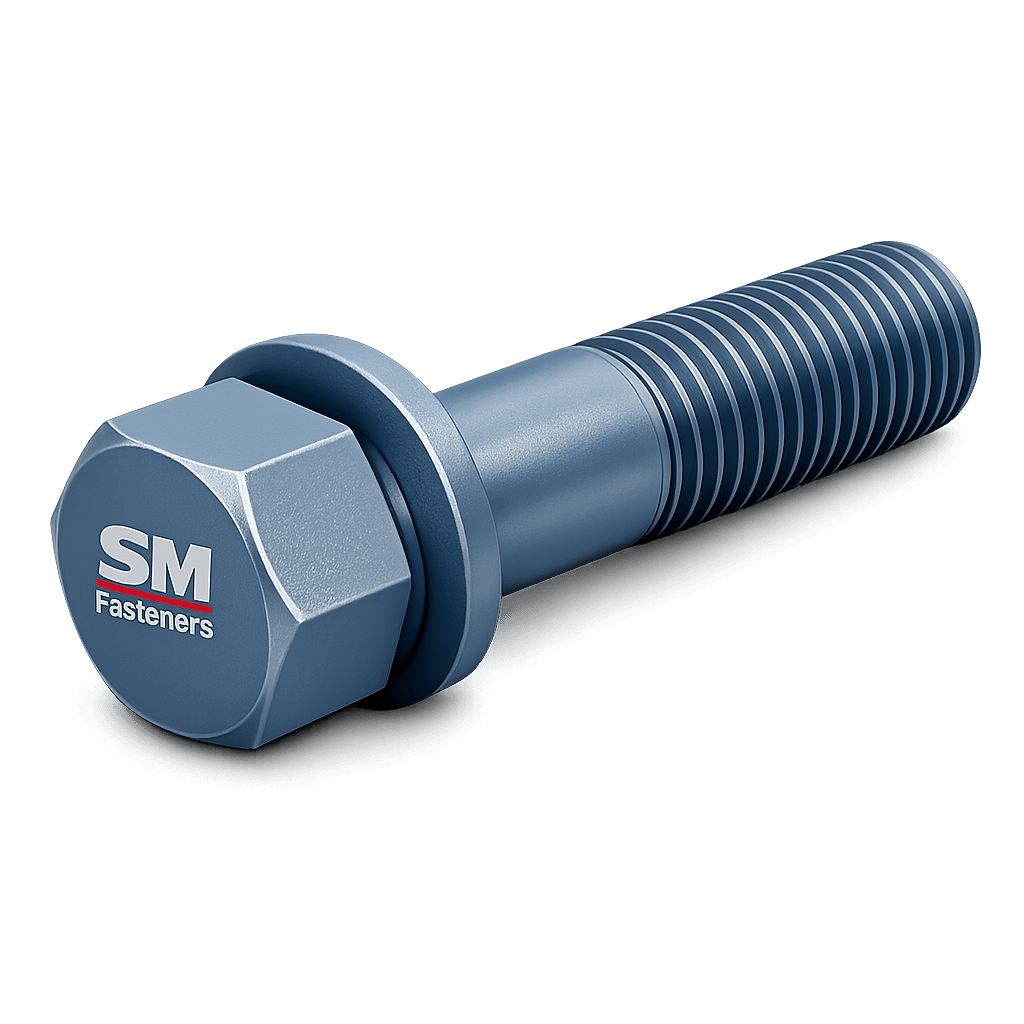
Xylan coated fasteners are high-performance engineered fastening systems utilizing fluoropolymer-based dry film coatings designed to improve corrosion resistance, reduce friction coefficients, enhance chemical resistance, and provide controlled torque–tension characteristics under critical operating conditions.
These coatings are widely specified in:
- Offshore platforms
- Refinery piping systems
- LNG terminals
- Structural steel assemblies
- Petrochemical plants
- Marine equipment
- High-temperature process systems
- OEM mechanical assemblies
Xylan coatings are typically applied over carbon steel, alloy steel, stainless steel, duplex stainless steel, and nickel alloy fasteners to improve operational reliability under aggressive environments.
For EPC contractors, OEM manufacturers, and industrial procurement teams, Xylan-coated fasteners are selected where conventional zinc plating or phosphate coatings fail to provide sufficient durability, anti-galling protection, or chemical resistance.
2. Technical Definition of Xylan Coating
Xylan is a family of fluoropolymer-based industrial coatings incorporating:
- PTFE (Polytetrafluoroethylene)
- FEP (Fluorinated Ethylene Propylene)
- PFA (Perfluoroalkoxy Alkane)
- MoS₂ lubricants
- Reinforced organic binders
The coating forms a thin-film engineered barrier providing:
- Corrosion resistance
- Dry lubrication
- Low friction coefficient
- Chemical resistance
- Anti-seize properties
- Reduced galling
- Controlled tightening performance
Typical coating thickness ranges:
| Coating System | Typical Thickness |
|---|---|
| Single coat | 20–30 microns |
| Two-coat system | 25–50 microns |
| Heavy-duty offshore system | 50–80 microns |
3. Industrial Importance of Xylan Coated Fasteners
3.1 Offshore & Marine Systems
Salt-laden environments accelerate galvanic and crevice corrosion. Xylan coatings provide:
- Chloride resistance
- Salt spray durability
- Reduced seizure during maintenance
- Extended inspection intervals
Typical applications:
- Flange bolting
- Subsea connectors
- Valve assemblies
- Structural brackets
3.2 Oil & Gas Processing Facilities
Hydrocarbon facilities require controlled preload performance under elevated temperatures and corrosive media.
Xylan coatings help minimize:
- Thread galling
- Hydrogen-assisted corrosion
- Fastener seizure
- Maintenance downtime
Used in:
- Pressure vessels
- Heat exchangers
- Pipeline systems
- Compressor skids
3.3 Structural & Infrastructure Projects
Structural steel joints require reliable torque transfer and long-term atmospheric corrosion protection.
Xylan-coated assemblies are widely used in:
- Bridges
- Metro infrastructure
- Wind towers
- Transmission structures
- Coastal construction
4. Functional Role of Xylan Coated Fasteners
The fundamental role of a fastener is to create and maintain clamp load between assembled components.
Xylan coating improves fastening performance by influencing:
- Friction coefficient
- Torque consistency
- Clamp load repeatability
- Corrosion durability
- Installation efficiency
5. Load Mechanics in Bolted Joints
5.1 Clamping Force Principle
A bolted joint functions by converting tightening torque into preload.
The preload creates compressive force between joined components.
The relationship between torque and preload is approximated by:
Where:
- = tightening torque
- = nut factor
- = preload force
- = nominal bolt diameter
Xylan coatings significantly reduce the nut factor due to lower friction.
Typical nut factor values:
| Surface Condition | Nut Factor (K) |
|---|---|
| Plain steel | 0.20–0.25 |
| Zinc plated | 0.18–0.22 |
| Xylan coated | 0.10–0.16 |
| PTFE coated | 0.08–0.14 |
5.2 Torque–Tension Relationship
Lower friction increases preload consistency.
Advantages include:
- Reduced scatter in clamp load
- Improved assembly reliability
- Reduced overtightening risk
- Better gasket sealing integrity
This is especially critical in:
- Pressure-containing flanges
- Dynamic vibration systems
- Thermal cycling assemblies
6. Preload Calculation Example
Example
Given:
- Bolt size: M20
- Property class: 10.9
- Tensile stress area = 245 mm²
- Yield strength = 940 MPa
- Target preload = 70% of yield
Preload:
Torque with Xylan coating:
Assume:
- K = 0.14
- D = 20 mm = 0.02 m
7. Joint Design Principles
7.1 Importance of Proper Joint Design
Fastener failures are often caused by poor joint design rather than inadequate bolt strength.
Critical design considerations include:
- Preload retention
- Joint stiffness
- Thermal expansion compatibility
- Vibration resistance
- Corrosion compatibility
7.2 Joint Stiffness Ratio
The stiffness ratio between the bolt and clamped material influences fatigue resistance.
Higher joint stiffness improves:
- Load sharing
- Vibration resistance
- Fatigue life
Xylan coatings assist by maintaining stable preload under cyclic conditions.
7.3 Thread Engagement Requirements
Recommended minimum engagement:
| Material Combination | Minimum Engagement |
|---|---|
| Steel to steel | 1 × diameter |
| Stainless steel | 1.5 × diameter |
| Aluminum | 2 × diameter |
| Cast iron | 1.5 × diameter |
8. Friction & Tribological Performance
8.1 Coefficient of Friction
Xylan coatings reduce friction significantly.
Typical dynamic friction coefficients:
| Coating Type | Coefficient of Friction |
|---|---|
| Plain steel | 0.50–0.80 |
| Zinc plated | 0.18–0.25 |
| Xylan PTFE | 0.08–0.15 |
| MoS₂ dry film | 0.05–0.12 |
8.2 Galling Prevention
Stainless steel fasteners are highly susceptible to galling.
Xylan coatings provide:
- Surface separation
- Lubrication
- Reduced adhesive wear
- Improved assembly repeatability
Commonly specified for:
- Austenitic stainless steel bolts
- Duplex fasteners
- Nickel alloy studs
9. Mechanical Behavior Under Service Loads
9.1 Tensile Loading
Tensile loads act parallel to the bolt axis.
The fastener must resist:
- Yielding
- Fracture
- Relaxation
9.2 Shear Loading
Shear forces act perpendicular to the bolt axis.
Joint performance depends on:
- Bolt diameter
- Shear plane location
- Material hardness
- Clamp load retention
9.3 Fatigue Loading
Fatigue is a primary cause of industrial fastener failure.
Caused by:
- Cyclic loading
- Vibration
- Thermal expansion cycles
Xylan coatings assist indirectly by improving preload consistency.
10. Failure Mechanisms in Xylan Coated Fasteners
10.1 Hydrogen Embrittlement
High-strength fasteners above 39 HRC are susceptible.
Risk increases during:
- Acid cleaning
- Electroplating
- Corrosive exposure
Xylan coatings themselves do not eliminate embrittlement risk.
Mitigation measures:
- Controlled baking
- Mechanical cleaning
- Non-electrolytic coating systems
- Hardness control
10.2 Stress Corrosion Cracking
Occurs in:
- Chloride environments
- H₂S service
- High tensile stress conditions
Critical for:
- Offshore structures
- Sour gas systems
Applicable standards:
11. Thermal Performance of Xylan Coatings
Typical operating limits:
| Xylan Series | Temperature Range |
|---|---|
| Standard PTFE systems | -40°C to +150°C |
| High-temperature fluoropolymer | Up to +260°C |
| Specialty systems | Up to +315°C |
12. Corrosion Resistance Mechanism
Xylan coatings protect through:
- Barrier protection
- Moisture isolation
- Chemical inertness
- Reduced galvanic interaction
Performance depends on:
- Surface preparation
- Coating thickness
- Cure quality
- Substrate material
13. Corrosion Resistance vs Environment
| Environment | Carbon Steel | Zinc Plated | Xylan Coated | Duplex + Xylan |
|---|---|---|---|---|
| Coastal atmosphere | Moderate | Good | Excellent | Excellent |
| Offshore splash zone | Poor | Moderate | Very good | Excellent |
| H₂S environment | Poor | Poor | Good | Excellent |
| Acidic chemical exposure | Poor | Poor | Good | Excellent |
| High humidity | Moderate | Good | Excellent | Excellent |
| LNG cryogenic systems | Moderate | Moderate | Excellent | Excellent |
14. Fastener Joint Reliability in EPC Projects
Critical EPC requirements include:
- Traceability
- Repeatable preload
- Corrosion durability
- International standards compliance
- Third-party inspection compatibility
Xylan-coated fasteners are widely accepted where:
- Controlled assembly torque is mandatory
- Anti-galling is required
- Extended maintenance intervals are critical
15. SM Fasteners Engineering Capability
SM Fasteners manufactures precision-engineered coated fastening systems for industrial and EPC applications using:
- Carbon steel
- Alloy steel
- Stainless steel
- Duplex & super duplex stainless steel
- Nickel alloys
- PEEK engineering polymers
Supported by:
- ISO 9001 quality systems
- MSME certification
- UKAF-aligned quality framework
Capabilities include:
- Custom coating systems
- Precision thread manufacturing
- Dimensional inspection
- Traceability control
- Export-oriented packaging systems
16. Summary — Engineering Significance
Xylan-coated fasteners provide a critical combination of:
- Corrosion resistance
- Controlled friction behavior
- Galling resistance
- Chemical durability
- Torque consistency
These characteristics make them essential in:
- Offshore engineering
- Oil & gas systems
- Structural steel
- Chemical processing
- High-reliability industrial assemblies
The engineering performance of the coating must always be evaluated alongside:
Base material properties
Joint design
Service environment
Torque control methodology
Applicable international standards
17. Product Types of Xylan Coated Fasteners
Xylan coating systems are applied across a wide range of industrial fastening products depending on load requirements, environmental exposure, assembly accessibility, and maintenance conditions.
Typical coated fastening products manufactured by SM Fasteners include:
- Hex Bolt
- Heavy Hex Nut
- Socket head cap screws
- Stud bolts
- Threaded rods
- Hex nuts
- Heavy hex nuts
- Lock nuts
- Washers
- Anchor fasteners
- Structural bolting assemblies
- U-bolts
- Custom-machined fasteners
- PEEK-coated and hybrid fastening systems
18. Hex Head Xylan Coated Bolts
Hex bolts are the most widely used industrial fasteners for structural and pressure-containing applications.
Functional Characteristics
- High torque transfer capability
- Easy field installation
- Compatible with hydraulic tensioning systems
- Suitable for heavy preload applications
Common Applications
- Pipe flanges
- Structural steel joints
- Pump assemblies
- Valve systems
- Heavy machinery
19. Heavy Hex Bolts
Heavy hex bolts provide increased bearing surface area and higher wrenching strength.
Advantages
- Better load distribution
- Improved resistance to head deformation
- Enhanced suitability for high-pressure joints
Common Standards
| Standard | Description |
|---|---|
| ASTM A193 | Alloy steel bolting for pressure service |
| ASTM A320 | Low-temperature bolting |
| ASTM F3125 | Structural bolting |
| DIN 6914 | High-strength structural bolts |
20. Socket Head Cap Screws
Used where compact assembly geometry or recessed installation is required.
Features
- High tensile capability
- Precision-machined heads
- Reduced external clearance requirement
- Suitable for automation systems
Typical Industries
- Aerospace support systems
- Precision machinery
- Automotive systems
- Robotics
- OEM equipment
21. Stud Bolts
Stud bolts are extensively used in flange connections and pressure-retaining assemblies.
Configuration
Fully threaded rods with nuts on both ends.
Benefits
- Uniform clamping force
- Easier flange alignment
- Better load distribution
- Simplified maintenance replacement
Common Standards
| Standard | Description |
|---|---|
| ASTM A193 B7 | High-temperature alloy steel stud bolts |
| ASTM A320 L7 | Low-temperature bolting |
| ASTM A453 | Stainless bolting |
| DIN 976 | Threaded studs |
22. Threaded Rods
Threaded rods are used for:
- Structural suspension
- Pipe support systems
- Embedded anchoring
- Equipment mounting
Xylan-coated threaded rods are preferred in corrosive outdoor environments and chemical processing plants.
23. Xylan Coated Nuts
Nuts are coated either independently or as matched assemblies with bolts.
Key Engineering Requirement
The coating friction coefficient between nut and bolt must remain controlled and repeatable.
Improper coating thickness can affect:
- Thread fit
- Torque values
- Clamp load accuracy
24. Washer Configurations
Washers are essential for:
- Load distribution
- Surface protection
- Joint relaxation control
- Electrical isolation
Common Types
| Washer Type | Function |
|---|---|
| Flat washer | Load distribution |
| Spring washer | Vibration resistance |
| Hardened washer | Structural preload support |
| Belleville washer | Controlled spring preload |
| Insulating washer | Electrical isolation |
25. Structural Fastener Assemblies
Structural assemblies generally include:
- Bolt
- Nut
- Hardened washers
Used in:
- Bridges
- Wind towers
- Transmission structures
- Industrial steel frames
Typical standards:
| Standard | Description |
|---|---|
| ASTM F3125 | Structural bolting |
| EN 14399 | High-strength preloaded assemblies |
| DIN 6914/6915 | Structural bolting systems |
26. PEEK Hybrid Fastening Systems
PEEK (Polyether Ether Ketone) fasteners are increasingly used in specialized industrial systems where:
- Electrical insulation is required
- Weight reduction is critical
- Chemical resistance is necessary
- Non-metallic fastening is preferred
Applications include:
- Semiconductor systems
- Electrical assemblies
- Chemical processing equipment
- Cryogenic systems
SM Fasteners supports advanced material fastening solutions including PEEK fasteners and coated hybrid assemblies.
27. Fastener Geometry Fundamentals
Fastener geometry directly affects:
- Clamp load
- Stress concentration
- Fatigue resistance
- Installation torque
- Joint stiffness
Critical geometric elements include:
- Head dimensions
- Shank diameter
- Thread profile
- Pitch
- Bearing surface
- Fillet radius
28. Thread Geometry Principles
28.1 Thread Pitch
Thread pitch determines axial movement per revolution.
Metric Threads
Pitch measured in millimeters.
Example:
- M20 × 2.5
- M16 × 2.0
Unified Threads
Threads per inch (TPI).
Example:
- 3/4″-10 UNC
- 3/4″-16 UNF
28.2 Coarse vs Fine Threads
| Parameter | Coarse Thread | Fine Thread |
|---|---|---|
| Assembly speed | Faster | Slower |
| Stripping resistance | Higher | Moderate |
| Vibration resistance | Moderate | Better |
| Tensile stress area | Lower | Higher |
| Galling tendency | Lower | Higher |
| Preferred application | Structural | Precision/mechanical |
29. Metric Thread Standards
Metric threads comply primarily with ISO standards.
Applicable Standards
| Standard | Scope |
|---|---|
| ISO 261 | Metric thread series |
| ISO 262 | Preferred metric combinations |
| ISO 965 | Thread tolerances |
| ISO 68-1 | Basic thread profile |
| ISO 724 | Basic dimensions |
30. Unified Thread Standards
Unified threads are widely used in North American industrial systems.
Thread Series
| Thread Type | Description |
|---|---|
| UNC | Unified National Coarse |
| UNF | Unified National Fine |
| UNEF | Extra fine |
| 8UN | Large-diameter pressure service |
Applicable Standards
| Standard | Description |
|---|---|
| ASME B1.1 | Unified inch threads |
| ASME B18 series | Fastener dimensions |
31. British Thread Standards
British thread systems remain common in maintenance and legacy infrastructure.
| Thread Standard | Description |
|---|---|
| BSW | British Standard Whitworth |
| BSF | British Standard Fine |
| BSP | British Standard Pipe |
32. Thread Tolerance Classes
Thread tolerance controls:
- Assembly fit
- Coating allowance
- Load distribution
- Interchangeability
Metric Thread Classes
| Internal Thread | External Thread | Fit Type |
|---|---|---|
| 6H | 6g | Standard industrial fit |
| 5H | 4h | Precision fit |
| 7H | 8g | Loose fit |
33. Thread Standards & Tolerances Table
| System | Standard | External Class | Internal Class | Typical Application |
|---|---|---|---|---|
| Metric ISO | ISO 965 | 6g | 6H | General industrial |
| Unified UNC | ASME B1.1 | 2A | 2B | Structural |
| Unified UNF | ASME B1.1 | 3A | 3B | Precision |
| BSW | BS 84 | Medium fit | Medium fit | Legacy systems |
| BSF | BS 84 | Fine fit | Fine fit | Mechanical systems |
34. Fastener Head Configurations
Common Head Types
| Head Type | Engineering Use |
|---|---|
| Hex head | Heavy industrial |
| Heavy hex | Structural/high preload |
| Socket head | Compact assemblies |
| Countersunk | Flush surfaces |
| Button head | Low-profile installations |
| Stud | Flanged joints |
35. Dimensional Logic in Fastener Selection
Key dimensional parameters:
- Nominal diameter
- Grip length
- Thread length
- Head height
- Across flats dimension
- Bearing area
These dimensions influence:
- Load transfer
- Joint stiffness
- Installation access
- Tool compatibility
36. Metric Hex Bolt Dimensions
ISO 4014 / ISO 4017 Reference Dimensions
| Size | Pitch | Head Width (s) | Head Height (k) | Standard Length Range |
|---|---|---|---|---|
| M6 | 1.0 | 10 mm | 4 mm | 10–80 mm |
| M8 | 1.25 | 13 mm | 5.3 mm | 16–120 mm |
| M10 | 1.5 | 16 mm | 6.4 mm | 20–150 mm |
| M12 | 1.75 | 18 mm | 7.5 mm | 25–200 mm |
| M16 | 2.0 | 24 mm | 10 mm | 30–300 mm |
| M20 | 2.5 | 30 mm | 12.5 mm | 40–400 mm |
| M24 | 3.0 | 36 mm | 15 mm | 50–500 mm |
| M30 | 3.5 | 46 mm | 18.7 mm | 70–600 mm |
37. UNC Thread Dimensions
| Nominal Size | Threads Per Inch | Across Flats | Typical Applications |
|---|---|---|---|
| 1/4″-20 | 20 | 7/16″ | General machinery |
| 3/8″-16 | 16 | 9/16″ | Structural/mechanical |
| 1/2″-13 | 13 | 3/4″ | Heavy equipment |
| 5/8″-11 | 11 | 15/16″ | Pressure systems |
| 3/4″-10 | 10 | 1-1/8″ | Pipeline flanges |
| 1″-8 | 8 | 1-1/2″ | Heavy industrial |
38. Dimensional Considerations for Xylan Coating
Coating thickness affects:
- Pitch diameter
- Thread engagement
- Assembly fit
Engineering compensation may include:
- Oversized tapped holes
- Controlled coating thickness
- Post-coating gauging
39. Coating Build-Up Control
Typical maximum coating buildup:
| Thread Size | Recommended Coating Thickness |
|---|---|
| M6–M12 | 20–25 microns |
| M16–M24 | 25–40 microns |
| M30+ | 40–60 microns |
40. Mechanical Property Classes
ISO Property Classes
| Property Class | Tensile Strength | Yield Ratio |
|---|---|---|
| 8.8 | 800 MPa | 0.8 |
| 10.9 | 1000 MPa | 0.9 |
| 12.9 | 1200 MPa | 0.9 |
41. ASTM Fastener Grades
| ASTM Grade | Material Type | Application |
|---|---|---|
| A193 B7 | Alloy steel | High temperature |
| A320 L7 | Low temperature | |
| A193 B8 | Stainless steel | |
| A453 Gr 660 | High-temperature stainless | |
| F3125 A325 | Structural steel | |
| F3125 A490 | High-strength structural |
42. Proof Load & Tensile Strength Table
| Size | Grade/Class | Proof Load (kN) | Ultimate Tensile Load (kN) |
|---|---|---|---|
| M12 | 8.8 | 61 | 84 |
| M12 | 10.9 | 86 | 104 |
| M16 | 8.8 | 113 | 157 |
| M16 | 10.9 | 159 | 196 |
| M20 | 8.8 | 176 | 245 |
| M20 | 10.9 | 248 | 306 |
| M24 | 8.8 | 253 | 353 |
| M24 | 10.9 | 357 | 441 |
43. Structural Bolting Standards
EN Structural Standards
| Standard | Description |
|---|---|
| EN 14399 | High-strength preloaded assemblies |
| EN 15048 | Non-preloaded structural assemblies |
ASTM Structural Standards
| Standard | Description |
|---|---|
| ASTM F3125 | Structural bolts |
| ASTM F436 | Hardened washers |
| ASTM A563 | Structural nuts |
44. Pressure Vessel & Piping Standards
Xylan-coated fasteners are frequently specified in pressure-containing systems.
Applicable standards:
| Standard | Scope |
|---|---|
| ASME B16.5 | Pipe flanges |
| ASME PCC-1 | Bolted flange assembly |
| API 6A | Wellhead systems |
| API 17D | Subsea equipment |
| MSS SP-44 | Pipeline flanges |
45. Offshore & Sour Service Requirements
Applicable Standards
| Standard | Relevance |
|---|---|
| NACE MR0175 | Sour service material control |
| ISO 15156 | H₂S environments |
| ASTM G48 | Pitting corrosion testing |
| ISO 9227 | Salt spray testing |
46. Dimensional Inspection Requirements
Critical dimensional checks include:
- Major diameter
- Minor diameter
- Pitch diameter
- Thread angle
- Head dimensions
- Straightness
- Concentricity
Inspection tools:
- GO/NO-GO gauges
- Optical comparators
- Coordinate measuring machines (CMM)
- Micrometers
- Thread ring gauges
47. Interchangeability Considerations
Industrial projects frequently involve mixed-standard systems.
Engineering review is required for:
- Metric vs inch conversion
- Head geometry differences
- Thread pitch compatibility
- Torque value adjustments
- Coating thickness allowances
Incorrect interchangeability can cause:
- Galling
- Thread failure
- Clamp load reduction
- Leakage
48. Torque Tightening Considerations
Torque values vary depending on:
- Coating friction coefficient
- Lubrication
- Surface finish
- Thread condition
- Fastener grade
Xylan-coated fasteners typically require lower torque compared with zinc-plated or plain steel fasteners.
49. Tightening Torque Chart
Approximate Torque Values for Xylan-Coated Metric Bolts
| Size | Class 8.8 | Class 10.9 | Lubrication Condition |
|---|---|---|---|
| M8 | 18 Nm | 26 Nm | Xylan coated |
| M10 | 36 Nm | 52 Nm | Xylan coated |
| M12 | 62 Nm | 88 Nm | Xylan coated |
| M16 | 152 Nm | 214 Nm | Xylan coated |
| M20 | 300 Nm | 430 Nm | Xylan coated |
| M24 | 520 Nm | 740 Nm | Xylan coated |
| M30 | 1030 Nm | 1450 Nm | Xylan coated |
Actual field torque values should always be validated using project-specific preload requirements and calibrated tightening procedures.
50. Weight Chart for Industrial Fasteners
Approximate Weight Table — Hex Bolts
| Size × Length | Weight per Piece | Weight per 100 pcs |
|---|---|---|
| M10 × 50 | 0.039 kg | 3.9 kg |
| M12 × 60 | 0.067 kg | 6.7 kg |
| M16 × 80 | 0.158 kg | 15.8 kg |
| M20 × 100 | 0.312 kg | 31.2 kg |
| M24 × 120 | 0.540 kg | 54.0 kg |
| M30 × 150 | 1.020 kg | 102.0 kg |
Weight alignment is important for:
- Export logistics
- EPC quantity estimation
- Container optimization
- Offshore lifting calculations
SM Fasteners supports customized dimensional and weight requirements for project-specific procurement packages.
51. Engineering Summary
Product geometry, thread standards, dimensional tolerances, and mechanical classifications collectively determine the reliability of Xylan-coated fastening systems.
Proper engineering selection requires evaluation of:
- Service environment
- Mechanical loading
- Torque requirements
- Corrosion exposure
- International standards compatibility
- Coating thickness interaction with thread tolerances
In industrial EPC and OEM applications, coated fastener assemblies must be treated as precision-engineered systems rather than