

HEX CAP BOLT
1. Industry Context
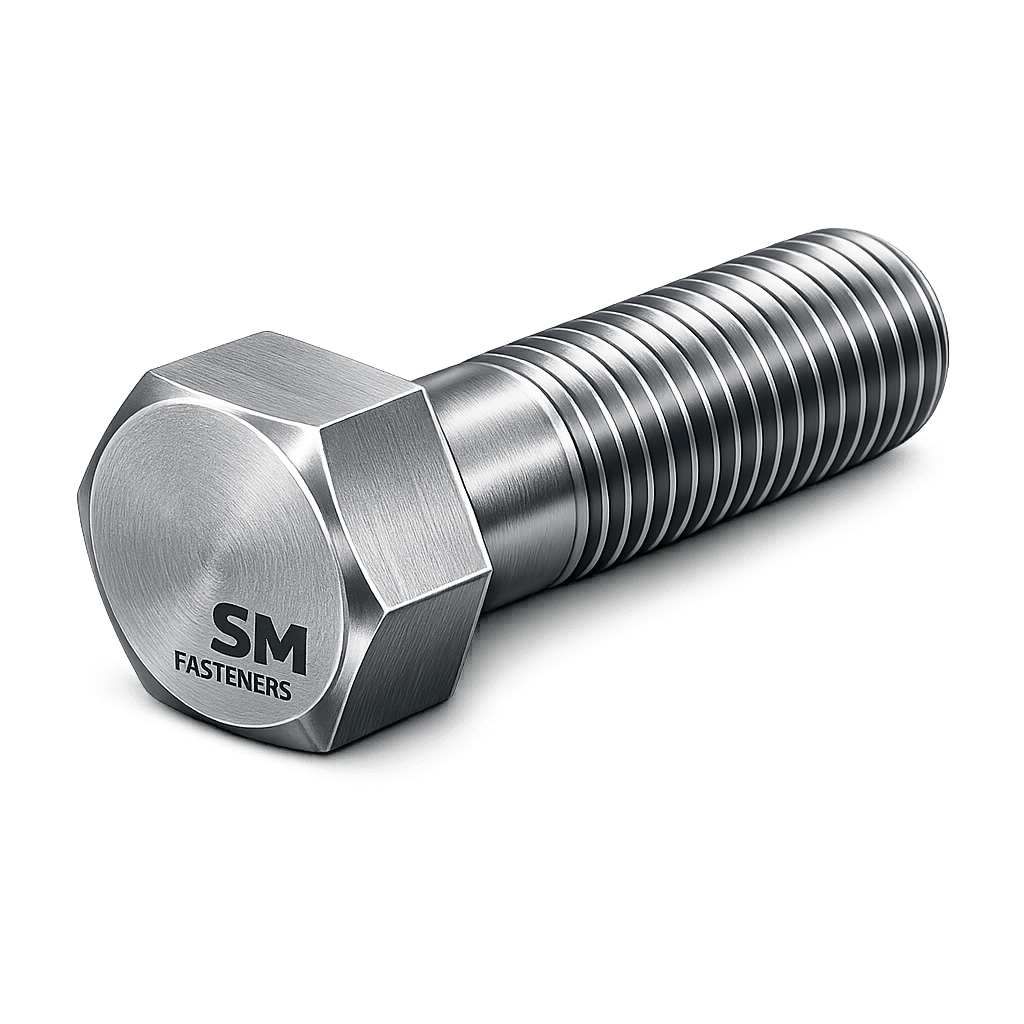
Hex Cap Bolts represent one of the most widely engineered mechanical fastening solutions used across global industrial infrastructure. Unlike generic hex bolts used in non-critical assemblies, Hex Cap Bolts are precision fasteners manufactured under strict dimensional and mechanical standards ensuring predictable load transfer, repeatable preload performance, and long-term joint reliability.
Across modern engineering sectors, bolted joints remain the primary method of:
- Structural load transmission
- Equipment assembly
- Pressure containment
- Rotating machinery alignment
- Maintenance disassembly capability
Welded joints provide permanence, whereas Hex Cap Bolt assemblies provide controlled clamping force with serviceability, making them essential in regulated industries.
Key Global Industries Utilizing Hex Cap Bolts
| Industry | Functional Requirement |
|---|---|
| Structural Steel & Construction | Moment connections, base plates, structural nodes |
| Oil & Gas | Flanges, valves, pressure vessels |
| Power Generation | Turbine casings, boiler structures |
| Petrochemical Plants | Corrosion-resistant assemblies |
| Offshore & LNG | High fatigue + marine corrosion resistance |
| Heavy Equipment | Dynamic load retention |
| Railways | Vibration-resistant structural joints |
| Shipbuilding | Seawater-exposed mechanical assemblies |
SM Fasteners manufactures Hex Cap Bolts aligned with these sectors’ engineering compliance expectations, supporting EPC contractors, OEM manufacturers, and global procurement programs.
2. Technical Definition of a Hex Cap Bolt
A Hex Cap Bolt is a precision externally threaded fastener featuring:
- Hexagonal forged head
- Controlled bearing surface
- Defined head height tolerance
- Machine threads manufactured to international standards
- Intended use with nut or tapped hole
Engineering Definition
A Hex Cap Bolt is a high-strength externally threaded fastener designed to generate controlled axial preload through torque application, producing clamping force sufficient to maintain joint integrity under static, cyclic, thermal, and dynamic loading conditions.
Distinction: Hex Bolt vs Hex Cap Bolt
| Parameter | Hex Bolt | Hex Cap Bolt |
|---|---|---|
| Dimensional Control | General | Precision controlled |
| Manufacturing Standard | Often unspecified | ISO / ASTM / DIN compliant |
| Bearing Surface | May vary | Precisely faced |
| Head Tolerances | Wide | Tight tolerances |
| Industrial Use | General fabrication | Critical engineering joints |
| Inspection Requirement | Limited | Mandatory QC |
Hex Cap Bolts supplied by SM Fasteners conform to international dimensional systems ensuring interchangeability in global projects.
3. Functional Role in Mechanical Assemblies
A Hex Cap Bolt does not carry load directly in most properly designed joints.
Instead, it functions as a spring element creating compressive force between clamped members.
Fundamental Purpose
✔ Generate preload
✔ Maintain friction between parts
✔ Prevent relative motion
✔ Resist separation forces
Load Transfer Principle
Properly designed bolted joints transfer load through:
Frictional resistance, not bolt shear.
4. Load Mechanics & Force Behavior
Understanding Hex Cap Bolt performance requires analysis of force interaction between:
- Bolt stiffness
- Joint stiffness
- External loading
4.1 Bolt as an Elastic Spring
A tightened bolt behaves according to Hooke’s Law:
Where:
- F = preload force
- k = bolt stiffness
- ΔL = elastic elongation
Elastic stretching is essential — overtightened bolts that exceed yield lose preload stability.
4.2 Joint Compression Model
The bolted joint acts as two springs:
| Element | Behavior |
|---|---|
| Bolt | Tension spring |
| Clamped Parts | Compression spring |
Load distribution depends on stiffness ratio.
Where:
- = Bolt stiffness
- = Joint stiffness
Only a portion of external load increases bolt tension.
4.3 Preload Importance
Engineering best practice:
70–85% of proof load should be used as installation preload.
Benefits:
- Prevents fatigue failure
- Maintains gasket sealing
- Eliminates joint slip
- Improves vibration resistance
SM Fasteners supplies Hex Cap Bolts manufactured to controlled mechanical properties enabling predictable preload performance across EPC installations.
4.4 Torque–Tension Relationship
Torque converts into preload according to:
Where:
| Symbol | Definition |
|---|---|
| F | Bolt preload |
| T | Applied torque |
| D | Nominal diameter |
| K | Nut factor (friction coefficient) |
Typical nut factor values:
| Condition | Nut Factor K |
|---|---|
| Dry | 0.20–0.24 |
| Zinc plated | 0.18–0.20 |
| Lubricated | 0.14–0.18 |
| PTFE coated | 0.10–0.13 |
Friction accounts for nearly 90% of applied torque, emphasizing surface finish and lubrication control.
5. Joint Design Principles
Hex Cap Bolts must be selected as part of complete joint engineering, not as standalone components.
5.1 Correct Bolt Selection Parameters
| Parameter | Engineering Consideration |
|---|---|
| Diameter | Load capacity |
| Grip Length | Joint thickness |
| Thread Engagement | Strength utilization |
| Material Grade | Mechanical requirement |
| Coating | Environment |
| Temperature | Material stability |
| Installation Method | Torque / Tension control |
5.2 Thread Engagement Requirements
Minimum recommended engagement:
| Material | Engagement Length |
|---|---|
| Steel | 1 × Diameter |
| Cast Iron | 1.5 × Diameter |
| Aluminum | 2 × Diameter |
| PEEK / Polymer | 2.5–3 × Diameter |
5.3 Joint Categories
Friction-Type Joint
Load resisted by surface friction.
Used in:
- Structural connections
- Machinery frames
Bearing-Type Joint
Bolt carries shear load.
Used when slip acceptable.
Tension Joint
Bolt directly resists tensile load.
Used in:
- Pressure flanges
- Structural anchoring
6. Mechanical Behavior Under Service Loads
6.1 Static Loading
Bolt preload exceeds external load → joint remains closed.
Desired condition.
6.2 Dynamic & Cyclic Loading
Major failure source.
Factors affecting fatigue life:
- Preload accuracy
- Surface finish
- Stress concentration at threads
- Material cleanliness
Rolled threads supplied by SM Fasteners improve fatigue resistance by inducing compressive residual stress.
6.3 Thermal Expansion Effects
Different material expansion rates may reduce preload.
Example:
| Material | Expansion Risk |
|---|---|
| Stainless bolt + Carbon steel flange | Preload loss |
| Alloy steel + high temperature service | Strength reduction |
Material compatibility is therefore critical in petrochemical and power applications.
7. Failure Mechanisms in Hex Cap Bolts
Understanding failures supports proper specification and procurement.
7.1 Fatigue Failure
Primary industrial failure mode.
Characteristics:
- Crack initiation at first thread root
- Progressive propagation
- Sudden final fracture
Prevention:
- Correct preload
- Rolled threads
- Surface integrity control
7.2 Shear Failure
Occurs when:
- Joint slips
- Insufficient preload
- Incorrect joint design
7.3 Hydrogen Embrittlement
Risk for:
- High-strength bolts (>1000 MPa)
- Electroplated coatings
Mitigation practices implemented by SM Fasteners:
- Controlled plating processes
- Post-bake hydrogen relief
- Hardness monitoring
7.4 Stress Corrosion Cracking (SCC)
Occurs in environments containing:
- Chlorides
- H₂S
- Caustic chemicals
Material selection becomes critical.
7.5 Thread Stripping
Common causes:
- Inadequate engagement length
- Soft parent material
- Over-torque installation
8. Friction, Bearing Surface & Clamping Mechanics
Head Bearing Surface Function
The under-head bearing surface distributes compressive stress across the joint.
Engineering requirements:
- Flatness control
- Surface finish consistency
- Proper washer selection
Washer Interaction
Washers:
- Reduce embedment loss
- Improve torque consistency
- Protect coated surfaces
SM Fasteners supplies compatible washer systems aligned with bolt material and coating requirements.
9. Nut Factor & Friction Control
Variations in friction cause major preload deviations.
Typical preload scatter:
| Method | Scatter Range |
|---|---|
| Torque control | ±25% |
| Lubricated torque | ±15% |
| Torque + angle | ±10% |
| Hydraulic tensioning | ±5% |
Critical joints in Oil & Gas frequently use tensioning rather than torque.
10. Design Considerations for Critical Industries
Oil & Gas (NACE Service)
Requirements:
- Controlled hardness
- Material traceability
- Sulfide stress cracking resistance
- ISO 15156 compliance
Structural Engineering
Design governed by:
- Slip resistance
- Fatigue category
- Installation verification
Power Generation
Focus areas:
- Creep resistance
- Thermal cycling endurance
- Long maintenance intervals
LNG & Offshore
Key challenges:
- Marine corrosion
- Vibration fatigue
- Low-temperature toughness
11. Role of Advanced Materials Including PEEK Fasteners
Although Hex Cap Bolts are traditionally metallic, PEEK Hex Cap Bolts supplied by SM Fasteners address specialized applications:
| Application | Advantage |
|---|---|
| Electrical insulation | Non-conductive |
| Chemical plants | Chemical resistance |
| Semiconductor | Clean-room compatibility |
| Cryogenic systems | Dimensional stability |
| Medical equipment | Non-magnetic |
PEEK fasteners eliminate galvanic corrosion and reduce system weight.
12. Engineering Selection Workflow (Procurement Perspective)
EPC procurement teams typically follow:
- Define load case
- Identify governing standard
- Select material grade
- Evaluate environment
- Specify coating
- Confirm certification requirements
- Verify dimensional compliance
- Approve manufacturer QA system
SM Fasteners integrates these requirements through ISO 9001 certified manufacturing and inspection processes supporting global project qualification.
13. Summary — Engineering Function of Hex Cap Bolts
Hex Cap Bolts are precision-engineered load control devices rather than simple connectors. Their performance depends on:
- Controlled mechanical properties
- Accurate geometry
- Proper preload generation
- Environmental compatibility
- Verified manufacturing quality
Correct specification transforms the bolted joint into a predictable engineered system capable of operating safely across demanding industrial environments.
14. Product Types and Variants of Hex Cap Bolts
Hex Cap Bolts are engineered in multiple configurations to satisfy varying mechanical load paths, assembly constraints, and international design standards. Selection is governed by joint geometry, installation method, load condition, and governing specification.
14.1 Fully Threaded Hex Cap Bolt
Description:
Threads extend across entire shank length.
Engineering Characteristics
- Maximum thread engagement
- Higher tensile stress concentration
- Suitable for adjustable grip conditions
Typical Applications
- Machinery assemblies
- Thin joint stacks
- Maintenance replacement bolts
- Tapped hole assemblies
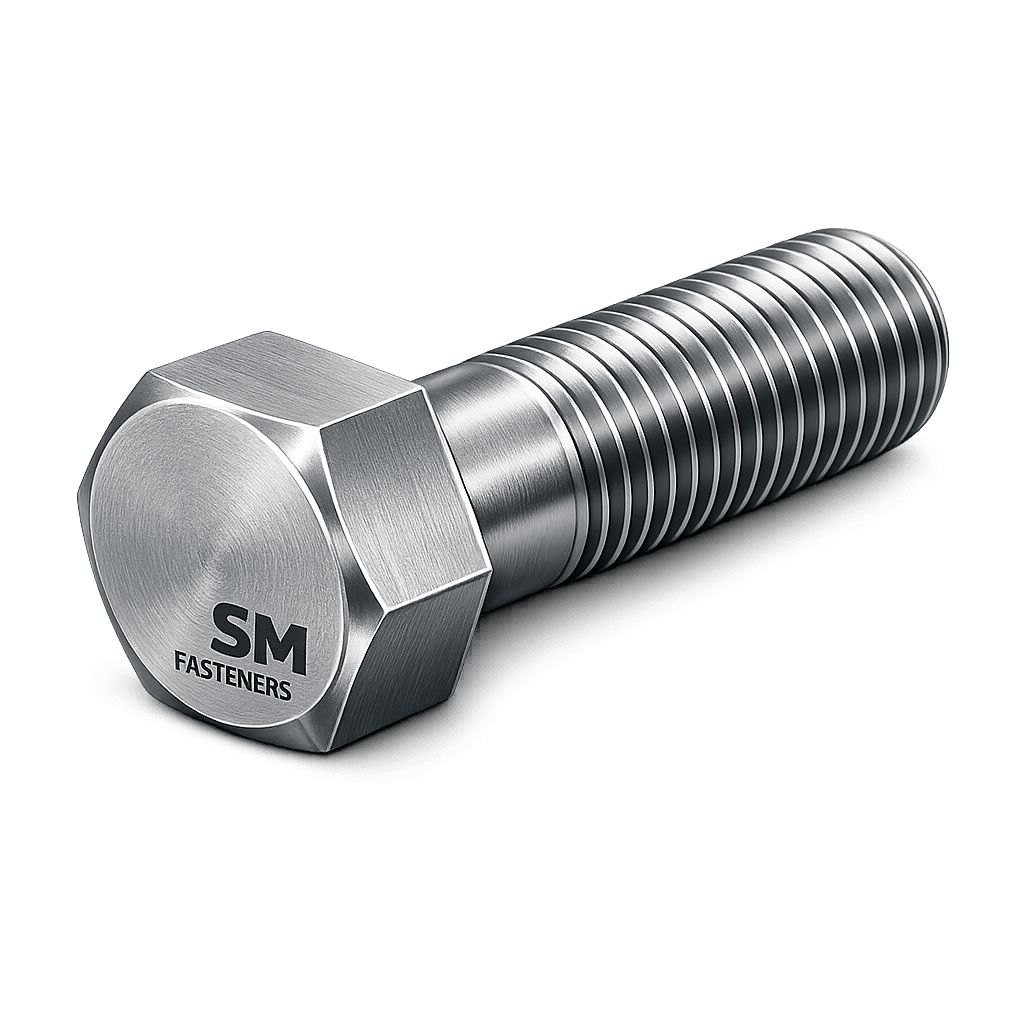
14.2 Partially Threaded Hex Cap Bolt
Description:
Unthreaded shank (grip length) beneath head.
Engineering Advantages
- Improved shear capacity
- Reduced fatigue initiation
- Better alignment of joint members
Used In
- Structural steel connections
- Flange assemblies
- Heavy equipment mounting
14.3 Heavy Hex Cap Bolt
Heavy hex configuration provides:
- Larger head width
- Increased bearing surface
- Improved wrench engagement
- Higher preload capability
Primary Standards
- ASTM A193
- ASTM A325
- ASTM A490
- ASME B18.2.1
Widely used in:
- Oil & Gas flanges
- Pressure vessels
- Offshore structural systems
14.4 High-Strength Structural Hex Cap Bolt
Designed specifically for structural friction-type joints.
Key Features:
- Controlled mechanical properties
- Calibrated installation procedures
- Defined proof load limits
Common Grades:
- Property Class 8.8
- Property Class 10.9
- ASTM A325
- ASTM A490 equivalents
14.5 Flanged Hex Cap Bolt
Includes integral washer face.
Advantages:
- Eliminates separate washer
- Improved load distribution
- Reduced loosening risk
Applications:
- Automotive assemblies
- Vibrating equipment
- Industrial machinery
14.6 Reduced Head / Special Geometry Cap Bolts
Engineered for constrained installation spaces:
- Limited clearance equipment
- Compact housings
- Electrical enclosures
SM Fasteners provides custom-engineered geometries aligned with OEM drawings.
14.7 PEEK Hex Cap Bolts (Advanced Polymer Variant)
Manufactured using high-performance thermoplastic PEEK.
Characteristics:
- Chemical inertness
- Electrical insulation
- Non-magnetic behavior
- High temperature resistance (~260°C continuous)
Applications:
- Semiconductor processing
- Medical systems
- Chemical dosing equipment
- Electronics manufacturing
15. Dimensional Logic and Engineering Geometry
Hex Cap Bolt geometry directly influences:
- Preload accuracy
- Torque transmission
- Stress distribution
- Assembly repeatability
15.1 Key Geometric Parameters
| Parameter | Symbol | Function |
|---|---|---|
| Nominal Diameter | d | Load capacity |
| Pitch | P | Thread engagement |
| Head Width Across Flats | s | Wrench compatibility |
| Head Height | k | Strength under torque |
| Thread Length | b | Engagement control |
| Grip Length | l – b | Shear strength region |
| Under-head Radius | r | Stress reduction |
15.2 Standard Head Geometry Concept
Engineering rationale:
- Larger head → lower bearing stress
- Controlled fillet radius → fatigue resistance
- Flat bearing face → torque consistency
16. Metric Hex Cap Bolt Dimensional Specifications (ISO System)
Table 1 — Standard Metric Dimensions (ISO 4014 / ISO 4017)
| Size | Pitch (mm) | Head Width s (mm) | Head Height k (mm) | Thread Length b (mm) |
|---|---|---|---|---|
| M6 | 1.0 | 10 | 4 | 18 |
| M8 | 1.25 | 13 | 5.3 | 22 |
| M10 | 1.5 | 16 | 6.4 | 26 |
| M12 | 1.75 | 18 | 7.5 | 30 |
| M16 | 2.0 | 24 | 10 | 38 |
| M20 | 2.5 | 30 | 12.5 | 46 |
| M24 | 3.0 | 36 | 15 | 54 |
| M30 | 3.5 | 46 | 18.7 | 66 |
| M36 | 4.0 | 55 | 22.5 | 78 |
Dimensions aligned with internationally interchangeable metric systems supported by SM Fasteners manufacturing capability.
17. Imperial Hex Cap Bolt Dimensions (ASME / BS)
Table 2 — Inch Series Dimensions (ASME B18.2.1)
| Size | Threads (UNC) | Across Flats (in) | Head Height (in) |
|---|---|---|---|
| 1/4″ | 20 | 7/16 | 5/32 |
| 3/8″ | 16 | 9/16 | 1/4 |
| 1/2″ | 13 | 3/4 | 5/16 |
| 5/8″ | 11 | 15/16 | 25/64 |
| 3/4″ | 10 | 1-1/8 | 15/32 |
| 1″ | 8 | 1-1/2 | 5/8 |
| 1-1/4″ | 7 | 1-7/8 | 25/32 |
SM Fasteners supplies both metric and imperial systems to meet EPC global project requirements.
18. Thread Forms and Engineering Logic
Thread geometry determines:
- Load distribution
- Fatigue resistance
- Assembly efficiency
18.1 Metric Thread System (ISO)
Characteristics:
- 60° thread angle
- Rounded root
- Optimized fatigue life
Standards:
- ISO 68
- ISO 261
- ISO 965
18.2 Unified Thread System (UNC / UNF)
| Type | Characteristic | Application |
|---|---|---|
| UNC | Coarse thread | General engineering |
| UNF | Fine thread | High vibration environments |
18.3 British Thread Systems
| Standard | Use |
|---|---|
| BSW | Legacy structural systems |
| BSF | Fine precision assemblies |
Table 3 — Thread Standards & Tolerances
| System | Standard | Tolerance Class |
|---|---|---|
| Metric | ISO 965 | 6g / 6H |
| UNC | ASME B1.1 | 2A / 2B |
| UNF | ASME B1.1 | 2A / 2B |
| BSW | BS 84 | Medium |
| BSF | BS 84 | Close |
19. Property Class & Strength Classification Systems
Hex Cap Bolts are classified by mechanical strength.
ISO Property Classes
| Class | Yield Strength (MPa) | Tensile Strength (MPa) |
|---|---|---|
| 4.6 | 240 | 400 |
| 5.8 | 400 | 500 |
| 8.8 | 640 | 800 |
| 10.9 | 900 | 1000 |
| 12.9 | 1080 | 1200 |
Engineering rule:
Higher class → higher preload capability → stricter installation control.
ASTM Equivalent Grades
| ISO Class | ASTM Equivalent |
|---|---|
| 8.8 | ASTM A325 |
| 10.9 | ASTM A490 |
| Stainless | ASTM A193 B8 |
| High Temp | ASTM A193 B7 |
20. Interchangeability Considerations
Global EPC projects require cross-standard compatibility.
Critical factors:
- Head dimensions
- Thread pitch
- Mechanical grade
- Washer compatibility
Incorrect interchangeability may cause:
- Loss of preload
- Installation failure
- Inspection rejection
SM Fasteners maintains dimensional verification to ensure compliance across ISO, ASTM, DIN, and BS systems.
21. Dimensional Tolerance Philosophy
Precision tolerance ensures:
- Consistent torque response
- Predictable preload
- Automated assembly compatibility
Typical controls:
| Feature | Control Method |
|---|---|
| Head flatness | Optical inspection |
| Thread pitch | GO/NO-GO gauges |
| Concentricity | CNC verification |
| Length tolerance | Digital measurement |
22. Engineering Geometry and Stress Distribution
Thread Stress Concentration
Highest stress occurs at:
- First engaged thread
- Root radius
Rolled thread geometry improves fatigue life by compressive surface stress.
Bearing Stress Equation
Where:
- = preload
- = bearing area
Larger bearing surfaces reduce joint embedding and preload loss.
23. Length Selection Logic
Correct bolt length must ensure:
✔ Full nut engagement
✔ Proper grip length
✔ Minimal exposed threads
Engineering recommendation:
24. Standard Length Availability
SM Fasteners supports manufacturing ranges:
| Diameter Range | Length Capability |
|---|---|
| M6 – M12 | Up to 200 mm |
| M16 – M24 | Up to 400 mm |
| M27 – M48 | Up to 1000 mm |
| Custom | Project-specific |
25. Dimensional Compliance Verification
Inspection aligned with:
- ISO 3269 Fastener Acceptance Inspection
- ISO 4759 Tolerances
- ASME dimensional checks
Each production batch undergoes dimensional conformity verification prior to dispatch.
26. Engineering Marking & Identification
Hex Cap Bolts must include permanent identification.
Markings include:
- Manufacturer identification (SM)
- Property class or grade
- Heat number traceability
Purpose:
- Inspection validation
- Field traceability
- Regulatory compliance
27. Procurement Specification Guidance
Typical EPC specification format:
28. Geometry Influence on Installation Method
| Geometry | Preferred Installation |
|---|---|
| Standard Hex | Torque wrench |
| Heavy Hex | Hydraulic tensioner |
| Flanged | Torque controlled |
| Fine Thread | Angle tightening |
29. Summary — Dimensional Engineering Philosophy
Hex Cap Bolt geometry is engineered to ensure:
- Global dimensional interchangeability
- Controlled mechanical performance
- Predictable preload generation
- Compliance with international standards
Through adherence to ISO, ASTM, DIN, and BS dimensional systems, SM Fasteners delivers precision-manufactured Hex Cap Bolts suitable for audited industrial and EPC environments worldwide.
30. Material Engineering Philosophy for Hex Cap Bolts
Material selection governs the long-term mechanical integrity, corrosion resistance, fatigue life, and environmental compatibility of Hex Cap Bolts. In engineered assemblies, improper material choice is one of the most common root causes of premature joint failure.
SM Fasteners manufactures Hex Cap Bolts using globally recognized material systems aligned with:
- ISO standards
- ASTM specifications
- NACE MR0175 / ISO 15156 requirements
- EPC procurement specifications
- Offshore and petrochemical service environments
Material selection must always consider:
- Mechanical load requirement
- Environmental exposure
- Operating temperature
- Corrosion risk
- Installation method
- Inspection and certification requirements
31. Industrial Material Categories
31.1 Carbon Steel Hex Cap Bolts
Used where corrosion exposure is limited and cost efficiency is required.
Typical Grades
- ISO Property Class 4.6 / 5.8 / 8.8
- ASTM A307
- ASTM A325
Characteristics
- Good machinability
- Moderate strength
- Requires protective coating
Applications
- Structural steel
- Machinery bases
- Infrastructure projects
31.2 Alloy Steel Hex Cap Bolts
Designed for high-strength applications.
Typical Grades
- ASTM A193 B7
- ASTM A320 L7
- Property Class 10.9 / 12.9
Engineering Advantages
- High tensile strength
- Elevated temperature resistance
- Improved fatigue life
Industries
- Oil & Gas
- Pressure vessels
- Power generation
- Refinery equipment
31.3 Stainless Steel Hex Cap Bolts
Selected where corrosion resistance is critical.
Common Grades:
- ASTM A193 B8 (304)
- ASTM A193 B8M (316)
- A4-70 / A4-80
- A2-70
Performance Attributes
- Excellent corrosion resistance
- Non-magnetic (austenitic)
- Suitable for chemical environments
31.4 Duplex & Super Duplex Stainless Steel
Engineered for aggressive offshore and chloride environments.
Grades Supported by SM Fasteners:
- UNS S31803
- UNS S32205
- Super Duplex S32750 / S32760
Advantages:
- High strength
- Superior pitting resistance
- SCC resistance
- Extended service life in seawater
31.5 Nickel Alloy Fasteners
For extreme environments beyond stainless steel capability.
Supported Materials:
- Inconel 625 / 718
- Incoloy 800 / 825
- Monel 400
- Hastelloy C276
- Nickel 200/201
- SMO 254
Applications:
- LNG processing
- Chemical reactors
- Acid handling systems
- Offshore subsea equipment
31.6 PEEK Hex Cap Bolts — Advanced Engineering Polymer
SM Fasteners supplies PEEK fasteners for specialized engineering systems.
Characteristics:
- Continuous service temperature ~260°C
- Chemical inertness
- Non-conductive
- Lightweight
- Radiation resistant
Applications:
- Semiconductor manufacturing
- Medical equipment
- Electrical insulation assemblies
- Clean-room environments
32. Material Comparison Table
Table 4 — Material Performance Comparison
| Material | UTS (MPa) | Yield (MPa) | Corrosion Resistance | Temperature Limit | Relative Cost | Typical Application |
|---|---|---|---|---|---|---|
| Carbon Steel | 400–800 | 240–640 | Low | 300°C | Low | Structural |
| Alloy Steel B7 | 860 | 720 | Moderate | 450°C | Medium | Pressure systems |
| SS 304 | 700 | 450 | High | 425°C | Medium | General corrosion |
| SS 316 | 700 | 450 | Very High | 425°C | Medium-High | Marine |
| Duplex | 800 | 550 | Excellent | 300°C | High | Offshore |
| Super Duplex | 900 | 650 | Extreme | 300°C | Very High | Seawater |
| Inconel 718 | >1200 | >1000 | Exceptional | 700°C | Premium | Turbines |
| SMO 254 | 650 | 300 | Extreme | 400°C | Premium | Chloride plants |
| PEEK | 100 | 90 | Chemical inert | 260°C | High | Electronics |
33. Corrosion Resistance vs Environment
Table 5 — Environmental Compatibility
| Environment | Carbon Steel | SS316 | Duplex | Super Duplex | Nickel Alloy | PEEK |
|---|---|---|---|---|---|---|
| Atmospheric | ✓ | ✓ | ✓ | ✓ | ✓ | ✓ |
| Marine Seawater | ✗ | ✓ | ✓✓ | ✓✓✓ | ✓✓✓ | ✓ |
| Chloride Exposure | ✗ | ✓ | ✓✓ | ✓✓✓ | ✓✓✓ | ✓ |
| Acidic Chemicals | ✗ | Limited | ✓ | ✓✓ | ✓✓✓ | ✓✓ |
| H₂S / Sour Service | ✗ | Limited | ✓ | ✓✓ | ✓✓✓ | ✓ |
| LNG Low Temp | ✓ | ✓ | ✓ | ✓ | ✓✓ | ✓ |
✓✓✓ = Excellent resistance
Materials for sour service are supplied in accordance with NACE MR0175 / ISO 15156 hardness limits.
34. Mechanical Properties by Strength Grade
Table 6 — Mechanical Property Classes
| Property Class | Tensile Strength MPa | Yield MPa | Hardness Range |
|---|---|---|---|
| 4.6 | 400 | 240 | 120–180 HB |
| 5.8 | 500 | 400 | 150–220 HB |
| 8.8 | 800 | 640 | 22–32 HRC |
| 10.9 | 1000 | 900 | 32–39 HRC |
| 12.9 | 1200 | 1080 | 39–44 HRC |
Hardness control is essential to avoid hydrogen embrittlement in high-strength fasteners.
35. Heat Treatment Processes
Heat treatment directly controls strength, toughness, and fatigue resistance.
35.1 Normalizing
Purpose:
- Refines grain structure
- Improves machinability
Used for carbon steel fasteners prior to forging.
35.2 Quenching & Tempering (Q&T)
Primary process for high-strength Hex Cap Bolts.
Steps:
- Austenitizing
- Rapid quenching
- Controlled tempering
Benefits:
- High tensile strength
- Controlled hardness
- Improved toughness
Typical for:
- Property Class 8.8 / 10.9 / 12.9
- ASTM A193 B7
35.3 Solution Annealing (Stainless Steel)
- Dissolves carbides
- Restores corrosion resistance
- Eliminates sensitization
Applied to austenitic stainless grades.
35.4 Age Hardening (Nickel Alloys)
Used for:
- Inconel 718
- High-temperature aerospace-grade fasteners
Produces exceptional strength at elevated temperatures.
35.5 Hydrogen Relief Baking
Mandatory after electroplating of high-strength bolts.
Typical cycle:
- 200°C bake
- 4–24 hours depending on grade
Prevents delayed brittle fracture.
36. End-to-End Manufacturing Workflow — SM Fasteners
SM Fasteners operates controlled manufacturing aligned with ISO 9001 quality systems.
Step 1 — Raw Material Procurement
Incoming materials verified through:
- Mill Test Certificates (MTC)
- Chemical analysis
- Heat number traceability
- PMI verification (for alloy materials)
Step 2 — Material Cutting
- CNC controlled bar cutting
- Length tolerance verification
- Heat segregation maintained
Step 3 — Head Forming (Hot/Cold Forging)
Hot Forging
- Large diameters
- Alloy steels
Cold Forging
- Superior grain flow
- Improved fatigue life
Forging aligns material grain structure with load direction.
Step 4 — Machining Operations
Operations include:
- Facing
- Chamfering
- Shank turning
- Special geometry production
Step 5 — Thread Manufacturing
Thread Rolling (Preferred)
Advantages:
- Work hardening
- Compressive residual stress
- Higher fatigue resistance
Thread Cutting
Used when:
- Large diameter bolts
- Special materials
- Low volume custom production
Step 6 — Heat Treatment
Controlled furnaces ensure:
- Uniform hardness
- Mechanical compliance
- Documentation traceability
Step 7 — Surface Preparation
Processes:
- Shot blasting
- Pickling
- Passivation
- Surface cleaning
Step 8 — Coating Application
Performed under controlled process parameters.
Step 9 — Inspection & Testing
Covered in Part 4.
Step 10 — Identification & Traceability
Each batch marked with:
- Manufacturer ID (SM)
- Grade marking
- Heat number linkage
37. Surface Engineering & Coating Technologies
Surface coatings influence:
- Corrosion resistance
- Torque coefficient
- Galling behavior
- Service life
37.1 Hot Dip Galvanizing (HDG)
Characteristics:
- Thick zinc coating (~70–100 µm)
- Excellent outdoor durability
Used for:
- Structural steel
- Infrastructure projects
37.2 Zinc Electroplating
Benefits:
- Smooth appearance
- Controlled thickness
Risk:
Hydrogen embrittlement (controlled by baking).
37.3 Mechanical Galvanizing
Impact bonding process reducing hydrogen risk.
37.4 PTFE / Fluoropolymer Coating
Advantages:
- Low friction
- Chemical resistance
- Controlled preload
Ideal for flange bolting.
37.5 Xylan / Fluoropolymer Systems
Widely used in offshore Oil & Gas:
- Anti-galling
- Salt spray resistance
- Stable torque coefficient
37.6 Black Oxide
Used primarily for indoor machinery.
37.7 Passivation (Stainless Steel)
Removes free iron contamination and enhances corrosion resistance.
38. Surface Finish Performance Comparison
Table 7 — Surface Finish Comparison
| Coating | Corrosion Resistance | Friction Control | Hydrogen Risk | Typical Use |
|---|---|---|---|---|
| Black Oxide | Low | Moderate | None | Machinery |
| Zinc Plated | Medium | Good | Medium | Indoor |
| HDG | High | Variable | Low | Structural |
| Mechanical Galv. | High | Moderate | Low | High strength |
| PTFE | Very High | Excellent | None | Chemical plants |
| Xylan | Extreme | Excellent | None | Offshore |
| Passivated SS | Excellent | Stable | None | Marine |
39. Temperature Capability of Materials
| Material | Max Service Temp |
|---|---|
| Carbon Steel | 300°C |
| Alloy Steel B7 | 450°C |
| Stainless Steel | 425°C |
| Duplex | 300°C |
| Inconel | 700°C |
| PEEK | 260°C |
40. Engineering Considerations for Coating Selection
Selection must consider:
- Required preload accuracy
- Corrosion exposure
- Maintenance interval
- Inspection requirements
Coating friction directly impacts tightening torque values — a critical factor for EPC installations.
41. Summary — Material & Manufacturing Engineering
Hex Cap Bolt reliability depends on integrated control of:
- Metallurgy
- Heat treatment
- Thread manufacturing
- Surface engineering
- Traceable production workflow
Through certified manufacturing, advanced material capability including PEEK and high-performance nickel alloys, and ISO 9001 quality integration, SM Fasteners delivers Hex Cap Bolts engineered for demanding global industrial environments.
42. Inspection Philosophy for Hex Cap Bolts
Hex Cap Bolts used in structural, pressure, and rotating equipment applications must demonstrate repeatable mechanical performance, verified through systematic inspection and documented traceability.
Inspection is not limited to final testing — it is integrated throughout the manufacturing lifecycle under ISO 9001 certified quality management systems implemented by SM Fasteners.
Primary objectives:
- Dimensional conformity
- Mechanical property verification
- Metallurgical integrity
- Surface coating performance
- Full traceability for EPC audit compliance
43. Incoming Material Inspection
All production begins with controlled raw material qualification.
Verification Activities
- Mill Test Certificate (MTC) review
- Heat number validation
- Chemical composition analysis
- Positive Material Identification (PMI)
- Visual inspection for defects
Applicable standards:
- ASTM material specifications
- ISO 898
- EN 10204 certification requirements
Material traceability remains preserved from raw bar stock through finished fastener dispatch.
44. In-Process Quality Control
SM Fasteners applies staged inspection checkpoints.
Forging Inspection
- Head geometry verification
- Flash removal check
- Grain flow alignment assessment
Thread Inspection
- GO / NO-GO gauges
- Pitch diameter control
- Lead accuracy verification
Heat Treatment Monitoring
- Furnace calibration records
- Hardness sampling
- Batch traceability logs
45. Final Dimensional Inspection
Conducted in accordance with:
- ISO 4759 tolerances
- ISO 3269 inspection rules
- ASME B18 dimensional verification
Inspection Parameters
| Parameter | Method |
|---|---|
| Diameter | Digital micrometer |
| Length | Vernier measurement |
| Head dimensions | Optical comparator |
| Thread profile | Gauge inspection |
| Straightness | Dial indicator |
46. Mechanical Testing Requirements
Mandatory Tests
- Proof load test
- Tensile strength test
- Yield strength verification
- Hardness testing (HRC / HV / HB)
Table 8 — Proof Load & Tensile Strength
| Size | Property Class | Proof Load (kN) | Ultimate Tensile Load (kN) |
|---|---|---|---|
| M10 | 8.8 | 32 | 45 |
| M12 | 8.8 | 46 | 65 |
| M16 | 8.8 | 85 | 120 |
| M20 | 8.8 | 133 | 188 |
| M20 | 10.9 | 170 | 245 |
| M24 | 10.9 | 245 | 353 |
| M30 | 10.9 | 410 | 580 |
| M36 | 10.9 | 600 | 850 |
Values representative of ISO 898 performance ranges.
47. Non-Destructive Testing (NDT)
Applied for critical applications.
Methods include:
- Magnetic Particle Inspection (MPI)
- Dye Penetrant Testing (PT)
- Ultrasonic Testing (UT)
- Eddy current inspection
Used extensively for:
- Offshore fasteners
- Pressure vessel bolting
- Nuclear and power projects
48. Coating & Surface Verification
Testing includes:
- Coating thickness measurement
- Salt spray corrosion testing
- Adhesion testing
- Friction coefficient validation
Ensures predictable torque–tension relationship during installation.
49. Positive Material Identification (PMI)
PMI confirms alloy composition using:
- XRF analyzers
- Spectrometer analysis
Mandatory for:
- Duplex
- Super Duplex
- Nickel alloys
- NACE service bolts
50. Certification & Documentation
SM Fasteners provides complete documentation packages suitable for EPC approval.
Standard Documentation
- EN 10204 3.1 Material Test Certificate
- Heat Treatment Reports
- Dimensional Inspection Reports
- Coating Certification
- Mechanical Test Reports
- Certificate of Conformance (CoC)
Optional
- EN 10204 3.2 Third-Party Certification
- Third-party inspection (TPI)
- Client witness testing
Certifications supported:
- ISO 9001 Quality System
- MSME Registration
- UKAF Accredited Quality Framework
51. Preload Calculation — Engineering Method
Fundamental Formula
Where:
- F = Preload force (N)
- T = Torque (Nm)
- K = Nut factor
- D = Nominal diameter (m)
Worked Example
Bolt: M20 Property Class 10.9
Torque Applied = 420 Nm
Nut Factor = 0.18
Diameter = 0.02 m
Result:
Preload ≈ 117 kN
This preload corresponds to approximately 75% of proof load — optimal engineering practice.
52. Tightening Torque Chart
Table 9 — Recommended Tightening Torque (Nm)
| Size | Grade 8.8 Dry | Grade 8.8 Lubricated | Grade 10.9 Dry | Grade 10.9 Lubricated |
|---|---|---|---|---|
| M8 | 25 | 18 | 36 | 26 |
| M10 | 49 | 35 | 70 | 50 |
| M12 | 85 | 60 | 120 | 85 |
| M16 | 210 | 150 | 300 | 215 |
| M20 | 410 | 295 | 580 | 420 |
| M24 | 710 | 510 | 1000 | 720 |
| M30 | 1420 | 1020 | 2000 | 1450 |
Torque values depend strongly on coating friction characteristics.
53. Failure Prevention Through Installation Control
Major field failures originate from installation errors rather than manufacturing defects.
Recommended practices:
- Calibrated torque tools
- Lubrication consistency
- Cross-pattern tightening
- Controlled preload verification
Critical joints may require hydraulic tensioning.
54. Surface Finish Performance vs Environment
Table 10 — Coating Selection by Environment
| Environment | Recommended Finish |
|---|---|
| Indoor Machinery | Black Oxide |
| Structural Outdoor | HDG |
| Marine Offshore | Xylan / PTFE |
| Chemical Processing | PTFE |
| Sour Service | Zinc Mechanical + Controlled Hardness |
| Food/Pharma | Passivated Stainless |
| Electrical Systems | PEEK Fasteners |
55. Weight Chart — Hex Cap Bolts
(Aligned with SM Fasteners manufacturing data)
Table 11 — Approximate Weight
| Size | Length (mm) | Weight / Piece (kg) | Weight / 100 pcs (kg) |
|---|---|---|---|
| M10 | 50 | 0.031 | 3.1 |
| M12 | 60 | 0.054 | 5.4 |
| M16 | 80 | 0.125 | 12.5 |
| M20 | 100 | 0.245 | 24.5 |
| M24 | 120 | 0.425 | 42.5 |
| M30 | 150 | 0.890 | 89 |
| M36 | 180 | 1.55 | 155 |
Used for logistics planning, container loading, and EPC quantity estimation.
56. Industry Applications
Construction & Structural Steel
- Beam connections
- Column anchoring
- Bridge assemblies
Oil & Gas (Upstream / Midstream / Downstream)
- Flange bolting
- Pipeline supports
- Pressure vessels
- Valve assemblies
Materials frequently supplied:
- ASTM A193 B7
- Duplex & Super Duplex
- PTFE coated systems
Power Generation
- Turbine casings
- Boilers
- Heat exchangers
Requires high-temperature alloy bolts.
Petrochemical & Chemical Processing
- Acid-resistant materials
- Non-galling stainless fasteners
- Nickel alloys
LNG & Offshore Platforms
- Marine corrosion resistance
- Fatigue resistance
- NACE-compliant materials
Automotive & Heavy Equipment
- Engine mounting
- Transmission assemblies
- Structural chassis joints
Railways & Infrastructure
- Track systems
- Signaling equipment
- Structural fastening
Shipbuilding & Marine
- Deck structures
- Propulsion equipment
- Corrosion-critical assemblies
PEEK Fastener Applications
- Electrical insulation
- Semiconductor tooling
- Medical imaging equipment
- Chemical dosing pumps
57. Packaging & Export Preparation
SM Fasteners prepares Hex Cap Bolts for international shipment under industrial logistics standards.
Packaging Methods
- VCI corrosion protection
- Thread protectors
- Moisture barrier wrapping
- Batch identification labels
Export Crating
- ISPM-15 compliant wooden crates
- Fumigated pallets
- Container load optimization
- Shock protection packaging
58. Global Export Documentation
Typical export dossier includes:
- Commercial Invoice
- Packing List
- Certificate of Origin
- EN 10204 3.1 / 3.2 certificates
- Inspection Release Note
- Heat treatment reports
- Coating certification
- Compliance declaration
Designed to satisfy EPC contractor audit and customs clearance requirements.
59. Traceability & Identification System
Each production lot maintains traceability through:
- Heat number tracking
- Batch manufacturing records
- Inspection data linkage
- Permanent head marking
Ensures lifecycle accountability from manufacture to field installation.
60. Integration with ISO 9001 Quality Management
SM Fasteners quality framework integrates:
- Process validation
- Document control
- Calibration management
- Continuous improvement
- Corrective action systems
This enables consistent global supply capability to OEM and EPC clients.
61. Engineering Procurement Checklist
Before approval, buyers typically verify:
✔ Standard compliance
✔ Mechanical grade
✔ Material certification
✔ Coating specification
✔ Inspection documentation
✔ Manufacturer certification
✔ Traceability system
SM Fasteners supports full technical submittal packages for project qualification.
62. Complete Engineering Perspective
A Hex Cap Bolt is an engineered load-control component whose performance depends on the integration of:
- Geometry
- Metallurgy
- Heat treatment
- Surface engineering
- Installation practice
- Inspection verification
Through certified manufacturing capability, advanced material expertise including Duplex, Nickel Alloys, and PEEK fasteners, and globally compliant documentation systems, SM Fasteners demonstrates full readiness to supply precision Hex Cap Bolts for critical industrial and EPC applications worldwide.