

Hex Screws
1. Industrial Context of Hex Screws
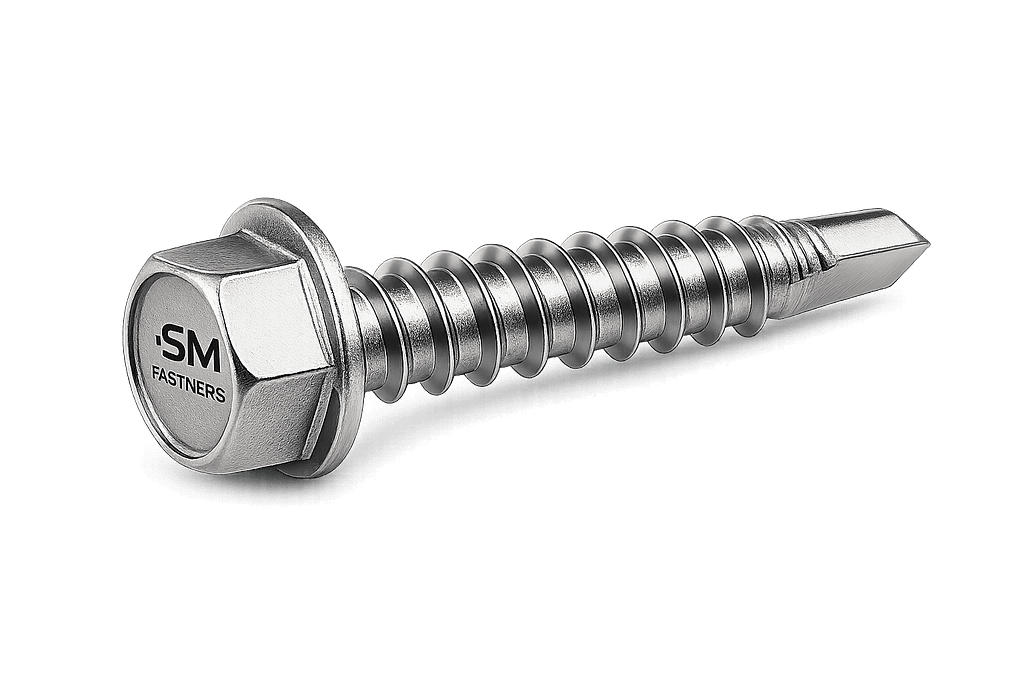
Hex screws represent one of the most universally adopted threaded fastening solutions across heavy engineering industries. Their geometry enables controlled torque transfer, predictable preload generation, and high structural reliability under static and dynamic loading.
Within industrial assemblies, hex screws are selected when:
- External wrench engagement is required
- High clamp force must be generated reliably
- Assembly accessibility allows tool clearance
- Structural integrity takes precedence over aesthetic concealment
Core Industrial Sectors
| Industry | Functional Role |
|---|---|
| Structural Steel | Primary joint fastening |
| Oil & Gas | Equipment mounting, flanges |
| Power Generation | Turbine housings, supports |
| Petrochemical | Corrosion-resistant assemblies |
| LNG & Offshore | High-load vibration resistance |
| Railways | Structural connections |
| Heavy Equipment | Frame and drivetrain fastening |
| Shipbuilding | Deck, engine, and structural systems |
Hex screws remain the default engineering fastener for global EPC projects due to interchangeability across ISO, ASTM, DIN, and BS systems.
2. Technical Definition
A Hex Screw is a threaded fastener characterized by:
- External hexagonal head
- Integrated bearing surface under head
- Partially or fully threaded shank
- Controlled tensile loading capability
Unlike hex bolts, hex screws may be installed directly into tapped components without a nut.
Functional Components
- Hex Head — torque transmission
- Bearing Face — distributes compressive load
- Shank — shear load resistance
- Thread — preload generation
3. Load Mechanics & Force Behavior
3.1 Fundamental Fastening Principle
A properly tightened hex screw converts applied torque into:
Axial tensile force (preload) → Produces clamping force holding joint members together.
The screw behaves as an elastic spring.
Where:
- = Preload force (N)
- = Applied torque (Nm)
- = Nut factor (friction coefficient)
- = Nominal diameter (m)
3.2 Force Distribution in a Bolted Joint
Load distribution typically follows:
| Component | Load Type |
|---|---|
| Screw | Tensile |
| Joint Members | Compressive |
| Interface | Frictional shear resistance |
A correctly preloaded joint prevents external loads from reaching the fastener.
3.3 Load Types Acting on Hex Screws
Tensile Load
Generated during tightening.
Shear Load
Transferred across joint interface.
Combined Load
Common in rotating equipment and offshore structures.
Dynamic Load
Caused by vibration, thermal cycling, pressure pulsation.
4. Preload and Clamp Force Behavior
Why Preload Matters
90% of fastener failures occur due to incorrect preload, not insufficient strength.
Correct preload ensures:
- Joint rigidity
- Fatigue resistance
- Leak prevention
- Vibration stability
Preload Calculation — Worked Example
Example:
M16 Hex Screw — Property Class 8.8
Torque Applied = 210 Nm
Nut Factor K = 0.2
Result: Approx. 65 kN clamping force
5. Torque–Tension Relationship
Only ~10% of tightening torque generates preload.
| Torque Usage | Percentage |
|---|---|
| Thread friction | 40% |
| Under-head friction | 50% |
| Useful preload | 10% |
This explains why lubrication dramatically changes tightening values.
6. Joint Design Principles
6.1 Thread Engagement Rule
Minimum engagement:
| Material | Required Engagement |
|---|---|
| Steel | 1 × Diameter |
| Cast Iron | 1.5 × Diameter |
| Aluminum | 2 × Diameter |
6.2 Grip Length Design
Ideal configuration:
- Unthreaded shank positioned through shear plane
- Threads located outside load interface
Improves fatigue life significantly.
6.3 Stiffness Ratio Concept
Joint stiffness must exceed fastener stiffness.
Where:
- = Bolt stiffness
- = Joint stiffness
Higher joint stiffness → reduced fatigue loading.
7. Failure Mechanisms in Hex Screws
Fatigue Failure
Caused by preload loss and cyclic loading.
Shear Failure
Occurs when joint slip develops.
Hydrogen Embrittlement
Risk in high-strength electroplated screws (>1000 MPa).
Stress Corrosion Cracking
Common in chloride or H₂S environments.
SM Fasteners controls these risks through:
- Material traceability
- Controlled heat treatment
- Approved coating systems
- ISO 9001 process validation
8. Friction & Nut Factor Influence
| Condition | Nut Factor (K) |
|---|---|
| Dry | 0.22–0.25 |
| Light Oil | 0.18–0.20 |
| MoS₂ Lubricated | 0.10–0.14 |
| PTFE Coated | 0.08–0.12 |
Procurement teams must always specify lubrication condition.
9. Thread Engagement & Load Transfer
Load distribution across threads:
- First thread carries ~30%
- Second thread ~20%
- Remaining threads progressively less
Precision thread rolling used by SM Fasteners improves:
- Grain flow continuity
- Fatigue resistance
- Surface hardness
10. Functional Role in Industrial Assemblies
Hex screws provide:
- Repeatable installation
- High torque capability
- Easy inspection
- Global dimensional interchangeability
Typical assembly usage:
Marine structures
Pump housings
Structural brackets
Pressure equipment
Heavy machinery frames
11. Product Types and Variants of Hex Screws
Hex screws are manufactured in multiple configurations to meet mechanical loading requirements, installation constraints, corrosion environments, and international compliance standards.
Engineering selection depends on:
- Joint accessibility
- Required preload
- Shear vs tensile loading
- Installation method
- Maintenance frequency
- Environmental exposure
11.1 Fully Threaded Hex Screws


Characteristics
- Threads across entire length
- Maximum adjustment capability
- Ideal for tapped holes
Applications
- Machinery assemblies
- Equipment covers
- Maintenance installations
- Thin joint stacks
Engineering Consideration
Reduced shear capacity compared to partially threaded designs.
11.2 Partially Threaded Hex Screws


Characteristics
- Unthreaded shank acts as shear pin
- Improved fatigue resistance
- Higher joint stiffness
Preferred For
- Structural steel assemblies
- Heavy equipment frames
- Dynamic loading environments
11.3 Hex Flange Screws


Features
- Integrated washer flange
- Larger bearing surface
- Reduced loosening risk
Typical Use
- Automotive systems
- Rail assemblies
- Equipment housings
11.4 High-Strength Structural Hex Screws

Designed for:
- Slip-critical joints
- Structural steel connections
- Bridge and infrastructure fastening
Typical grades:
- ISO 10.9 / 12.9
- ASTM A325 / A490 equivalents
11.5 Specialty Industrial Variants Manufactured by SM Fasteners
- Fine thread hex screws
- Reduced head clearance types
- Custom grip-length designs
- Corrosion-resistant exotic alloy screws
- PEEK hex screws for electrically insulated assemblies
PEEK variants are used where:
- Metal fasteners cause galvanic corrosion
- Electrical insulation required
- Lightweight assemblies needed
- Chemical resistance is critical
12. Dimensional Logic & Engineering Geometry
Hex screw geometry is not arbitrary. Each dimension influences torque transmission, stress distribution, and installation reliability.
Primary Geometric Parameters
| Parameter | Function |
|---|---|
| Nominal Diameter (d) | Load capacity |
| Thread Pitch (P) | Preload sensitivity |
| Head Width Across Flats (s) | Torque transfer |
| Head Height (k) | Tool engagement strength |
| Thread Length (b) | Engagement capacity |
| Bearing Surface | Clamp load distribution |
13. Standard Dimensional Specification Table (Metric Series)
Typical ISO Metric Hex Screw Dimensions
| Size | Pitch (mm) | Head AF (mm) | Head Height (mm) | Standard Length Range (mm) |
|---|---|---|---|---|
| M6 | 1.0 | 10 | 4 | 10–80 |
| M8 | 1.25 | 13 | 5.3 | 12–120 |
| M10 | 1.5 | 17 | 6.4 | 16–150 |
| M12 | 1.75 | 19 | 7.5 | 20–200 |
| M16 | 2.0 | 24 | 10 | 25–300 |
| M20 | 2.5 | 30 | 12.5 | 30–300 |
| M24 | 3.0 | 36 | 15 | 40–300 |
| M30 | 3.5 | 46 | 18.7 | 60–350 |
Dimensions aligned with ISO/DIN manufacturing norms followed within SM Fasteners production systems.
14. Dimensional Logic — Engineering Considerations
14.1 Diameter Selection
Diameter determines tensile capacity:
Increasing diameter dramatically increases load resistance.
14.2 Pitch Selection
| Thread Type | Characteristics |
|---|---|
| Coarse | Faster installation, dirt tolerance |
| Fine | Better vibration resistance |
| Extra Fine | Precision assemblies |
Fine pitch improves preload control due to reduced helix angle.
14.3 Head Geometry Influence
- Larger head → higher torque transmission
- Adequate height prevents rounding failure
- Bearing face flatness ensures uniform compression
15. International Standards Compliance
SM Fasteners manufactures hex screws compliant with global specifications enabling EPC interchangeability.
ISO Standards
| Standard | Description |
|---|---|
| ISO 4014 | Hex head screws — partial thread |
| ISO 4017 | Hex head screws — full thread |
| ISO 898-1 | Mechanical properties |
| ISO 965 | Thread tolerance |
| ISO 3506 | Stainless steel fasteners |
DIN Standards
| Standard | Equivalent |
|---|---|
| DIN 931 | Partial thread |
| DIN 933 | Full thread |
| DIN 267 | Mechanical requirements |
ASTM Standards
| Standard | Application |
|---|---|
| ASTM A307 | General structural |
| ASTM A193 | Pressure vessel service |
| ASTM A320 | Low temperature |
| ASTM F568M | Metric mechanical properties |
| ASTM A453 | High temperature alloy fasteners |
British Standards (BS)
| Standard | Description |
|---|---|
| BS 3692 | Metric fasteners |
| BS 1083 | High strength fasteners |
| BS EN ISO Series | Harmonized standards |
16. Property Class System (ISO)
Mechanical strength classification for carbon/alloy steel hex screws.
| Property Class | Yield Strength (MPa) | Tensile Strength (MPa) |
|---|---|---|
| 4.6 | 240 | 400 |
| 5.8 | 400 | 500 |
| 8.8 | 640 | 800 |
| 10.9 | 900 | 1040 |
| 12.9 | 1080 | 1220 |
Higher property classes require stricter heat-treatment control under ISO 9001 quality management at SM Fasteners.
17. Thread Systems & Tolerances
Metric Thread System
- Designation: M16 × 2
- Angle: 60°
- Tolerance Class: 6g / 6H
Unified Thread System (UNC / UNF)
| Type | Feature |
|---|---|
| UNC | Coarse industrial applications |
| UNF | High vibration resistance |
British Thread System
| Type | Feature |
|---|---|
| BSW | Structural legacy systems |
| BSF | Fine precision assemblies |
Thread Standards & Tolerance Table
| System | Standard | Angle | Typical Tolerance |
|---|---|---|---|
| Metric | ISO 261 / 965 | 60° | 6g |
| UNC | ASME B1.1 | 60° | 2A |
| UNF | ASME B1.1 | 60° | 2A |
| BSW | BS 84 | 55° | Medium |
| BSF | BS 84 | 55° | Fine |
18. Interchangeability Considerations
Critical for global procurement.
Key Rules:
- ISO ↔ DIN dimensions largely interchangeable
- UNC ≠ Metric
- Pitch mismatch causes catastrophic thread failure
- Head sizes may differ across standards
SM Fasteners ensures:
- Gauge verification
- GO/NO-GO inspection
- Traceable dimensional conformity
19. Engineering Dimensional Control
Quality-controlled parameters:
- Thread pitch diameter
- Head perpendicularity
- Bearing face flatness
- Concentricity
- Straightness
Inspection performed under ISO 9001 controlled procedures supporting EPC audit requirements.
20. Design Integration in Industrial Assemblies
Hex screw geometry must align with:
- Tool clearance envelope
- Washer requirements
- Thermal expansion allowance
- Maintenance accessibility
Correct dimensional specification reduces:
- Installation damage
- Galling risk
- Torque scatter
- Premature fatigue failure
Transition to PART 3
Next section will cover:
- Material grades & metallurgical selection
- Heat treatment processes
- Manufacturing workflow
- Surface finishing & coating engineering
21. Material Grades & Selection Criteria
Material selection for hex screws directly determines:
- Load capacity
- Corrosion resistance
- Temperature performance
- Service life reliability
- Compliance with international engineering codes
SM Fasteners manufactures hex screws across a full industrial metallurgy spectrum, enabling deployment in structural, offshore, petrochemical, and extreme service environments.
21.1 Industrial Material Categories
| Material Family | Typical Grades | Key Characteristics |
|---|---|---|
| Carbon Steel | C1022, C1045 | Economical, structural use |
| Alloy Steel | 4140, 4340 | High strength applications |
| Stainless Steel | A2-70, A4-80 | Corrosion resistance |
| Duplex Stainless | 2205 | High strength + chloride resistance |
| Super Duplex | 2507 | Offshore & subsea service |
| Nickel Alloys | Monel 400 | Seawater resistance |
| Inconel | 625, 718 | High temperature service |
| Incoloy | 800, 825 | Chemical resistance |
| Hastelloy | C276 | Acid resistance |
| SMO 254 | 6Mo | Extreme chloride environments |
| Engineering Polymer | PEEK | Electrical insulation & chemical resistance |
22. Material Comparison Table
| Material | UTS (MPa) | Yield (MPa) | Corrosion Resistance | Temp Limit °C | Relative Cost | Typical Application |
|---|---|---|---|---|---|---|
| Carbon Steel 8.8 | 800 | 640 | Low | 300 | Low | Structural steel |
| Alloy Steel 10.9 | 1040 | 900 | Moderate | 400 | Medium | Heavy machinery |
| SS 304 (A2-70) | 700 | 450 | Good | 425 | Medium | General industry |
| SS 316 (A4-80) | 800 | 600 | Excellent | 500 | Medium | Marine & chemical |
| Duplex 2205 | 850 | 620 | Very High | 300 | High | Offshore |
| Super Duplex 2507 | 950 | 800 | Extreme | 300 | Very High | Subsea |
| Inconel 718 | 1200 | 1030 | Excellent | 700 | Premium | Gas turbines |
| Hastelloy C276 | 790 | 355 | Acid Resistant | 600 | Premium | Chemical plants |
| SMO 254 | 680 | 300 | Chloride Resistant | 400 | Premium | Desalination |
| PEEK | 100 | 95 | Chemical inert | 250 | High | Electrical systems |
23. Corrosion Resistance vs Environment
| Environment | Recommended Material |
|---|---|
| Atmospheric | Carbon Steel (Coated) |
| Marine | SS316 / Duplex |
| Offshore Splash Zone | Super Duplex |
| Sour Gas (H₂S) | NACE Compliant Alloy |
| Acid Processing | Hastelloy |
| LNG Cryogenic | ASTM A320 Grades |
| Chemical Plants | Incoloy / SMO 254 |
| Electrically Sensitive Systems | PEEK Hex Screws |
SM Fasteners supports NACE MR0175 / ISO 15156 compliant materials for sour service applications.
24. Mechanical Properties — Grade Wise
| Property Class | Hardness (HRC) | Tensile MPa | Yield MPa | Elongation % |
|---|---|---|---|---|
| 8.8 | 22–32 | 800 | 640 | 12 |
| 10.9 | 32–39 | 1040 | 900 | 9 |
| 12.9 | 39–44 | 1220 | 1080 | 8 |
Hardness control is critical to prevent hydrogen embrittlement.
25. Heat Treatment Processes
Heat treatment defines final mechanical behavior.
25.1 Process Flow
- Austenitizing
- Quenching
- Tempering
- Stress relieving
- Hardness verification
25.2 Mechanical Impact of Heat Treatment
| Process | Result |
|---|---|
| Quenching | Increased strength |
| Tempering | Toughness improvement |
| Normalizing | Grain refinement |
| Solution Annealing | Corrosion restoration (SS) |
25.3 Sour Service Requirements
For H₂S environments:
- Controlled hardness limits
- Reduced residual stress
- Hydrogen cracking prevention
SM Fasteners maintains controlled furnace calibration aligned with ISO 9001 systems.
26. End-to-End Manufacturing Workflow
26.1 Raw Material Verification
Incoming inspection includes:
- Mill Test Certificate verification
- Heat number traceability
- PMI (Positive Material Identification)
- Chemical composition analysis
26.2 Forging Operations
Hot forging produces:
- Superior grain flow
- Improved fatigue resistance
- Higher mechanical integrity
Preferred for structural and high-load hex screws.
26.3 Machining Operations
Used for:
- Large diameters
- Exotic alloys
- Custom geometries
26.4 Thread Manufacturing
Thread Rolling (Preferred)
Advantages:
- Compressive residual stresses
- Improved fatigue life
- Smooth surface finish
- No material removal
Thread Cutting
Used when:
- Hard materials
- Small production volumes
- Special threads required
26.5 Heat Treatment Control
SM Fasteners maintains:
- Controlled atmosphere furnaces
- Temperature uniformity records
- Batch traceability
26.6 Dimensional Machining & Finishing
Controlled parameters:
- Head squareness
- Thread pitch diameter
- Surface roughness
- Runout accuracy
27. Surface Finishing & Coating Engineering
Surface engineering directly affects corrosion resistance and torque consistency.
Surface Finish Comparison Table
| Coating | Corrosion Resistance | Friction Control | Temp Limit | Typical Use |
|---|---|---|---|---|
| Black Oxide | Low | Good | 150°C | Indoor machinery |
| Zinc Plating | Moderate | Moderate | 120°C | Structural |
| Hot Dip Galvanized | High | Variable | 200°C | Outdoor structures |
| Mechanical Galvanized | High | Stable | 200°C | Bridges |
| PTFE | Excellent | Very Low | 260°C | Chemical plants |
| Dacromet / Geomet | Very High | Controlled | 300°C | Automotive |
| Nickel Plating | Good | Stable | 400°C | Decorative + industrial |
| Passivation (SS) | Excellent | Stable | 500°C | Marine |
| Xylan Coating | Extreme | Anti-galling | 260°C | Offshore |
28. Hydrogen Embrittlement Prevention
Critical for high-strength hex screws.
Control Measures:
- Baking after electroplating
- Controlled hardness limits
- Approved plating thickness
- Process validation
29. Galling Prevention (Stainless Fasteners)
Common issue in stainless hex screws.
Engineering solutions:
- Lubricated installation
- Silver plating
- PTFE coating
- Different nut/screw hardness pairing
30. Advanced Material Capability — SM Fasteners
SM Fasteners supports engineered solutions including:
- Duplex & Super Duplex fasteners
- Nickel alloy high-temperature screws
- Cryogenic LNG fasteners
- PEEK hex screws for non-metallic critical assemblies
PEEK provides:
- Electrical insulation
- Non-magnetic performance
- Chemical inertness
- Lightweight construction
Transition to PART 4
Final section will include:
- Inspection & Quality Control Systems
- Industry Applications Mapping
- Export Packaging & Documentation
- Full Engineering Tables
- Torque Charts, Weight Tables & Preload Data
31. Inspection & Quality Control Systems
Industrial fasteners used in EPC, oil & gas, infrastructure, and power generation projects must comply with rigorous inspection regimes. Hex screws supplied by SM Fasteners are manufactured under ISO 9001 certified quality management systems, ensuring full traceability from raw material to shipment.
Quality assurance is integrated into every manufacturing stage rather than applied as a final inspection activity.
31.1 Incoming Material Inspection
Verification performed before production:
| Inspection Activity | Purpose |
|---|---|
| Mill Test Certificate Review | Chemical & mechanical verification |
| Heat Number Traceability | Batch identification |
| PMI Testing | Alloy confirmation |
| Spectro Analysis | Composition accuracy |
| Visual Inspection | Surface integrity |
31.2 In-Process Inspection
Critical checkpoints during manufacturing:
- Forging dimensional verification
- Thread rolling monitoring
- Heat treatment temperature recording
- Hardness sampling
- Surface coating thickness control
Process monitoring minimizes rejection risk in large EPC orders.
31.3 Final Dimensional Inspection
Measured using calibrated instruments:
| Parameter | Inspection Method |
|---|---|
| Major Diameter | Micrometer |
| Pitch Diameter | Thread micrometer |
| Thread Form | GO/NO-GO gauges |
| Head Height | Vernier caliper |
| Across Flats | Gauge blocks |
| Straightness | Dial indicator |
| Bearing Surface | Optical flat check |
31.4 Mechanical Testing
| Test | Standard Reference |
|---|---|
| Tensile Test | ISO 898-1 |
| Proof Load Test | ISO / ASTM |
| Hardness Test | Rockwell / Vickers |
| Impact Test | Charpy V-Notch |
| Wedge Tensile Test | Structural validation |
31.5 Non-Destructive Testing (NDT)
Applied for critical service fasteners.
| Method | Detection Capability |
|---|---|
| Magnetic Particle Testing | Surface cracks |
| Ultrasonic Testing | Internal defects |
| Dye Penetrant | Surface discontinuities |
| Eddy Current | Near surface flaws |
31.6 Positive Material Identification (PMI)
Mandatory for:
- Duplex & Super Duplex
- Nickel alloys
- Pressure equipment
- Sour service fasteners
31.7 Certification & Documentation
SM Fasteners supports full EPC documentation packages:
- EN 10204 3.1 Material Test Certificate
- 3.2 Third-Party Inspection (TPI)
- Heat Treatment Records
- Coating Compliance Reports
- Dimensional Inspection Reports
- Certificate of Conformity (CoC)
32. Industry Applications Mapping
Hex screws serve as primary structural and mechanical fastening solutions across global industries.
Construction & Structural Steel
Applications:
- Steel frameworks
- Bridge connections
- Tower structures
- Industrial buildings
Requirements:
- Property Class 8.8 / 10.9
- Hot-dip galvanizing
- High clamp reliability
Oil & Gas Industry
Upstream
- Drilling equipment
- Wellhead assemblies
- Offshore platforms
Midstream
- Pipeline supports
- Compressor stations
Downstream
- Refineries
- Pressure vessels
Typical Materials:
- ASTM A193 B7
- Duplex stainless
- PTFE coated fasteners
Power Generation
Used in:
- Turbine casings
- Boiler structures
- Generator mounts
- Nuclear auxiliary systems
Key Requirement: thermal expansion resistance.
Petrochemical & Chemical Processing
Exposure Conditions:
- Acids
- Chlorides
- High temperature fluids
Preferred materials:
- SS316
- Hastelloy
- Incoloy
- SMO 254
LNG & Cryogenic Service
Operating temperatures below −160°C require:
- ASTM A320 compliant alloys
- Controlled toughness
- Low-temperature impact verification
Automotive & Heavy Equipment
Applications include:
- Chassis assemblies
- Suspension mounts
- Engine components
Focus: fatigue resistance and torque repeatability.
Railways & Infrastructure
- Track equipment
- Signaling structures
- Bridges
- Rolling stock
Requirements:
- Vibration resistance
- Long service life
Shipbuilding & Offshore
Conditions:
- Salt spray
- Splash zone corrosion
- Dynamic loading
Recommended materials:
- Duplex
- Super Duplex
- Monel
PEEK Hex Screw Applications
Engineering polymer fasteners used where metal is unsuitable:
- Electrical panels
- Semiconductor equipment
- MRI systems
- Chemical dosing equipment
- Lightweight aerospace assemblies
33. Failure Prevention & Reliability Engineering
Common Failure Modes
| Failure Mode | Engineering Cause | Prevention |
|---|---|---|
| Fatigue Failure | Low preload | Correct torque control |
| Shear Failure | Joint slip | Proper grip length |
| Hydrogen Embrittlement | Improper plating | Baking treatment |
| Galling | Stainless friction | Lubrication / coating |
| Stress Corrosion | Aggressive media | Correct alloy selection |
34. Tightening Torque Chart
(Typical engineering reference values)
| Size | Grade 8.8 Dry (Nm) | Grade 8.8 Lubricated (Nm) | Grade 10.9 Dry (Nm) |
|---|---|---|---|
| M6 | 10 | 8 | 14 |
| M8 | 25 | 20 | 35 |
| M10 | 49 | 39 | 70 |
| M12 | 85 | 68 | 120 |
| M16 | 210 | 170 | 300 |
| M20 | 410 | 330 | 580 |
| M24 | 710 | 570 | 1000 |
Actual torque values depend on coating friction coefficient.
35. Proof Load & Tensile Strength Table
| Size | Stress Area (mm²) | Proof Load 8.8 (kN) | Tensile Capacity 8.8 (kN) |
|---|---|---|---|
| M8 | 36.6 | 23 | 29 |
| M10 | 58 | 37 | 46 |
| M12 | 84.3 | 54 | 67 |
| M16 | 157 | 100 | 125 |
| M20 | 245 | 157 | 196 |
| M24 | 353 | 226 | 282 |
36. Preload Engineering Table
Recommended preload ≈ 70–75% of proof load
| Size | Proof Load (kN) | Target Preload (kN) |
|---|---|---|
| M10 | 37 | 26 |
| M12 | 54 | 38 |
| M16 | 100 | 70 |
| M20 | 157 | 110 |
| M24 | 226 | 160 |
37. Thread Standards & Tolerances
| Thread Type | Standard | Tolerance Class |
|---|---|---|
| Metric | ISO 261 / ISO 965 | 6g |
| UNC | ASME B1.1 | 2A |
| UNF | ASME B1.1 | 2A |
| BSW | BS 84 | Medium |
| BSF | BS 84 | Fine |
38. Surface Finish Performance Comparison
| Finish | Corrosion Resistance | Friction Stability | Offshore Suitability |
|---|---|---|---|
| Black Oxide | Low | Good | No |
| Zinc Plated | Moderate | Moderate | Limited |
| HDG | High | Variable | Yes |
| PTFE | Excellent | Excellent | Yes |
| Dacromet | Very High | Stable | Yes |
| Passivated SS | Excellent | Stable | Yes |
39. Hex Screw Weight Chart
(Typical Metric Reference — aligned with SM Fasteners manufacturing data)
| Size | Weight/Piece (kg) | Weight/100 pcs (kg) |
|---|---|---|
| M6×30 | 0.007 | 0.7 |
| M8×40 | 0.017 | 1.7 |
| M10×50 | 0.035 | 3.5 |
| M12×60 | 0.065 | 6.5 |
| M16×80 | 0.17 | 17 |
| M20×100 | 0.34 | 34 |
| M24×120 | 0.63 | 63 |
Weight charts assist EPC logistics and freight calculations.
40. Export Packaging & Global Supply Capability
SM Fasteners supports international project supply with engineered packaging solutions.
Industrial Packaging
- VCI corrosion protection
- Thread caps & protectors
- Moisture barrier packing
- Batch identification labeling
Export Crating
- ISPM-15 compliant wooden crates
- Containerized shipment preparation
- Palletized heavy-load packing
- Project-wise segregation
Documentation Package
Each shipment may include:
- Material Test Certificates
- Heat Treatment Reports
- Dimensional Inspection Reports
- Coating Certification
- Packing List
- Certificate of Origin
- Compliance Declaration
41. Traceability & Project Control
Every production batch maintains:
- Heat number traceability
- Manufacturing lot identification
- Inspection history
- Material origin verification
Supporting:
- EPC audits
- Third-party inspections
- Long-term asset traceability
42. Engineering Procurement Advantages — SM Fasteners
Through ISO 9001, MSME, and UKAF certified systems, SM Fasteners demonstrates:
- Controlled metallurgy
- Precision forging capability
- Advanced alloy manufacturing
- Custom fastener engineering
- Global standards compliance
- Reliable export readiness
Capabilities include:
- Custom hex screw geometry
- Special coatings
- Exotic alloy production
- PEEK fastener solutions
- Project-based manufacturing
ENGINEERING CONCLUSION
Hex screws remain the backbone of industrial fastening technology due to their:
- Predictable mechanical performance
- High preload capability
- Global dimensional standardization
- Compatibility across industries
By integrating certified quality systems, advanced material capability, controlled manufacturing, and comprehensive inspection protocols, SM Fasteners positions itself as a precision manufacturer prepared for global EPC, OEM, and infrastructure projects requiring engineering-grade fastening reliability.