

Panel Nut
1. Industry Context
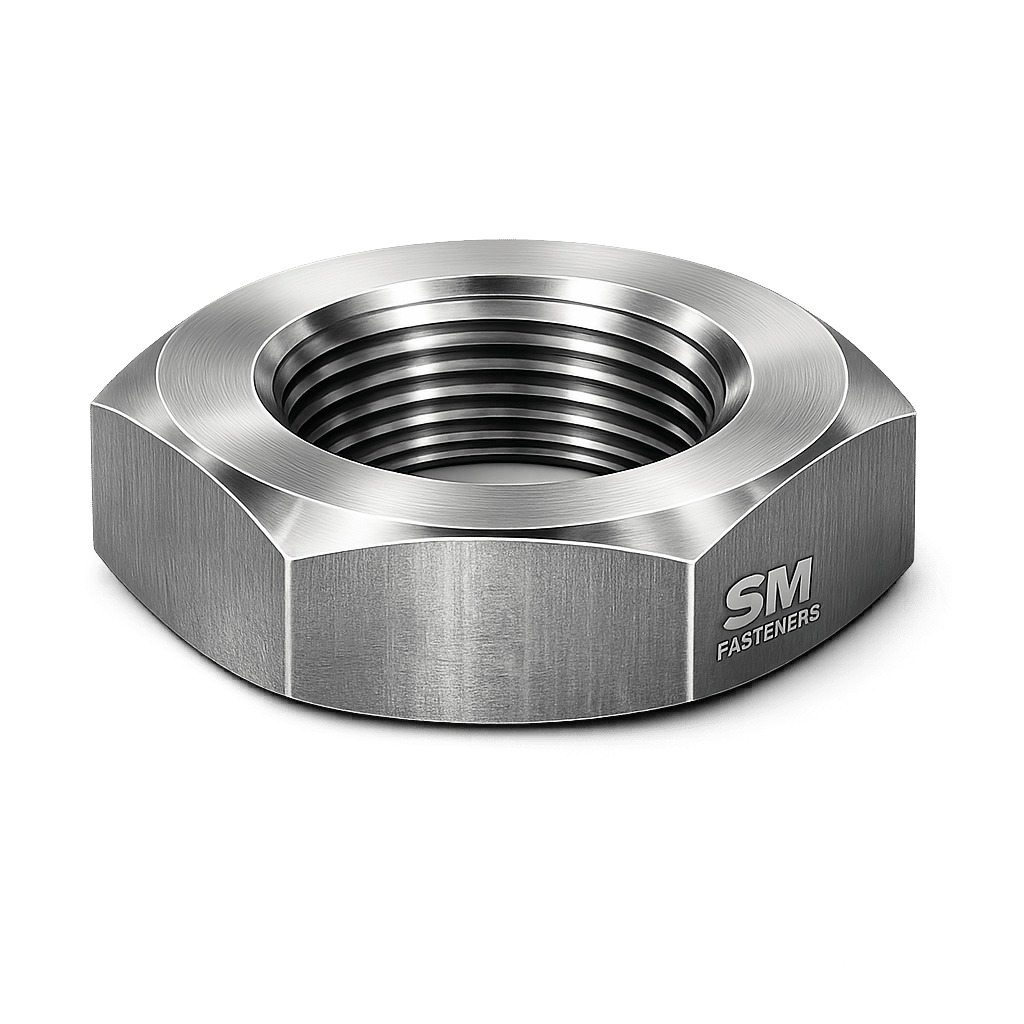
Panel mounting systems represent one of the most widely used fastening interfaces across industrial equipment, electrical assemblies, infrastructure modules, and heavy mechanical enclosures. Modern equipment architecture increasingly depends on thin-wall panels, sheet structures, composite housings, and modular enclosures, where traditional hex nuts cannot be efficiently deployed.
Panel Nuts are engineered specifically to:
- Provide secure threaded engagement in confined or thin sections
- Enable front-access installation
- Maintain repeatable preload under vibration
- Prevent panel deformation during tightening
- Support high-volume industrial assembly
Industries relying heavily on panel nut systems include:
| Industry | Functional Requirement |
|---|---|
| Oil & Gas | Instrument panels, explosion-proof enclosures |
| Power Generation | Control cabinets & switchgear |
| Petrochemical | Analyzer housings & junction boxes |
| Railways | Control consoles & vibration-prone panels |
| Automotive | Dashboard modules & body panels |
| Offshore | Corrosion-resistant enclosure mounting |
| Heavy Equipment | Operator consoles & electrical panels |
Unlike structural nuts intended for high-thickness joints, panel nuts are optimized for limited thread engagement environments while maintaining controlled clamp force.
SM Fasteners manufactures precision panel nuts under ISO 9001-certified quality systems, supporting EPC procurement programs requiring dimensional accuracy, traceability, and global compliance.
2. Technical Definition
A Panel Nut is a precision threaded fastening component designed to secure devices, fittings, connectors, or assemblies to thin panels, sheet metal structures, or enclosure walls, typically installed from one accessible side.
Core Functional Characteristics
- Low-profile geometry
- Optimized bearing surface
- Controlled torque transmission
- Anti-rotation features (optional)
- Compatibility with metric and imperial threads
- Designed for repetitive assembly cycles
Engineering Definition
A panel nut is a threaded retaining element that converts torque into axial clamping force while distributing load across a limited panel thickness without inducing localized yielding or distortion.
3. Functional Role in Mechanical Assemblies
Panel nuts perform three simultaneous engineering functions:
3.1 Load Transfer
Convert tightening torque into:
- Axial clamping force
- Surface compression
- Frictional resistance
3.2 Position Retention
Maintain alignment of:
- Electrical connectors
- Hydraulic fittings
- Instrumentation housings
- Control devices
3.3 Structural Protection
Prevent:
- Panel buckling
- Hole elongation
- Thread stripping
- Vibration loosening
4. Load Mechanics & Force Behavior
Panel nuts operate under combined loading conditions.
Primary Load Types
| Load Type | Description |
|---|---|
| Tensile Load | Generated by preload |
| Shear Load | External lateral forces |
| Bearing Load | Panel contact pressure |
| Cyclic Load | Vibration-induced fatigue |
| Thermal Load | Expansion mismatch |
4.1 Torque–Tension Relationship
The tightening torque produces preload according to:
Where:
- = Preload force (N)
- = Applied torque (Nm)
- = Nut factor (0.16–0.25 typical)
- = Nominal diameter (m)
Worked Example — Panel Nut
Given:
- Thread: M8
- Torque: 20 Nm
- Nut factor: 0.20
- Diameter: 0.008 m
This preload must remain below:
- Panel yield strength
- Thread stripping limit
- Bearing pressure threshold
4.2 Friction Distribution
Approximate torque consumption:
| Component | Torque Share |
|---|---|
| Thread friction | 40% |
| Bearing friction | 50% |
| Actual preload generation | 10% |
Therefore, surface finish and lubrication significantly influence clamp force accuracy.
5. Joint Design Principles
Panel nut joints must be engineered differently from structural bolt joints.
5.1 Thread Engagement Requirement
Minimum engagement:
| Material | Required Engagement |
|---|---|
| Steel Panel | 1 × Diameter |
| Aluminum Panel | 1.5 × Diameter |
| Polymer Panel | 2 × Diameter |
5.2 Bearing Stress Control
Where:
- = Contact area under nut
Increasing flange diameter reduces localized stress.
5.3 Panel Deformation Control
Design methods include:
- Flanged panel nuts
- Serrated locking faces
- Washer-integrated geometries
- Reinforced panel collars
5.4 Anti-Loosening Behavior
Panel nuts must maintain preload under vibration.
Common solutions:
- Prevailing torque design
- Nylon insert locking
- Serrated faces
- Chemical locking compounds
- Spring washer integration
6. Failure Mechanisms
6.1 Thread Stripping
Occurs when:
- Panel thickness insufficient
- Soft substrate used
- Over-torque applied
6.2 Panel Yielding
Localized plastic deformation around hole.
Mitigation:
- Increase bearing diameter
- Reduce tightening torque
- Use backing plates
6.3 Fatigue Failure
Repeated cyclic loading leads to:
- Crack initiation at first engaged thread
- Progressive loss of preload
6.4 Hydrogen Embrittlement
Relevant for:
- High-strength carbon steel panel nuts
- Electroplated coatings
SM Fasteners applies controlled baking procedures compliant with ISO plating standards.
6.5 Stress Corrosion Cracking
Critical in:
- Offshore installations
- Chloride environments
- Sour gas service
Material selection must follow NACE MR0175 / ISO 15156.
7. Preload Design Philosophy
Correct preload ensures:
- Joint stiffness
- Vibration resistance
- Seal integrity
- Electrical grounding continuity
Recommended preload range:
| Application | Preload Target |
|---|---|
| Static Panels | 60% Proof Load |
| Vibrating Equipment | 70–75% Proof Load |
| Sealed Enclosures | 75–80% Proof Load |
8. Functional Selection Criteria
Engineers select panel nuts based on:
- Panel thickness
- Required clamp force
- Installation accessibility
- Environmental exposure
- Maintenance frequency
- Electrical bonding requirements
9. Role in Modern Industrial Design
Panel nuts support:
- Modular equipment architecture
- Rapid maintenance access
- Reduced assembly time
- Automated manufacturing
- Lightweight structural systems
Their importance increases as industries transition toward:
- Compact equipment
- Digital instrumentation
- Offshore modularization
- Electrification systems
10. SM Fasteners Engineering Integration
SM Fasteners manufactures panel nuts with:
- Controlled thread tolerances
- Precision cold forming
- Advanced alloys including Duplex, Super Duplex, Inconel, Monel, and SMO 254
- PEEK polymer solutions for electrically isolated assemblies
- Full traceability aligned with ISO 9001 and UKAF accreditation
11. Product Types and Engineering Variants
Panel nuts exist in multiple geometries developed to solve installation, accessibility, load distribution, and vibration resistance challenges encountered in industrial assemblies.
Unlike conventional hex nuts, panel nuts are engineered around panel interface performance, not merely thread engagement.
11.1 Standard Panel Nut (Thin Pattern)
Description
Low-height internally threaded nut used where:
- Panel thickness is limited
- Rear-side access unavailable
- Low projection profile required
Characteristics
- Reduced height
- Controlled bearing face
- Precision internal thread tolerance
- Suitable for instrument mounting
Typical Applications
- Electrical enclosures
- Control panels
- Instrumentation housings
- Automation cabinets
11.2 Hex Panel Nut
Traditional hex external geometry allowing torque transmission using standard tools.
Engineering Advantages
- High torque capacity
- Easy installation
- Global interchangeability
Used where maintenance access is available.
11.3 Round Panel Nut (Knurled / Slotted)
Designed for:
- Visible exterior installations
- Decorative yet industrial interfaces
- Manual adjustment capability
Common in:
- Electrical connectors
- Sensor mounts
- Cable gland assemblies
11.4 Flanged Panel Nut
Integrated washer face increases load distribution.
Engineering Purpose
- Reduce panel indentation
- Prevent surface damage
- Improve vibration resistance
Recommended for:
- Aluminum panels
- Composite structures
- Thin stainless enclosures
11.5 Locking Panel Nut
Incorporates prevailing torque features.
Locking Methods:
- Nylon insert
- All-metal deformation lock
- Serrated flange
- Top-lock distortion
Used in:
- Rail systems
- Heavy equipment
- Offshore vibration zones
11.6 Jam Panel Nut (lock nut)
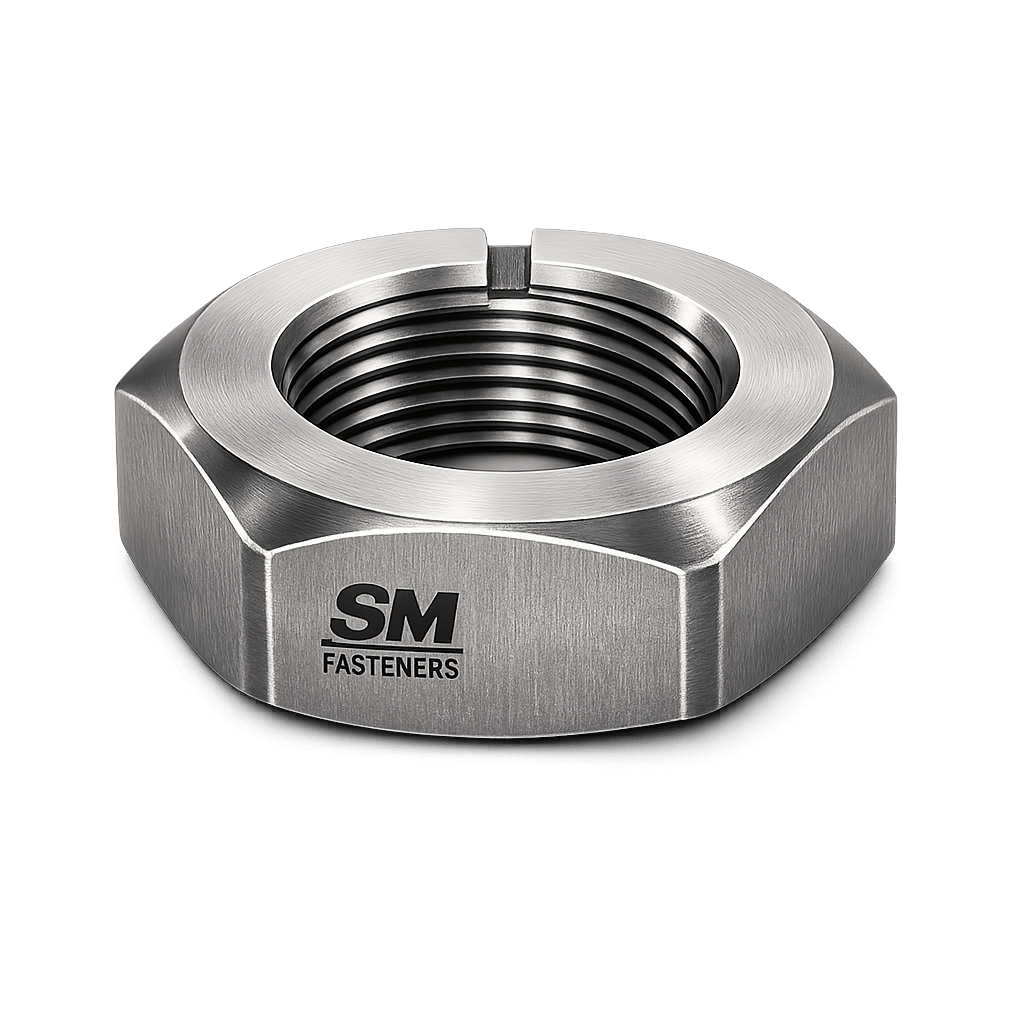
Thin secondary nut used to lock a primary nut.
Engineering Function:
- Prevent rotation
- Maintain preload stability
11.7 Captive Panel Nut Systems
Designed to remain attached to the panel even when disengaged.
Advantages:
- Prevent part loss
- Enable rapid maintenance
- Reduce foreign object damage risk
Widely specified in:
- Aerospace-style equipment
- Railways
- Military-grade enclosures
- Offshore installations
11.8 PEEK Panel Nuts (High-Performance Polymer)
SM Fasteners manufactures PEEK panel nuts for advanced applications.
Properties
- Electrically insulating
- Non-magnetic
- Chemical resistant
- Lightweight
- High temperature capable
Typical Industries:
| Industry | Requirement |
|---|---|
| Semiconductor | Electrical isolation |
| Medical | MRI compatibility |
| Chemical | Acid resistance |
| Electronics | Non-conductive fastening |
12. Dimensional Logic and Geometry Engineering
Panel nut dimensions are governed by three engineering constraints:
- Thread engagement strength
- Panel bearing pressure
- Installation accessibility
12.1 Critical Dimensional Parameters
| Symbol | Parameter |
|---|---|
| d | Nominal thread diameter |
| P | Thread pitch |
| m | Nut height |
| s | Width across flats |
| e | Width across corners |
| dc | Bearing diameter |
| t | Panel thickness |
| Lₑ | Effective engagement length |
12.2 Dimensional Design Philosophy
Nut Height Optimization
Standard structural nuts:
Panel nuts:
This reduces protrusion while maintaining adequate thread shear strength.
Bearing Diameter Requirement
Ensures prevention of localized panel yielding.
13. Dimensional Specification Table — Metric Panel Nuts
(Representative engineering data aligned with SM Fasteners manufacturing capability)
| Size | Pitch (mm) | Nut Height m (mm) | Across Flats s (mm) | Bearing Dia dc (mm) | Recommended Panel Thickness (mm) |
|---|---|---|---|---|---|
| M3 | 0.5 | 1.8 | 5.5 | 7 | 0.8–2 |
| M4 | 0.7 | 2.2 | 7 | 9 | 1–3 |
| M5 | 0.8 | 2.7 | 8 | 11 | 1–4 |
| M6 | 1.0 | 3.2 | 10 | 13 | 1.5–5 |
| M8 | 1.25 | 4.0 | 13 | 17 | 2–6 |
| M10 | 1.5 | 5.0 | 17 | 21 | 3–8 |
| M12 | 1.75 | 6.0 | 19 | 24 | 4–10 |
| M16 | 2.0 | 8.0 | 24 | 30 | 6–12 |
14. Imperial (UNC / UNF) Dimensional Logic
| Size | Thread Type | TPI | Nut Height (in) | Across Flats (in) |
|---|---|---|---|---|
| #8 | UNC | 32 | 0.090 | 0.25 |
| #10 | UNC | 24 | 0.110 | 0.31 |
| 1/4″ | UNC | 20 | 0.160 | 0.44 |
| 5/16″ | UNC | 18 | 0.200 | 0.50 |
| 3/8″ | UNC | 16 | 0.240 | 0.56 |
| 1/2″ | UNC | 13 | 0.320 | 0.75 |
15. Thread Standards & Tolerances
Global EPC projects demand interchangeability across standards.
Metric Threads
| Standard | Description |
|---|---|
| ISO 261 | Metric thread dimensions |
| ISO 965 | Tolerances |
| ISO 68-1 | Basic profile |
| ISO 724 | Thread geometry |
Typical tolerance:
- Internal thread: 6H
- External thread: 6g
Unified Threads
| Standard | Description |
|---|---|
| ASME B1.1 | Unified thread system |
| UNC | Coarse series |
| UNF | Fine series |
British Standards
| Standard | Description |
|---|---|
| BS 84 | BSW threads |
| BS 1083 | BSF threads |
Thread Tolerance Comparison
| Thread System | Internal Class | External Class | Typical Use |
|---|---|---|---|
| Metric | 6H | 6g | General engineering |
| UNC | 2B | 2A | Heavy equipment |
| UNF | 2B | 2A | Precision assemblies |
| BSW | Medium | Medium | Legacy infrastructure |
16. Applicable International Standards for Panel Nuts
Panel nuts may comply with or reference multiple standards depending on geometry.
| Standard | Scope |
|---|---|
| ISO 4035 | Thin hex nuts |
| ISO 4036 | Jam nuts |
| DIN 439 | Thin pattern nuts |
| DIN 985 | Lock nuts |
| ASTM A563 | Carbon steel nuts |
| ASTM A194 | Alloy & stainless nuts |
| ASME B18.2.2 | Hex nuts |
| BS 3692 | Metric fasteners |
| EN ISO 898-2 | Mechanical properties |
SM Fasteners produces panel nuts meeting cross-standard interchangeability required by global EPC specifications.
17. Mechanical Property Classes
Metric Property Classes
| Class | Proof Stress (MPa) | Application |
|---|---|---|
| 5 | 500 | Light assemblies |
| 8 | 800 | General industrial |
| 10 | 1000 | Heavy equipment |
| 12 | 1200 | High-load environments |
ASTM Equivalent Grades
| ASTM Grade | Equivalent Property Level |
|---|---|
| A563 Grade A | Class 5 |
| A563 DH | Class 8/10 |
| A194 2H | High strength |
| A194 8 | Stainless steel |
18. Interchangeability Considerations
Critical procurement checks:
- Thread compatibility
- Washer face diameter
- Torque rating equivalence
- Material certification alignment
- Coating compatibility
Incorrect substitution may lead to:
- Panel deformation
- Loss of preload
- Galvanic corrosion
- Inspection rejection
19. Geometry vs Load Performance Relationship
| Geometry | Load Distribution | Vibration Resistance | Typical Use |
|---|---|---|---|
| Thin Hex | Moderate | Medium | General panels |
| Flanged | High | High | Thin sheets |
| Locking | Medium | Very High | Dynamic equipment |
| Round | Low | Low | Connector retention |
| PEEK | Moderate | Medium | Electrical isolation |
20. SM Fasteners Engineering Capability Integration
SM Fasteners supplies panel nuts with:
- CNC precision machining and cold forming
- Tight tolerance threading
- Custom geometry development for OEM equipment
- Metric, UNC, UNF, BSW, BSF compatibility
- Special alloys including Duplex, Inconel, Monel, SMO 254
- PEEK fastener manufacturing for specialized industries
All dimensional control follows ISO 9001 quality management systems audited under UKAF accreditation.
21. Material Engineering Philosophy
Material selection for panel nuts is fundamentally different from structural fastening applications because the joint typically involves:
- Thin panels
- Mixed material assemblies
- Corrosion exposure
- Electrical grounding requirements
- Repeated maintenance cycles
Therefore, engineering selection must balance:
- Mechanical strength
- Galling resistance
- Corrosion performance
- Thermal stability
- Cost efficiency
- Regulatory compliance
SM Fasteners manufactures panel nuts across a complete industrial alloy spectrum to meet EPC and OEM procurement specifications.
22. Industrial Material Grades for Panel Nuts
22.1 Carbon Steel
Used where environmental exposure is controlled and cost efficiency is required.
| Grade | Standard | UTS (MPa) | Yield (MPa) | Temperature Limit |
|---|---|---|---|---|
| C15 | EN 10083 | 500 | 300 | 300°C |
| C35 | EN 10083 | 600 | 360 | 350°C |
| ASTM A563 Gr A | ASTM | 550 | 330 | 300°C |
| ASTM A563 DH | ASTM | 850 | 640 | 400°C |
Applications
- Indoor control panels
- Machinery housings
- Structural enclosures
22.2 Stainless Steel Grades
Provide corrosion resistance and long-term service reliability.
| Grade | Standard | UTS (MPa) | Corrosion Resistance | Typical Use |
|---|---|---|---|---|
| A2-70 (304) | ISO 3506 | 700 | General | Electrical panels |
| A4-70 (316) | ISO 3506 | 700 | Marine | Offshore |
| A4-80 | ISO 3506 | 800 | Chloride resistant | Petrochemical |
| 316L | ASTM A194 Gr 8M | 515 | High | Chemical plants |
Advantages:
- Excellent atmospheric resistance
- Non-magnetic options
- Clean-room compatibility
22.3 Alloy Steel Panel Nuts
For high preload and dynamic environments.
| Grade | Standard | UTS (MPa) | Application |
|---|---|---|---|
| ASTM A194 2H | ASTM | 860 | Pressure equipment |
| 4140 / 42CrMo4 | EN | 1000+ | Heavy machinery |
| Property Class 10 / 12 | ISO 898-2 | High | Dynamic loading |
22.4 Duplex & Super Duplex Stainless Steels
Engineered for aggressive environments.
| Grade | PREN | Chloride Resistance | Industry |
|---|---|---|---|
| Duplex 2205 | 35 | High | Offshore |
| Super Duplex 2507 | 42+ | Very High | Subsea systems |
Benefits:
- High strength + corrosion resistance
- Reduced weight requirements
- Superior SCC resistance
22.5 Nickel Alloys
For extreme environments.
| Alloy | Service Capability |
|---|---|
| Inconel 625 | High temperature + seawater |
| Inconel 718 | High strength elevated temp |
| Hastelloy C276 | Acid resistance |
| Monel 400 | Marine environments |
| Incoloy 825 | Chemical processing |
| SMO 254 | Chloride & brine resistance |
22.6 PEEK Panel Nuts — Advanced Polymer Solution
SM Fasteners provides PEEK fasteners for specialized assemblies.
| Property | Value |
|---|---|
| Continuous temperature | 250°C |
| Density | 1.3 g/cm³ |
| Electrical insulation | Excellent |
| Chemical resistance | Outstanding |
| Magnetic behavior | Non-magnetic |
Applications:
- Semiconductor manufacturing
- Medical equipment
- Electrical isolation panels
- Corrosive chemical plants
23. Material Selection Comparison Table
| Material | Strength | Corrosion Resistance | Cost Level | Typical Industry |
|---|---|---|---|---|
| Carbon Steel | High | Low | Low | Indoor equipment |
| SS304 | Medium | Good | Medium | General industrial |
| SS316 | Medium | Excellent | Medium | Marine |
| Duplex 2205 | High | Excellent | High | Offshore |
| Inconel | Very High | Extreme | Very High | High temperature |
| PEEK | Moderate | Chemical proof | High | Electronics |
24. Corrosion Resistance vs Environment
| Environment | Carbon Steel | SS304 | SS316 | Duplex | Nickel Alloy | PEEK |
|---|---|---|---|---|---|---|
| Indoor Industrial | ✔ | ✔ | ✔ | ✔ | ✔ | ✔ |
| Marine Atmosphere | ✖ | △ | ✔ | ✔✔ | ✔✔ | ✔ |
| Seawater Immersion | ✖ | ✖ | ✔ | ✔✔ | ✔✔ | ✔ |
| Acidic Chemical | ✖ | △ | ✔ | ✔ | ✔✔ | ✔✔ |
| H₂S Sour Service | ✖ | △ | ✔ | ✔✔ | ✔✔ | ✔ |
| High Temperature | △ | ✔ | ✔ | ✔ | ✔✔ | ✔ |
✔✔ = Preferred
All sour-service materials manufactured in compliance with NACE MR0175 / ISO 15156 hardness limitations.
25. Heat Treatment Processes
Heat treatment ensures required mechanical performance while preventing brittle failure.
25.1 Carbon & Alloy Steel Processes
| Process | Purpose |
|---|---|
| Normalizing | Grain refinement |
| Quenching | Increase hardness |
| Tempering | Improve toughness |
| Stress relieving | Remove residual stress |
Typical hardness control:
- Class 8: 22–32 HRC
- Class 10: 32–36 HRC
- Class 12: 36–39 HRC
25.2 Hydrogen Embrittlement Prevention
SM Fasteners follows controlled procedures:
- Post-plating baking
- Hydrogen diffusion treatment
- Hardness verification
- Process validation records
Critical for:
- Zinc plated panel nuts
- High-strength property classes
25.3 Stainless Steel Heat Treatment
| Grade | Treatment |
|---|---|
| 304 | Solution annealed |
| 316 | Solution annealed |
| Duplex | Controlled annealing |
| Nickel alloys | Age hardening (if applicable) |
26. End-to-End Manufacturing Workflow
SM Fasteners follows a traceable production sequence aligned with ISO 9001.
Step 1 — Raw Material Procurement
- Approved mills only
- Heat number traceability
- EN 10204 3.1 Mill Test Certificate verification
- PMI validation (optional)
Step 2 — Material Inspection
Incoming verification includes:
- Chemical composition
- Ultrasonic inspection
- Visual surface check
- Mechanical property confirmation
Step 3 — Forming Operations
Cold Forging
Preferred for high-volume panel nuts.
Advantages:
- Grain flow continuity
- Higher fatigue resistance
- Material efficiency
Hot Forging
Used for:
- Large sizes
- Nickel alloys
- Duplex grades
CNC Machining
Applied when:
- Tight tolerances required
- Custom geometries
- Prototype production
Step 4 — Thread Manufacturing
Thread Rolling (Preferred)
Benefits:
- Work hardening
- Superior fatigue life
- Improved surface finish
Thread Cutting
Used for:
- Exotic alloys
- Low production volumes
- Special pitch requirements
Step 5 — Heat Treatment
Performed in controlled furnaces:
- Atmosphere-controlled heating
- Automated temperature recording
- Batch traceability
Step 6 — Surface Preparation
- Shot blasting
- Pickling
- Passivation
- Degreasing
Step 7 — Coating / Surface Engineering
(see Section 27)
Step 8 — Final Inspection
- Dimensional verification
- Thread gauging
- Mechanical testing
- Surface finish inspection
Step 9 — Identification & Traceability
Each batch linked to:
- Heat number
- Production lot
- Inspection reports
- Certification package
27. Surface Finishing & Coating Technologies
Surface engineering directly affects corrosion performance and torque consistency.
27.1 Industrial Coating Options
| Coating | Thickness | Corrosion Resistance | Temperature Limit |
|---|---|---|---|
| Zinc Plating | 5–12 µm | Moderate | 120°C |
| HDG | 50–80 µm | High | 450°C |
| Zinc Nickel | 8–15 µm | Very High | 180°C |
| Mechanical Galvanizing | 40 µm | High | 300°C |
| Black Oxide | Minimal | Low | 300°C |
| PTFE / Xylan | 20–40 µm | Excellent | 260°C |
| Passivation | — | Stainless protection | High |
27.2 Surface Finish Performance Comparison
| Finish | Corrosion | Friction Control | Galling Resistance | Offshore Suitability |
|---|---|---|---|---|
| Plain Steel | Low | Poor | Low | ✖ |
| Zinc | Medium | Good | Medium | △ |
| Zn-Ni | High | Excellent | High | ✔ |
| PTFE | Very High | Excellent | Excellent | ✔✔ |
| Passivated SS | Very High | Good | High | ✔✔ |
27.3 Coating Selection Principles
Engineers must consider:
- Galvanic compatibility
- Torque coefficient consistency
- Hydrogen embrittlement risk
- Assembly lubrication requirements
28. Temperature Capability Comparison
| Material | Max Service Temperature |
|---|---|
| Carbon Steel | 400°C |
| Stainless Steel | 600°C |
| Duplex | 300°C |
| Inconel | 1000°C |
| PEEK | 250°C |
29. SM Fasteners Manufacturing Advantages
SM Fasteners integrates:
- ISO 9001 certified production control
- UKAF-accredited quality systems
- Custom engineering support
- Full exotic alloy manufacturing
- Precision PEEK fastener capability
- Global EPC project supply readiness
All manufacturing stages maintain documented traceability required by international inspection agencies and third-party auditors.
30. Inspection & Quality Control Philosophy
Panel nuts used in industrial assemblies must satisfy mechanical integrity, dimensional conformity, and traceability requirements demanded by EPC contractors, third-party inspectors, and international project specifications.
SM Fasteners operates under:
- ISO 9001 Certified Quality Management System
- UKAF-accredited audit framework
- MSME certified manufacturing infrastructure
- Lot-based traceability aligned with global project procurement
Quality assurance begins at raw material sourcing and continues through shipment.
31. Dimensional Inspection & Verification
31.1 Critical Inspection Parameters
| Parameter | Inspection Method |
|---|---|
| Thread diameter | GO/NO-GO gauges |
| Pitch accuracy | Optical comparator |
| Nut height | Digital micrometer |
| Across flats | Vernier / CMM |
| Bearing face flatness | Surface plate inspection |
| Thread concentricity | Coordinate measuring machine |
| Surface defects | Visual inspection (ISO 3269) |
Inspection frequency determined by:
- Sampling plans (ISO 2859)
- Project specifications
- Criticality classification
31.2 Thread Acceptance Criteria
| Thread Standard | Internal Class |
|---|---|
| Metric | 6H |
| UNC/UNF | 2B |
| BSF/BSW | Medium Fit |
32. Mechanical Testing & Validation
Mechanical verification ensures preload reliability and service safety.
Mandatory Tests
| Test | Standard |
|---|---|
| Proof load test | ISO 898-2 |
| Hardness test | ISO 6508 |
| Tensile verification | ASTM F606 |
| Wedge load test | ISO 2320 |
| Torque performance | ISO 16047 |
| Coating adhesion | ASTM B571 |
Mechanical Properties Table — Metric Property Classes
| Property Class | Proof Load (MPa) | Yield (MPa) | Tensile Strength (MPa) | Hardness (HRC) |
|---|---|---|---|---|
| 5 | 500 | 300 | 500–700 | 12–22 |
| 8 | 800 | 640 | 800–1000 | 22–32 |
| 10 | 1000 | 900 | 1000–1200 | 32–36 |
| 12 | 1200 | 1080 | 1200–1400 | 36–39 |
33. Non-Destructive Examination (NDT)
For critical service panel nuts:
| Method | Purpose |
|---|---|
| Magnetic Particle Inspection | Crack detection |
| Dye Penetrant Testing | Surface flaw identification |
| Ultrasonic Testing | Internal defects |
| PMI Testing | Alloy confirmation |
| Eddy Current | Surface discontinuity |
Required for:
- Offshore platforms
- LNG facilities
- Nuclear applications
- High-pressure instrumentation panels
34. Proof Load & Tensile Strength Table (Representative)
| Size | Stress Area (mm²) | Class 8 Proof Load (kN) | Class 10 Proof Load (kN) | Class 12 Proof Load (kN) |
|---|---|---|---|---|
| M4 | 8.78 | 7.0 | 8.8 | 10.5 |
| M5 | 14.2 | 11.3 | 14.2 | 17.0 |
| M6 | 20.1 | 16.0 | 20.0 | 24.0 |
| M8 | 36.6 | 29.0 | 36.5 | 44.0 |
| M10 | 58 | 46 | 58 | 70 |
| M12 | 84.3 | 67 | 84 | 101 |
| M16 | 157 | 125 | 157 | 188 |
35. Tightening Torque Chart
(Dry condition unless specified)
| Size | Class 8 (Nm) | Class 10 (Nm) | Class 12 (Nm) | Lubricated Reduction |
|---|---|---|---|---|
| M4 | 3 | 4 | 5 | −20% |
| M5 | 6 | 8 | 10 | −20% |
| M6 | 10 | 13 | 16 | −20% |
| M8 | 25 | 32 | 40 | −20% |
| M10 | 49 | 63 | 78 | −20% |
| M12 | 85 | 108 | 135 | −20% |
| M16 | 210 | 270 | 330 | −20% |
Torque values must always be validated against:
- Coating friction coefficient
- Lubrication condition
- Panel material strength
36. Preload Calculation — Engineering Example
Formula
Where:
- = Preload force (N)
- = Applied torque
- = Nut factor (0.18–0.25)
- = Nominal diameter (m)
Example
Panel Nut: M10
Torque = 63 Nm
K = 0.20
D = 0.01 m
Recommended working preload:
≈ 70% of proof load to prevent panel distortion.
37. Thread Standards & Tolerances Table
| Thread Type | Standard | Pitch Series | Tolerance |
|---|---|---|---|
| Metric | ISO 261 | Coarse/Fine | 6H |
| UNC | ASME B1.1 | Coarse | 2B |
| UNF | ASME B1.1 | Fine | 2B |
| BSW | BS 84 | Coarse | Medium |
| BSF | BS 1083 | Fine | Medium |
38. Surface Finish Comparison Table
| Surface Finish | Corrosion Life | Friction Stability | Offshore Use | Maintenance Need |
|---|---|---|---|---|
| Plain Steel | Low | Poor | ✖ | High |
| Zinc Plated | Medium | Good | △ | Medium |
| HDG | High | Moderate | ✔ | Low |
| Zinc Nickel | Very High | Excellent | ✔✔ | Very Low |
| PTFE/Xylan | Excellent | Excellent | ✔✔ | Very Low |
| Passivated SS | Excellent | Good | ✔✔ | Very Low |
39. Failure Analysis & Reliability Considerations
Common Field Failures
| Failure Mode | Cause | Engineering Mitigation |
|---|---|---|
| Thread stripping | Thin panel | Increase bearing diameter |
| Loosening | Vibration | Locking panel nut |
| Galling | SS–SS contact | PTFE coating |
| SCC | Chlorides | Duplex/Nickel alloy |
| Hydrogen embrittlement | Improper plating | Controlled baking |
40. Industry Applications
Construction & Structural Steel
- Architectural cladding panels
- Equipment housings
- Modular building systems
Oil & Gas (Upstream / Downstream)
- Control panels
- Analyzer cabinets
- Junction boxes
- Explosion-proof enclosures
Power Generation
- Switchgear panels
- Turbine control systems
- Substation equipment
Petrochemical & Chemical Processing
- Corrosion-resistant instrument mounting
- Acid service panels
- Pump control enclosures
LNG & Offshore Platforms
- Marine-grade stainless panel fastening
- Duplex alloy instrumentation panels
Automotive & Heavy Equipment
- Dashboard assemblies
- Operator cabins
- Electrical control modules
Railways & Infrastructure
- Signaling systems
- Control consoles
- Safety enclosures
Shipbuilding
- Navigation panels
- Marine electrical systems
PEEK Panel Nut Applications
- High-voltage isolation systems
- Semiconductor clean rooms
- MRI-compatible equipment
- Chemical exposure environments
41. Weight Chart — Panel Nuts (Typical)
(Aligned with SM Fasteners production references)
| Size | Weight per Piece (kg) | Weight per 100 pcs (kg) |
|---|---|---|
| M4 | 0.0015 | 0.15 |
| M5 | 0.0025 | 0.25 |
| M6 | 0.004 | 0.40 |
| M8 | 0.008 | 0.80 |
| M10 | 0.015 | 1.50 |
| M12 | 0.025 | 2.50 |
| M16 | 0.060 | 6.00 |
Custom weight charts provided for project-specific materials including Duplex, Inconel, and PEEK.
42. Packaging & Preservation for Export
SM Fasteners supplies panel nuts in industrial export-ready packaging:
Primary Protection
- VCI corrosion protection
- Thread caps / protectors
- Oil or dry-film protection
Secondary Packaging
- Heat-sealed poly bags
- Batch identification labels
- QR traceability tagging
Export Crating
- ISPM-15 compliant wooden crates
- Moisture barrier packaging
- Container desiccant control
43. Documentation Package for Global EPC Supply
Standard documentation includes:
| Document | Purpose |
|---|---|
| EN 10204 3.1 MTC | Material traceability |
| Heat Treatment Report | Mechanical verification |
| Dimensional Inspection Report | QA validation |
| Coating Test Report | Corrosion assurance |
| PMI Report | Alloy confirmation |
| Certificate of Conformity | Compliance declaration |
| Packing List & Traceability | Logistics control |
Optional:
- EN 10204 3.2 certification
- Third-party inspection (TPI)
- Client witness testing
44. Quality System Integration — SM Fasteners
SM Fasteners integrates manufacturing and inspection through:
- ISO 9001 process control
- UKAF-accredited audit framework
- Digital batch traceability
- SPC monitoring
- Controlled calibration systems
- Global procurement compliance readiness
45. Procurement Engineering Guidance
When specifying panel nuts for projects, engineers should define:
- Thread standard
- Property class
- Material grade
- Coating requirement
- Inspection level
- Certification requirement
- Environmental exposure
- Torque specification
- Panel thickness
SM Fasteners supports custom engineering review for EPC tenders and OEM qualification programs.
46. SM Fasteners — Global Supply Capability
SM Fasteners demonstrates industrial readiness through:
- Broad material capability including Stainless Steel, Alloy Steel, Duplex, Super Duplex, Nickel Alloys, SMO 254, and PEEK
- Precision cold forming and CNC machining
- Custom fastener engineering solutions
- Certified quality management systems
- Export logistics experience supporting international infrastructure projects