

Sleeve Nut
1. INDUSTRY CONTEXT, FUNCTIONAL ENGINEERING & LOAD MECHANICS
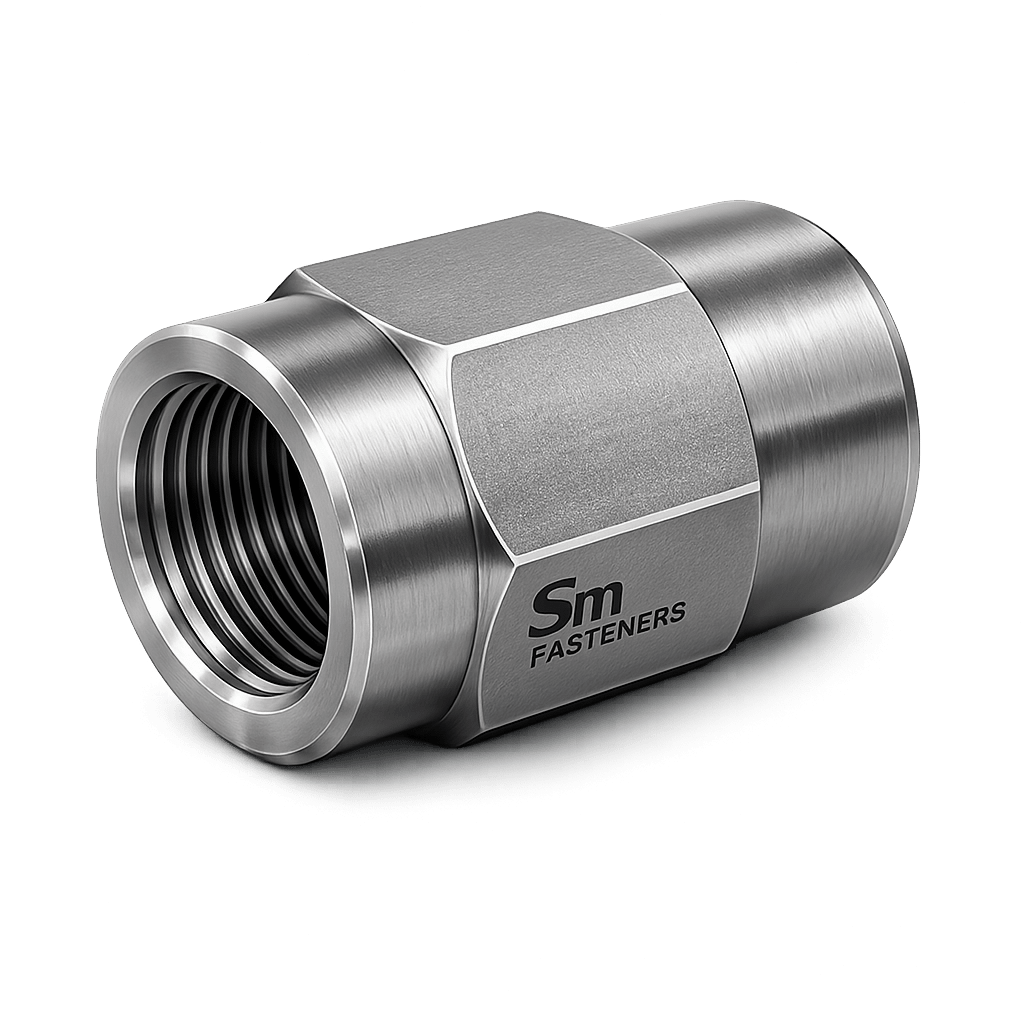
1.1 Industry Context and Engineering Relevance
Sleeve nuts are specialized threaded fastening components developed to provide extended thread engagement, alignment stability, and structural joining capability in assemblies where standard hex nuts cannot satisfy joint geometry or load distribution requirements.
Within modern industrial engineering systems, sleeve nuts serve as load-transmitting coupling elements across:
- Structural steel assemblies
- Mechanical linkages
- Rotating equipment supports
- Architectural tension systems
- Pipeline supports
- Adjustable assemblies
- Spacer-based installations
Unlike conventional nuts designed primarily for clamping, sleeve nuts function as combined fastening + spacing + alignment devices.
Industrial Drivers for Sleeve Nut Adoption
| Engineering Requirement | Limitation of Standard Nut | Sleeve Nut Advantage |
|---|---|---|
| Extended engagement | Limited thread depth | Full-length internal thread |
| Alignment accuracy | Misalignment risk | Guided axial positioning |
| Adjustable spacing | Requires additional spacers | Integrated sleeve geometry |
| Load distribution | Localized stress | Distributed bearing length |
| Structural tensioning | Multiple components needed | Single engineered element |
1.2 Technical Definition
A Sleeve Nut is defined as:
A cylindrical internally threaded fastener featuring extended body length beyond standard nut height, used to connect threaded members, provide spacing, or increase thread engagement while maintaining axial alignment.
Core Characteristics
- Cylindrical external profile
- Full internal thread length
- Increased engagement ratio
- Optional wrench flats or drive interface
- Precision-machined geometry
- Load-transfer along axial length
Sleeve nuts may also be referred to as:
- Long nuts
- Extension nuts
- Spacer nuts
- Connector nuts (application dependent)
1.3 Functional Role in Mechanical Assemblies
Sleeve nuts perform three simultaneous engineering functions:
1. Fastening Function
Creates axial clamping between threaded components.
2. Structural Coupling Function
Joins two threaded rods or studs.
3. Spacing Function
Load transmission occurs continuously through the internal threads.
1.4 Load Mechanics and Force Behaviour
1.4.1 Axial Load Transfer
When tightened, sleeve nuts generate preload identical to conventional nuts but with enhanced load distribution.
Primary forces:
- Tensile load
- Clamp force
- Thread shear stress
- Bearing pressure
1.4.2 Thread Engagement Mechanics
Critical engineering parameter:
Where:
- Le = Engagement length
- D = Nominal diameter
Sleeve nuts typically provide:
This substantially increases:
- Pull-out resistance
- Fatigue life
- Load reliability
1.4.3 Stress Distribution Advantage
Standard nuts concentrate stresses near first threads.
Sleeve nuts distribute stresses along full length:
| Parameter | Standard Nut | Sleeve Nut |
|---|---|---|
| Load concentration | High | Low |
| Thread stripping risk | Higher | Reduced |
| Fatigue resistance | Moderate | High |
| Alignment control | Limited | Excellent |
1.5 Preload and Clamp Force Mechanics
Joint integrity depends on preload.
General relationship:
Where:
- = Preload force
- = Applied torque
- = Nut factor
- = Nominal diameter
Typical nut factor:
| Condition | K Value |
|---|---|
| Dry steel | 0.20–0.25 |
| Zinc coated | 0.18 |
| Lubricated | 0.12–0.15 |
| PTFE coated | 0.10–0.12 |
Longer engagement stabilizes preload retention under vibration.
1.6 Joint Design Principles
1.6.1 Engagement Length Selection
| Material Combination | Minimum Engagement |
|---|---|
| Steel–Steel | 1D |
| Stainless–Steel | 1.5D |
| Aluminum Interface | 2D |
| High Vibration Systems | ≥2.5D |
Sleeve nuts inherently satisfy these requirements.
1.6.2 Joint Stiffness
Joint stiffness ratio:
Where:
- = Bolt stiffness
- = Joint stiffness
Extended sleeve length increases effective stiffness and reduces loosening.
1.6.3 Alignment Control
Sleeve nuts act as:
- Axial guides
- Centering components
- Thread alignment stabilizers
Critical in:
- Pump frames
- Structural rods
- Rail tension systems
- Offshore bracing
1.7 Torque–Tension Relationship
Approximately:
- 90% torque lost to friction
- 10% produces preload
Friction locations:
- Thread flanks
- Bearing surfaces
- Coating interfaces
Long sleeve geometry improves repeatability due to stabilized thread engagement.
1.8 Failure Mechanisms and Engineering Considerations
1. Thread Stripping
Caused by insufficient engagement or material mismatch.
Sleeve nuts reduce stripping risk.
2. Fatigue Failure
Occurs under cyclic loading.
Mitigated by:
- Uniform stress distribution
- Increased engaged threads
3. Shear Failure
Relevant in structural bracing applications.
Sleeve body thickness selected based on shear demand.
4. Hydrogen Embrittlement
Applicable to:
- High-strength alloy steels
- Electroplated components
Controlled via:
- Baking procedures
- ISO 4042 compliance
5. Stress Corrosion Cracking (SCC)
Critical environments:
- Chlorides
- H₂S
- Offshore atmosphere
Material selection becomes primary design variable.
1.9 Functional Selection Criteria
Engineers select sleeve nuts based on:
| Parameter | Engineering Consideration |
|---|---|
| Load magnitude | Proof load requirement |
| Environment | Corrosion resistance |
| Temperature | Material stability |
| Adjustment need | Sleeve length |
| Alignment | Geometry tolerance |
| Maintenance access | Drive design |
1.10 Application Engineering Relevance
Structural Steel
- Tension rod systems
- Architectural bracing
Oil & Gas
- Pipe supports
- Valve extensions
- Offshore modules
Power Generation
- Turbine alignment
- Equipment anchoring
Petrochemical
- Elevated pipe racks
- Expansion supports
Infrastructure
- Bridge tension assemblies
- Rail fastener systems
Heavy Equipment
- Adjustable mounts
- Hydraulic assemblies
1.11 SM FASTENERS Engineering Integration
SM Fasteners manufactures sleeve nuts under:
- ISO 9001 Quality Management
- UKAF-accredited inspection systems
- MSME industrial manufacturing framework
Capabilities include:
- Precision machining
- Custom engagement lengths
- Exotic alloy production
- PEEK engineering fasteners
- EPC project supply programs
Each sleeve nut is engineered for traceable industrial deployment, not commercial hardware usage.
2. PRODUCT TYPES, GEOMETRY LOGIC & INTERNATIONAL STANDARDS
2.1 Product Types and Engineering Variants
Sleeve nuts are not standardized as a single geometry worldwide. Instead, they exist as functional engineering variants designed according to load case, accessibility, and assembly method.
SM Fasteners manufactures sleeve nuts in standardized and fully custom-engineered configurations aligned with EPC and OEM project requirements.
2.1.1 Standard Cylindrical Sleeve Nut
Description
- Fully cylindrical body
- Internal threads through entire length
- External surface smooth or knurled
Engineering Purpose
- Coupling threaded rods
- Spacer applications
- Architectural tension systems
Typical Uses
- Structural tie rods
- Mechanical assemblies
- Pipe support systems
2.1.2 Hex sleeve nut
Geometry
- Cylindrical threaded body
- Hexagonal wrench flats
Advantages
- Controlled torque application
- Field installation ease
- Standard tooling compatibility
Used widely in:
- Heavy equipment
- EPC construction
- Maintenance assemblies
2.1.3 Reduced Diameter Sleeve Nut
Designed for:
- Restricted installation envelopes
- Embedded assemblies
- Equipment housings
Key feature:
- Smaller outside diameter while maintaining internal engagement length.
2.1.4 Heavy-Duty Structural Sleeve Nut
Characteristics:
- Increased wall thickness
- Extended length (3D–6D engagement)
- High proof-load capability
Used in:
- Bridge construction
- Offshore modules
- Wind structures
- High-tension rods
2.1.5 Shouldered Sleeve Nut
Features:
- Integrated flange or shoulder
- Positive stop positioning
Engineering Benefits:
- Accurate spacing
- Controlled compression zones
- Improved load transfer surface
2.1.6 Locking Sleeve Nut Variants
Used in vibration-sensitive assemblies.
Locking mechanisms include:
- Nylon insert
- All-metal prevailing torque
- Deformed thread locking
- Chemical locking compatibility
Applications:
- Railways
- Turbomachinery
- Mining equipment
2.1.7 PEEK Sleeve Nuts (High-Performance Polymer)
SM Fasteners supplies precision PEEK sleeve nuts for environments requiring:
- Electrical insulation
- Chemical resistance
- Weight reduction
- Non-magnetic properties
Typical industries:
- Semiconductor equipment
- Medical devices
- Chemical processing
- LNG instrumentation
2.2 Dimensional Logic and Geometry Engineering
Sleeve nut geometry is governed by load transfer efficiency, thread strength, and installation mechanics.
2.2.1 Fundamental Dimensional Parameters
| Parameter | Symbol | Engineering Function |
|---|---|---|
| Nominal diameter | D | Thread size |
| Thread pitch | P | Load transmission rate |
| Sleeve length | L | Engagement capacity |
| Outside diameter | OD | Shear strength |
| Wall thickness | t | Structural rigidity |
| Wrench size | S | Torque application |
2.2.2 Engagement Length Engineering
Recommended sleeve length:
| Application | Recommended Length |
|---|---|
| Standard coupling | 2D |
| Structural tension | 3D–4D |
| Dynamic loading | ≥4D |
| Soft materials | ≥5D |
Longer engagement reduces first-thread overstress.
2.2.3 Wall Thickness Design Rule
Minimum:
Heavy-duty designs:
Ensures resistance to:
- Radial bursting
- Shear deformation
- Installation damage
2.3 Dimensional Specification Table (Metric Sleeve Nuts)
Typical Engineering Dimensions — ISO Metric Series
| Thread Size | Pitch (mm) | Standard Length (mm) | OD (mm) | Hex Size (mm) |
|---|---|---|---|---|
| M6 | 1.0 | 18–30 | 10 | 10 |
| M8 | 1.25 | 24–40 | 13 | 13 |
| M10 | 1.5 | 30–50 | 17 | 17 |
| M12 | 1.75 | 36–60 | 19 | 19 |
| M16 | 2.0 | 48–80 | 24 | 24 |
| M20 | 2.5 | 60–100 | 30 | 30 |
| M24 | 3.0 | 72–120 | 36 | 36 |
| M30 | 3.5 | 90–150 | 46 | 46 |
Custom sizes manufactured by SM Fasteners per project drawings.
2.4 Thread Standards and Interchangeability
Sleeve nuts must comply with international thread systems depending on project geography.
2.4.1 Metric Threads
| Standard | Description |
|---|---|
| ISO 68-1 | Basic profile |
| ISO 261 | Metric thread series |
| ISO 965 | Tolerances |
| ISO 724 | Dimensions |
Tolerance class commonly supplied:
6H Internal Thread
2.4.2 Unified Threads (US Market)
| Thread | Application |
|---|---|
| UNC | General engineering |
| UNF | High strength assemblies |
| 8UN | Pressure equipment |
Standards:
- ASME B1.1
- ASTM A563 compatibility
2.4.3 British Thread Systems
| Standard | Use |
|---|---|
| BSW | Structural legacy systems |
| BSF | Fine mechanical systems |
| BSP | Pipe assemblies |
2.4.4 Thread Tolerance Table
| System | Internal Tolerance | External Fit |
|---|---|---|
| ISO Metric | 6H | 6g |
| UNC | 2B | 2A |
| UNF | 2B | 2A |
| BSW | Medium fit | Standard |
| BSF | Close fit | Precision |
2.5 Applicable International Standards
While sleeve nuts themselves are often drawing-based components, their engineering compliance references multiple standards.
2.5.1 Dimensional & Manufacturing Standards
| Standard | Scope |
|---|---|
| ISO 4032 | Hex nuts geometry reference |
| DIN 6334 | Long coupling nut reference |
| DIN 6330 | Heavy coupling nuts |
| ASME B18.2.2 | Nut dimensional guidance |
| BS 4190 | Metric fasteners |
DIN 6334 frequently serves as the global reference for sleeve-type nuts.
2.5.2 Mechanical Property Standards
| Standard | Coverage |
|---|---|
| ISO 898-2 | Carbon steel nuts |
| ASTM A563 | Structural nuts |
| ASTM A194 | High temperature nuts |
| ASTM F594 | Stainless nuts |
| ASTM B425 | Nickel alloy fasteners |
2.5.3 Material Compliance Standards
| Material | Standard |
|---|---|
| Stainless Steel | ASTM A276 / A479 |
| Alloy Steel | ASTM A193 |
| Duplex | ASTM A182 |
| Nickel Alloys | ASTM B564 |
| PEEK | ASTM D6262 |
2.6 Property Class System (ISO)
Nut strength must match bolt strength.
| Property Class | Proof Stress (MPa) | Matching Bolt Class |
|---|---|---|
| 5 | 500 | 5.8 |
| 8 | 800 | 8.8 |
| 10 | 1000 | 10.9 |
| 12 | 1200 | 12.9 |
Incorrect pairing leads to thread stripping.
2.7 Dimensional Engineering Considerations for Designers
Key Design Checks
✔ Thread shear capacity
✔ Sleeve wall shear strength
✔ Installation clearance
✔ Wrench accessibility
✔ Corrosion allowance
✔ Thermal expansion compatibility
Length Selection Formula
Where:
- n = engagement factor (2–6)
2.8 Engineering Tolerances
Typical SM Fasteners machining tolerances:
| Parameter | Tolerance |
|---|---|
| Length | ±0.2 mm |
| OD | ±0.05 mm |
| Concentricity | ≤0.05 mm |
| Thread pitch error | ISO 965 compliant |
| Surface finish | Ra 3.2–6.3 µm |
Critical for:
- Rotating equipment alignment
- Structural bracing
- Instrument supports
2.9 Geometry Influence on Mechanical Behaviour
| Geometry Feature | Mechanical Impact |
|---|---|
| Increased length | Higher fatigue life |
| Larger OD | Improved shear resistance |
| Fine thread | Better preload retention |
| Coarse thread | Faster installation |
| Hex drive | Accurate torque control |
2.10 Interchangeability Considerations
Engineering teams must verify:
- Thread system compatibility
- Property class matching
- Coating thickness effect on tolerance
- Galvanic compatibility
SM Fasteners provides cross-standard conversion support for global EPC projects.
2.11 SM Fasteners Engineering Capability Integration
SM Fasteners supports:
- DIN 6334 compliant sleeve nuts
- Custom non-standard lengths
- Mixed thread systems (Metric–UNC conversion)
- Tight tolerance CNC machining
- PEEK and exotic alloy production
- Batch traceability aligned with ISO 9001
All sleeve nuts supplied with engineering validation aligned to international inspection expectations.
3. MATERIAL ENGINEERING, HEAT TREATMENT, MANUFACTURING & SURFACE ENGINEERING
3.1 Material Engineering Philosophy
Material selection for sleeve nuts is a critical mechanical design decision, directly influencing:
- Load capacity
- Fatigue resistance
- Corrosion performance
- Temperature stability
- Galling resistance
- Service life reliability
Because sleeve nuts provide extended thread engagement, material mismatch or improper metallurgy can cause catastrophic joint failure despite correct geometry.
SM Fasteners manufactures sleeve nuts across the full industrial material spectrum under ISO 9001 certified process control with complete traceability.
3.2 Industrial Material Grades
3.2.1 Carbon Steel Sleeve Nuts
Used where high strength and cost efficiency are required.
Typical Grades
| Standard | Grade | Application |
|---|---|---|
| ASTM A563 | A, DH | Structural steel |
| ISO 898-2 | Class 8, 10 | Mechanical assemblies |
| DIN | C35 / C45 | General engineering |
Characteristics
- High tensile strength
- Good machinability
- Heat treatable
- Requires corrosion protection
3.2.2 Alloy Steel Sleeve Nuts
Designed for heavy-duty and high-stress environments.
| Standard | Grade |
|---|---|
| ASTM A194 | 2H, 7, 8 |
| ASTM A193 compatibility | B7, B16 systems |
| ISO Property Class | 10 / 12 |
Applications:
- Pressure vessels
- Turbines
- Petrochemical plants
- High-temperature equipment
3.2.3 Stainless Steel Sleeve Nuts
Primary choice for corrosion resistance.
| Grade | Equivalent | Features |
|---|---|---|
| A2-70 | SS304 | General corrosion resistance |
| A4-80 | SS316 | Marine & chemical |
| 316L | Low carbon | Welding environments |
| 321 | Stabilized | High temperature |
| 904L | High alloy | Acid resistance |
Advantages:
- No coating required
- Excellent atmospheric durability
- Good fatigue behavior
3.2.4 Duplex & Super Duplex Stainless Steel
Used in aggressive offshore and sour service conditions.
| Grade | Standard |
|---|---|
| Duplex 2205 | ASTM A182 F51 |
| Super Duplex 2507 | ASTM A182 F53/F55 |
Key Benefits:
- High yield strength (~2× austenitic)
- Chloride resistance
- SCC resistance
- Offshore compliance
Suitable for NACE MR0175 / ISO 15156 environments.
3.2.5 Nickel Alloy Sleeve Nuts
For extreme environments.
| Alloy | Typical Use |
|---|---|
| Inconel 625 | LNG & offshore |
| Inconel 718 | Aerospace/high temp |
| Hastelloy C276 | Acid plants |
| Monel 400 | Seawater |
| Incoloy 825 | Chemical reactors |
| SMO 254 | Chloride service |
Temperature capability: –196°C to 1000°C+
3.2.6 PEEK Sleeve Nuts (High-Performance Polymer)
SM Fasteners manufactures precision PEEK sleeve nuts where metallic fasteners are unsuitable.
Properties:
- Continuous service up to 260°C
- Electrical insulation
- Chemical inertness
- Lightweight
- Non-magnetic
- Zero galvanic corrosion
Industries:
- Semiconductor fabrication
- Instrumentation
- Medical systems
- Hydrogen plants
3.3 Material Comparison Table
| Material | UTS (MPa) | Yield (MPa) | Corrosion Resistance | Temp Limit | Relative Cost | Typical Industry |
|---|---|---|---|---|---|---|
| Carbon Steel | 800 | 640 | Low | 300°C | Low | Construction |
| Alloy Steel | 1000+ | 850 | Moderate | 500°C | Medium | Power/Oil |
| SS304 | 700 | 450 | Good | 425°C | Medium | General industry |
| SS316 | 800 | 550 | Excellent | 500°C | Medium-High | Marine |
| Duplex 2205 | 900 | 650 | Very High | 300°C | High | Offshore |
| Super Duplex | 950 | 750 | Extreme | 300°C | Very High | Subsea |
| Inconel 625 | 1000 | 700 | Exceptional | 1000°C | Premium | LNG |
| PEEK | 100 | — | Exceptional | 260°C | High | Electronics |
3.4 Material Selection Criteria
Engineering selection requires evaluation of:
Mechanical Factors
- Proof load requirement
- Fatigue life
- Dynamic loading
Environmental Factors
- Chlorides
- Acids
- Hydrogen sulfide
- High humidity
Thermal Factors
- Expansion mismatch
- Creep resistance
Corrosion Resistance vs Environment Table
| Environment | Recommended Material |
|---|---|
| Outdoor atmosphere | SS304 |
| Marine/seawater | SS316 / Duplex |
| Offshore platform | Super Duplex |
| Acidic chemical plant | Hastelloy |
| H₂S / Sour service | Duplex (NACE compliant) |
| Cryogenic LNG | Inconel |
| Electrical insulation | PEEK |
3.5 Heat Treatment Processes
Heat treatment establishes mechanical performance.
3.5.1 Carbon & Alloy Steel Processes
| Process | Purpose |
|---|---|
| Normalizing | Grain refinement |
| Quenching | Hardness increase |
| Tempering | Toughness restoration |
| Stress relieving | Distortion control |
Typical hardness:
- Class 8 → 22–32 HRC
- Class 10 → 32–39 HRC
3.5.2 Solution Annealing (Stainless & Duplex)
Process:
- Heat to 1040–1120°C
- Rapid quenching
Results:
- Restores corrosion resistance
- Removes carbide precipitation
- Prevents SCC
3.5.3 Age Hardening (Nickel Alloys)
Used for:
- Inconel 718
- High-temperature service
Improves:
- Creep resistance
- Strength retention
3.5.4 Hydrogen Embrittlement Control
Critical for high-strength sleeve nuts.
Controls include:
- Controlled electroplating
- Post-bake at 200°C
- ISO 4042 compliance
Sour Service Hardness Control
Per NACE MR0175:
Prevents sulfide stress cracking.
3.6 End-to-End Manufacturing Workflow
SM Fasteners follows a controlled industrial manufacturing route ensuring repeatability and traceability.
Step 1 — Raw Material Procurement
- Approved global mills
- Heat number traceability
- EN 10204 3.1 MTC verification
- PMI validation for alloy materials
Step 2 — Material Inspection
Performed checks:
- Chemical composition
- Ultrasonic integrity
- Dimensional verification
- Surface defect inspection
Step 3 — Forging or Machining
Forged Sleeve Nuts
Used for high-volume carbon/alloy steel.
Benefits:
- Grain flow strength
- Improved fatigue resistance
CNC Machined Sleeve Nuts
Used for:
- Stainless steel
- Duplex
- Nickel alloys
- PEEK
- Custom geometry
Step 4 — Thread Manufacturing
Thread Rolling (Preferred)
Advantages:
- Compressive surface stress
- Higher fatigue strength
- Smooth finish
Thread Cutting
Used when:
- Large diameters
- Exotic alloys
- Small batch custom parts
Step 5 — Heat Treatment
Controlled atmosphere furnaces.
Process monitoring:
- Temperature uniformity survey
- Hardness validation
- Microstructure verification
Step 6 — Secondary Machining
- Facing
- Chamfering
- Deburring
- Drive interface machining
Step 7 — Surface Preparation
- Degreasing
- Shot blasting
- Pickling/passivation
- Surface activation
Step 8 — Coating / Surface Engineering
3.7 Surface Finishing and Coatings
Surface engineering significantly influences fastener reliability.
Surface Finish Comparison Table
| Finish | Corrosion Resistance | Friction Control | Temperature Limit | Typical Use |
|---|---|---|---|---|
| Plain (Black) | Low | Stable | High | Indoor |
| Zinc Plated | Moderate | Good | 120°C | Construction |
| Hot Dip Galvanized | High | Variable | 200°C | Structural steel |
| Mechanical Galv. | High | Consistent | 200°C | Bridges |
| Phosphate | Low | Excellent | 300°C | Preload control |
| PTFE/Xylan | Very High | Excellent | 260°C | Offshore |
| Dacromet/Geomet | High | Controlled | 300°C | Automotive |
| Passivation | High | Neutral | High | Stainless |
| Electropolished | Maximum | Low galling | High | Pharma/LNG |
Coating Thickness Consideration
Coating impacts internal thread tolerance.
SM Fasteners adjusts machining allowance according to:
- ISO 965 tolerance shift
- ISO 10684 (HDG fasteners)
3.8 Failure Prevention Through Surface Engineering
Proper finishing prevents:
- Galling (SS fasteners)
- Fretting corrosion
- Thread seizure
- Atmospheric rusting
- Chemical attack
3.9 Manufacturing Traceability System — SM Fasteners
Each sleeve nut batch includes:
- Heat number identification
- Process routing card
- Operator traceability
- Inspection records
- Coating certification
Integrated into ISO 9001 QMS and UKAF audit framework.
3.10 Engineering Reliability Delivered by SM Fasteners
Capabilities include:
- Custom sleeve lengths up to EPC specifications
- Precision machining for tight tolerances
- Exotic alloy expertise
- PEEK high-performance polymer manufacturing
- Full international compliance manufacturing
- Global project supply readiness
4. INSPECTION, QUALITY CONTROL, APPLICATION ENGINEERING & EXPORT READINESS
4.1 Inspection Philosophy
Sleeve nuts used in EPC, infrastructure, offshore, and heavy engineering projects are classified as load-critical fastening components.
Inspection therefore verifies:
- Mechanical integrity
- Dimensional conformity
- Material authenticity
- Surface condition
- Traceability compliance
SM Fasteners integrates inspection throughout the manufacturing lifecycle rather than limiting verification to final inspection.
4.2 Incoming Material Inspection
All production begins with controlled raw material verification.
Verification Activities
| Inspection | Method | Standard |
|---|---|---|
| Chemical composition | Spectrometer / PMI | ASTM / EN |
| Heat number validation | MTC review | EN 10204 |
| Surface defects | Visual & MPI | ASTM E165 |
| Internal integrity | Ultrasonic testing | ASTM A388 |
| Hardness baseline | Rockwell / Brinell | ASTM E18 |
Only approved heats enter production.
4.3 In-Process Quality Control
Process-stage inspection ensures dimensional stability.
Key Controls
- Forging temperature monitoring
- CNC machining validation
- Thread gauge verification
- Heat treatment cycle recording
- Coating thickness inspection
Dimensional Inspection Parameters
| Parameter | Inspection Tool |
|---|---|
| Length | Vernier / CMM |
| OD | Micrometer |
| Concentricity | Dial indicator |
| Thread pitch | Thread gauge |
| Thread tolerance | GO / NO-GO gauges |
| Surface roughness | Profilometer |
Thread inspection complies with:
- ISO 1502
- ASME B1.2
- DIN 13
4.4 Mechanical Testing Requirements
Mechanical validation confirms load capacity.
Mandatory Tests
| Test | Purpose | Standard |
|---|---|---|
| Proof Load Test | Thread strength | ISO 898-2 |
| Tensile Test | Load capacity | ASTM F606 |
| Hardness Test | Heat treatment validation | ASTM E18 |
| Impact Test | Low temperature reliability | ASTM A370 |
| Torque Test | Installation performance | ISO 16047 |
4.5 Non-Destructive Testing (NDT)
Applied based on project criticality.
| Method | Detects |
|---|---|
| Magnetic Particle Inspection | Surface cracks |
| Dye Penetrant | Micro defects |
| Ultrasonic Testing | Internal discontinuities |
| Eddy Current | Surface integrity |
| Radiography (special cases) | Internal flaws |
4.6 Positive Material Identification (PMI)
Required for:
- Duplex
- Super Duplex
- Nickel alloys
- Sour service projects
PMI verifies alloy chemistry before shipment.
4.7 Certification & Documentation
SM Fasteners supplies full EPC documentation packages.
Standard Documentation Set
| Document | Description |
|---|---|
| EN 10204 3.1 MTC | Material traceability |
| EN 10204 3.2 (if required) | Third-party witness |
| Heat Treatment Report | Furnace cycle data |
| Dimensional Inspection Report | QA verification |
| Coating Certificate | Surface compliance |
| PMI Report | Alloy confirmation |
| Test Certificates | Mechanical results |
| Certificate of Conformance | Final approval |
Documentation aligned with:
- Oil & Gas project audits
- Power plant QA systems
- International procurement standards
4.8 Mechanical Properties Table (Grade Wise)
| Property Class | Proof Load (MPa) | Yield Strength (MPa) | Tensile Strength (MPa) |
|---|---|---|---|
| Class 5 | 500 | 300 | 500–600 |
| Class 8 | 800 | 640 | 800 |
| Class 10 | 1000 | 900 | 1000 |
| Class 12 | 1200 | 1080 | 1200 |
4.9 Proof Load & Tensile Capacity Table (Typical Values)
| Size | Stress Area (mm²) | Proof Load Class 8 (kN) | Proof Load Class 10 (kN) |
|---|---|---|---|
| M8 | 36.6 | 29 | 36 |
| M10 | 58 | 46 | 58 |
| M12 | 84.3 | 67 | 84 |
| M16 | 157 | 125 | 157 |
| M20 | 245 | 196 | 245 |
| M24 | 353 | 282 | 353 |
| M30 | 561 | 448 | 561 |
4.10 Tightening Torque Chart
(Approximate engineering reference — lubricated condition)
| Size | Class 8 Torque (Nm) | Class 10 Torque (Nm) |
|---|---|---|
| M8 | 25 | 35 |
| M10 | 50 | 70 |
| M12 | 85 | 120 |
| M16 | 210 | 300 |
| M20 | 410 | 580 |
| M24 | 710 | 1000 |
| M30 | 1420 | 2000 |
Torque values depend on friction coefficient.
4.11 Preload Calculation — Engineering Example
Formula:
Where:
- = Torque (Nm)
- = Nut factor
- = Diameter (m)
Example — M20 Sleeve Nut
Given:
- Torque = 410 Nm
- Nut factor = 0.18
- Diameter = 0.02 m
Preload ≈ 114 kN
4.12 Thread Standards & Tolerance Table
| Thread Type | Standard | Tolerance |
|---|---|---|
| Metric | ISO 965 | 6H |
| UNC | ASME B1.1 | 2B |
| UNF | ASME B1.1 | 2B |
| BSW | BS 84 | Medium |
| BSF | BS 84 | Close fit |
4.13 Weight Chart — Sleeve Nuts (Reference)
Aligned with SM Fasteners production data.
| Size | Length | Weight/Piece (kg) | Weight/100 pcs (kg) |
|---|---|---|---|
| M8×30 | 0.015 | 1.5 | |
| M10×40 | 0.028 | 2.8 | |
| M12×50 | 0.045 | 4.5 | |
| M16×60 | 0.090 | 9.0 | |
| M20×80 | 0.165 | 16.5 | |
| M24×100 | 0.290 | 29.0 | |
| M30×120 | 0.520 | 52.0 |
(Custom weight charts available per drawing.)
4.14 Industry Applications
Construction & Structural Steel
- Tie rod systems
- Architectural tension structures
- Steel bridges
- Seismic bracing
Oil & Gas Industry
Upstream
- Wellhead structures
- Skid assemblies
Midstream
- Pipeline supports
- Compressor stations
Downstream
- Refinery equipment mounting
- Reactor structures
Materials often required:
- ASTM A194
- Duplex
- PTFE coated assemblies
Power Generation
- Turbine alignment systems
- Boiler structures
- Nuclear auxiliary systems
- Solar mounting assemblies
Petrochemical & Chemical Processing
- Corrosion-resistant supports
- Pump base alignment
- Process equipment installations
LNG & Offshore Platforms
- Cryogenic pipe supports
- Offshore modules
- Splash zone structures
Super Duplex and Inconel sleeve nuts commonly specified.
Automotive & Heavy Equipment
- Adjustable linkages
- Hydraulic mounts
- Suspension assemblies
Railways & Infrastructure
- Track tension assemblies
- Signaling structures
- Bridge rehabilitation
Shipbuilding & Marine
- Deck equipment mounting
- Structural bracing
- Mooring systems
PEEK Fastener Applications
Used where metal fasteners cannot operate:
- Electronics manufacturing
- Semiconductor tools
- Chemical dosing equipment
- MRI & non-magnetic systems
4.15 Failure Modes Monitored During Inspection
| Failure Mode | Preventive Control |
|---|---|
| Thread stripping | Proof load testing |
| Fatigue cracking | Grain flow control |
| Hydrogen embrittlement | Baking procedure |
| SCC | Material selection |
| Galling | Surface finish selection |
| Torque scatter | Coating consistency |
4.16 Industrial Packaging & Export Protection
SM Fasteners follows export-grade preservation systems.
Packaging Methods
- VCI corrosion protection
- Oil-coated preservation
- Individual thread protection caps
- Heat-sealed moisture barrier bags
- Heavy-duty cartons
Export Crating
- ISPM-15 compliant wooden crates
- Palletized shipment
- Shock-resistant packaging
- Container humidity control
4.17 Global Export Capability
SM Fasteners supports worldwide EPC supply chains.
Supported Markets
- Middle East Oil & Gas
- Europe Infrastructure Projects
- North America OEM Supply
- Southeast Asia Petrochemical Expansion
- Offshore & LNG Projects
Logistics Capability
- Batch traceability labeling
- Barcode identification
- Project-specific packing lists
- Mill traceability linking
- Inspection release documentation
4.18 Integration with ISO 9001 Quality Management System
Quality management ensures:
- Controlled documentation
- Process repeatability
- Corrective action systems
- Supplier qualification
- Continuous improvement
Audited under UKAF-accredited certification.
4.19 Procurement Advantages — SM Fasteners
Engineering buyers benefit from:
✔ Custom sleeve nut engineering
✔ Exotic alloy manufacturing capability
✔ Precision CNC machining
✔ PEEK fastener expertise
✔ Full international standard compliance
✔ Inspection-ready documentation packages
✔ EPC project supply reliability
SM Fasteners operates as a precision manufacturing partner, delivering fastening solutions suitable for technical review, third-party inspection, and global industrial deployment.